
Xiaomi's latest budget offering packs impressive specs including a 6.9-inch 120Hz display, massive battery, and HyperOS 3 for just $101 in Indonesia.
Xiaomi has expanded its affordable Redmi A lineup with the new Redmi A7 Pro, a budget smartphone that punches above its weight class with a 6,000mAh battery, 120Hz display, and modern HyperOS 3 software—all priced at approximately $101 for the base model in Indonesia.
What's New in the Redmi A7 Pro
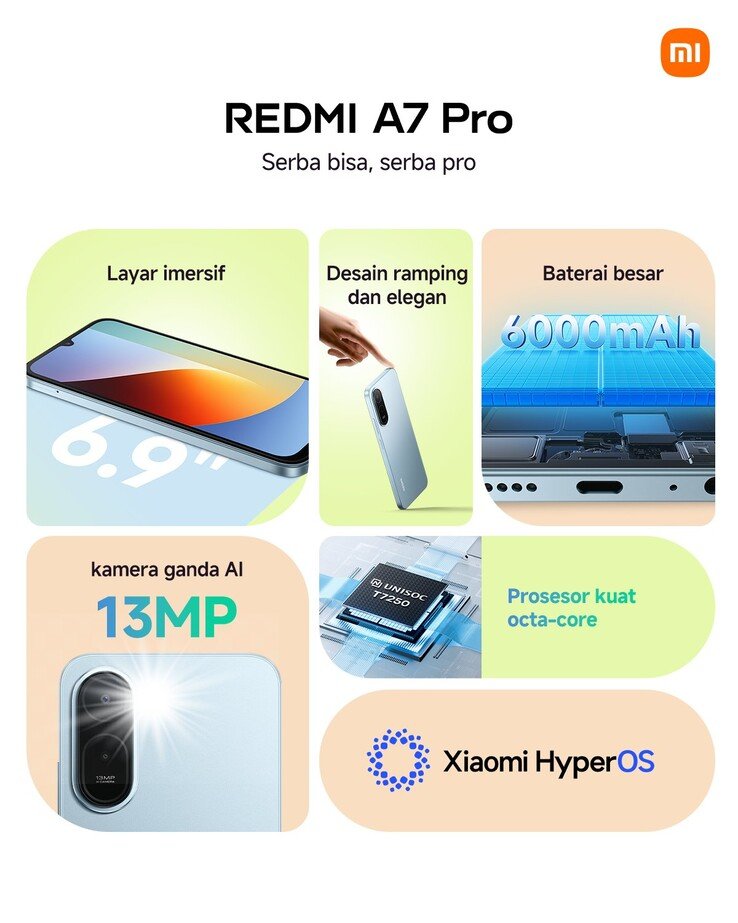
The Redmi A7 Pro brings several notable upgrades over its predecessor, the Redmi A5. The most significant improvement is the massive 6,000mAh battery, which dwarfs the 5,200mAh unit found in last year's model. This substantial capacity should easily provide two-day battery life for most users, making it ideal for those who prioritize longevity over other features.
The display has also received a significant upgrade, jumping from the A5's 6.88-inch panel to a slightly larger 6.9-inch IPS LCD with a 120Hz refresh rate. This is particularly impressive for a device in this price range, as high refresh rate displays are typically reserved for mid-range and flagship devices. The screen also features DC dimming technology and has earned TÜV Rheinland certifications for low blue light emissions and flicker-free operation, reducing eye strain during extended use.
Under the hood, the Redmi A7 Pro is powered by the Unisoc T7250 chipset, an octa-core processor built on a 12nm process. This same chipset powers the recently launched Realme P4 Lite, indicating Xiaomi's strategy of using cost-effective but capable processors in its budget lineup. The phone comes with 4GB of LPDDR4X RAM and up to 128GB of UFS 2.2 internal storage, providing adequate performance for everyday tasks and multitasking.
Camera and Design
For photography, the Redmi A7 Pro features a 13MP rear camera and an 8MP front-facing camera. While these specifications aren't groundbreaking, they're reasonable for a device in this price bracket. The phone measures 8.15mm in thickness and weighs 208g, which is slightly on the heavier side due to the large battery but still comfortable for daily use.
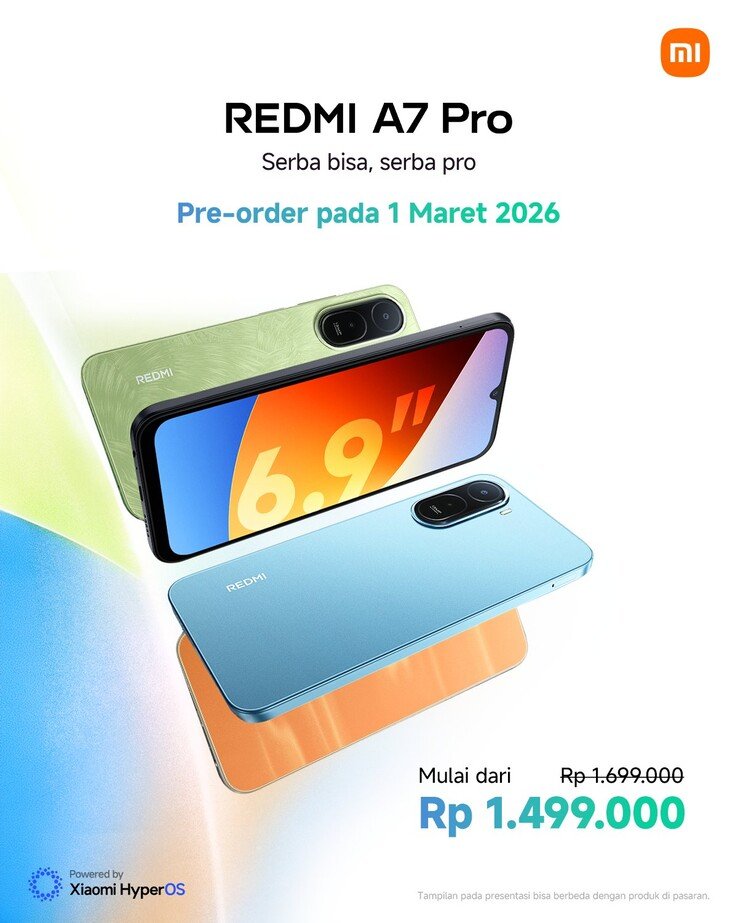
Design-wise, the A7 Pro offers multiple color options including Black, Mist Blue, Palm Green, and Sunset Orange, giving users some personality choices typically not found in budget devices. The phone also includes practical features like a side-mounted fingerprint scanner for security and a headphone jack for those who prefer wired audio connections.
Software and User Experience
One of the most interesting aspects of the Redmi A7 Pro is its software. The device runs HyperOS 3 based on Android, which is Xiaomi's latest custom skin. This is noteworthy because many budget devices still ship with older Android versions or heavily modified skins. HyperOS 3 brings a more refined user experience with improved animations, better optimization, and access to the latest Android features and security updates.
Pricing and Availability
The Redmi A7 Pro has been officially announced in Indonesia with aggressive pricing. The base variant with 4GB RAM and 64GB storage is priced at Rp 1,699,000, which converts to approximately $101. During the pre-order period running until March 7, Xiaomi is offering a discounted price of Rp 1,499,000 (around $90), making it an even more attractive proposition for budget-conscious consumers.
The device will be available for purchase starting March 13 in Indonesia. While availability in other regions hasn't been officially announced, the phone recently cleared the TDRA certification, suggesting a potential launch in the UAE market as well. This certification process is often a precursor to official regional launches, so consumers in other markets may see the A7 Pro in the coming months.
How It Compares to Competitors
At this price point, the Redmi A7 Pro faces competition from other budget offerings in the market. The combination of a 120Hz display and 6,000mAh battery is particularly compelling, as many competitors in the sub-$150 range typically offer only one of these features, not both.
For comparison, the previous Redmi A5 offered a larger 6.88-inch display but with a lower refresh rate and smaller battery. The A7 Pro represents a more balanced approach, slightly reducing screen size while adding the high refresh rate and increasing battery capacity.
The Unisoc T7250 chipset, while not a powerhouse, provides adequate performance for everyday tasks like social media, web browsing, and light gaming. It's a step up from the entry-level chipsets found in some ultra-budget devices, offering better efficiency and performance.
Who Should Consider the Redmi A7 Pro
The Redmi A7 Pro is ideally suited for several user profiles:
Budget-conscious users who want modern features without breaking the bank will appreciate the 120Hz display and large battery. Students and young professionals will benefit from the long battery life for all-day use between charges. First-time smartphone buyers will find the HyperOS 3 interface approachable while still offering modern features. Users in regions with limited charging access will value the massive battery capacity.
However, power users or those who prioritize camera quality might want to look at slightly higher-end models, as the A7 Pro's camera system and overall performance are designed for basic to moderate use rather than intensive applications.
The Bigger Picture
The Redmi A7 Pro represents Xiaomi's continued commitment to bringing premium features to budget segments. By including a 120Hz display and large battery in a sub-$100 device, Xiaomi is pushing the boundaries of what consumers can expect from entry-level smartphones.
This strategy aligns with the broader trend in the smartphone market where features once reserved for flagship devices gradually trickle down to more affordable segments. The A7 Pro demonstrates that consumers don't necessarily need to spend flagship prices to get a satisfying smartphone experience, especially for core functions like battery life and display quality.
As smartphone technology continues to mature, we can expect to see more features like high refresh rate displays, larger batteries, and modern software becoming standard even in the most affordable devices. The Redmi A7 Pro is a clear example of this democratization of technology, making it an interesting device to watch as it represents the current state of the art in budget smartphones.
Comments
Please log in or register to join the discussion