
A UK-based web developer has publicly declared a 'No AI' policy for his professional work, outlining his reasoning in a formal document and explaining why he refuses to use generative AI tools for coding or content creation.
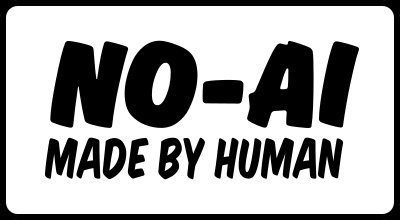
A UK-based web developer, David Bushell, has taken a firm public stance against using artificial intelligence in his professional work. He has added a "NO-AI" badge to his website and published a formal AI Policy detailing his position. This move comes amid a tech industry increasingly saturated with AI-powered tools and marketing.
What's Claimed
Bushell's policy is straightforward: he does not use AI for his professional work. The badge on his site, which he notes is temporary, serves as a visible declaration of this stance. His formal policy document provides the nuance, stating that while he does not use AI, he has left "wiggle room" should the technology's trajectory change dramatically in the future. He explicitly states that this is his personal policy and he is not asking others to adopt it, though he is open to discussion with clients who have serious questions.
What's Actually New
While individual developers have expressed skepticism about AI tools, Bushell's approach is notable for its public, formal declaration. Unlike many who quietly use or avoid these tools, he has created a dedicated policy page and a prominent site badge. This transforms a personal preference into a professional stance. He also addresses potential criticism preemptively in his blog post, dismissing "whataboutery" arguments and clarifying that his policy is specifically about AI use, not other potential issues. He also states he has no interest in using AI for personal creative hobbies, emphasizing that the journey and act of creation are as important as the final product.
Limitations and Context
Bushell's policy is a personal declaration, not a universal standard. It does not address the broader industry trend where AI tools are being integrated into development workflows, from code completion (like GitHub Copilot) to design assistance. His stance may not be feasible for all developers or companies, especially those operating at scale where efficiency gains from AI-assisted coding are a significant factor. The policy also doesn't delve into specific technical critiques of current AI models, such as their tendency to produce hallucinated code or their reliance on vast datasets of questionable provenance.
His policy is a first draft, subject to change. He reserves the right to update it or remove the badge, indicating his position is based on the current state of the technology and industry. This is a pragmatic acknowledgment that the landscape could shift, though he expresses skepticism about the industry's positive trajectory.

The Broader Practitioner View
Bushell's position reflects a segment of the developer community that prioritizes craftsmanship, deep understanding, and direct control over their tools. For these practitioners, the "journey" of solving a problem is integral to the work. Using an AI to generate code or content can feel like skipping that essential process. This perspective often contrasts with a productivity-focused view that prioritizes output speed and volume.
His refusal to engage in "prompt engineering" as a paid service—highlighted in the title "You Can’t Pay Me To Prompt!"—underscores a belief that the core value of a developer or designer lies in problem-solving, architecture, and nuanced decision-making, not in directing an AI. While he humorously notes he would accept a "very large cheque" to shill an AI startup, the point is clear: his credibility is tied to this stance.
The debate isn't just about efficiency; it's about the nature of creative and technical work. Bushell's policy forces a conversation about what we value in the process of building software and creating digital content. As AI tools become more capable, such declarations may become more common, creating a clear divide between those who integrate AI into their workflow and those who reject it on principle.
For developers and clients considering similar policies, Bushell's document provides a template for articulating a reasoned position. It also serves as a reminder that in a rapidly evolving tech landscape, individual and organizational stances on AI are becoming a significant part of professional identity.
Comments
Please log in or register to join the discussion