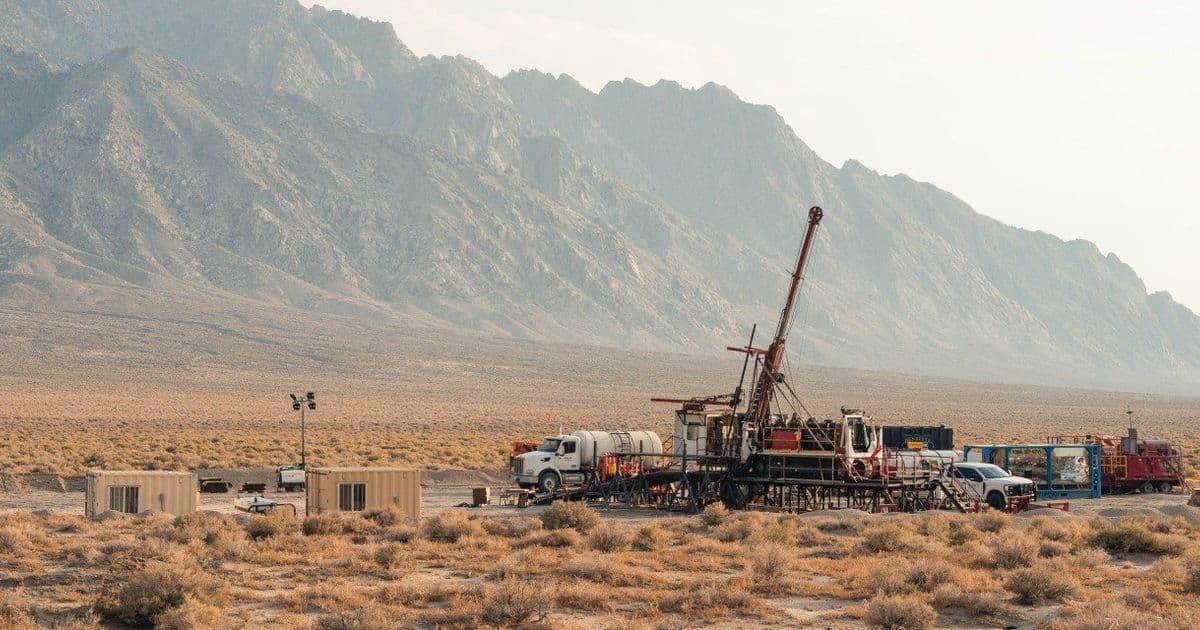
A Salt Lake City startup is using artificial intelligence to map subsurface geology, aiming to unlock overlooked geothermal energy sources and address America's growing electricity demand.
The search for clean, baseload power has a new, data-driven contender. Zanskar, a Salt Lake City-based startup, has raised $115 million in new funding, bringing its total capital to $180 million. The company's premise is straightforward but ambitious: use artificial intelligence to identify geothermal energy fields that traditional exploration methods have missed.
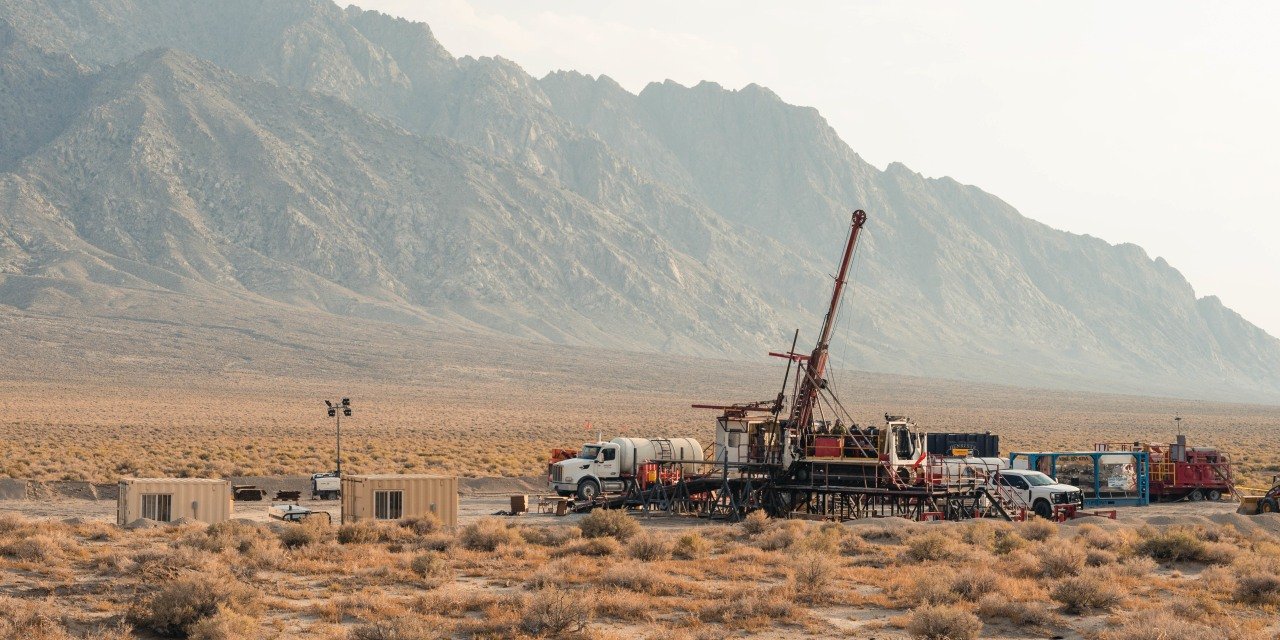
Geothermal energy—heat from the Earth's core—offers a constant, carbon-free power source. Unlike solar or wind, it doesn't depend on weather. The challenge has always been finding viable reservoirs. Traditional exploration relies on seismic surveys, drilling, and geological intuition, a process that is slow, expensive, and often inconclusive. Zanskar argues that by training AI models on vast geological datasets, it can predict where hot rock exists at drillable depths with greater accuracy and speed.
The company's approach isn't about discovering new heat sources; the Earth's geothermal potential is vast and largely untapped. It's about better targeting. Zanskar's AI analyzes public and proprietary data—satellite imagery, magnetic field readings, historical drilling logs, and more—to create detailed subsurface maps. The goal is to reduce the financial risk of geothermal projects, which can cost hundreds of millions of dollars to develop. By pinpointing the most promising sites, Zanskar aims to make geothermal a more attractive investment for utilities and independent power producers.
This funding round signals strong investor confidence in applying AI to physical-world problems, particularly in energy. The $180 million total suggests a long-term bet on the company's technology stack and its ability to scale. It also aligns with broader policy trends; the U.S. Department of Energy has identified geothermal as a critical component of a decarbonized grid, and recent legislation provides incentives for clean energy development.
However, the path from AI prediction to a functioning power plant is fraught with technical and economic hurdles. Geothermal reservoirs are complex systems, and even the best AI models can only provide probabilistic assessments. Drilling remains the single largest cost and risk factor. A dry hole, or a well that produces less energy than expected, can derail a project. Critics in the energy sector caution that while AI can improve exploration efficiency, it doesn't eliminate the fundamental uncertainties of subsurface engineering.
Moreover, the geothermal industry itself is niche compared to solar or wind. Scaling it up requires not just better exploration but also advances in drilling technology, power plant design, and grid integration. Zanskar's success will depend not only on its AI's accuracy but also on its ability to partner with drilling firms, engineering companies, and utilities to bring projects to fruition.
The counter-argument from some energy analysts is that the focus should be on rapidly deploying proven technologies like solar and battery storage, which have seen dramatic cost reductions. They argue that pouring capital into high-risk, capital-intensive geothermal exploration could divert resources from faster decarbonization pathways. Yet, the need for firm, dispatchable power to complement intermittent renewables keeps geothermal in the conversation.
Zanskar's model represents a convergence of two trends: the digitization of traditional industries and the application of AI to climate solutions. If successful, it could create a blueprint for using data science to de-risk other hard-tech sectors. For now, the company's $180 million war chest will be used to refine its algorithms, expand its geological database, and, most importantly, validate its predictions through actual drilling. The real test won't be the sophistication of its AI, but the megawatts it can ultimately bring online.
Relevant Links:
- Zanskar Official Website (Assumed official site based on company profile)
- U.S. Department of Energy Geothermal Technologies Office
- Geothermal Energy Association (Industry trade group providing context on the sector)
Comments
Please log in or register to join the discussion