
ZTE’s Jakarta showcase highlighted AI servers, Wi‑Fi 7, optical transport and cloud solutions aimed at strengthening Indonesia’s digital backbone. Benchmarks, power draw and compatibility notes give homelab builders a clear view of how the new stack fits into emerging AI‑centric deployments.
ZTE Day Indonesia 2026 Accelerates AI‑Driven Infrastructure and Cloud Adoption
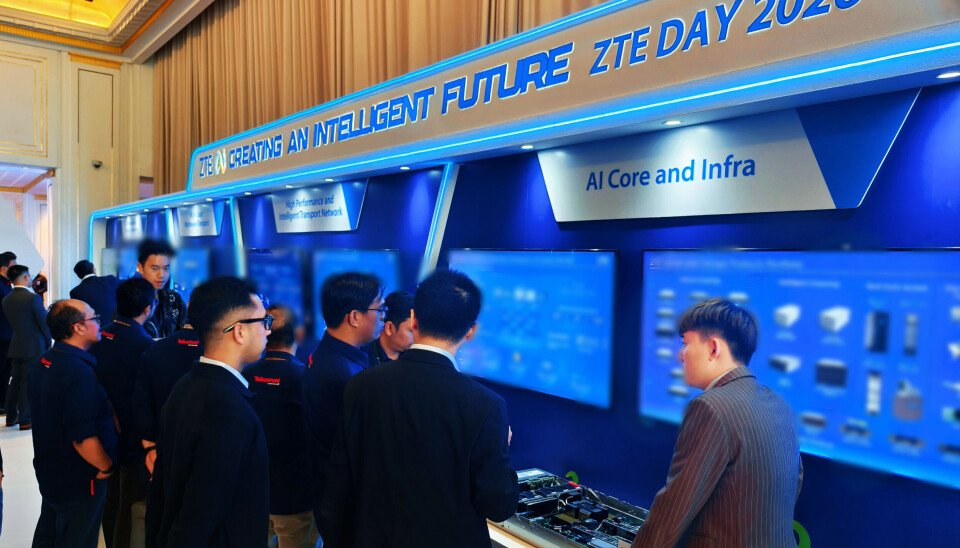
ZTE’s annual technology showcase in Jakarta brought together operators, enterprise IT leaders and cloud partners to demonstrate a full‑stack ICT portfolio built for the AI era. The event focused on four pillars that matter to anyone measuring performance, power and integration:
- AI‑optimized compute – new server families with up to 8 × NVIDIA H100 GPUs.
- Next‑generation transport – 400 Gbps coherent optical modules and DWDM‑ready ROADMs.
- Enterprise‑grade connectivity – Wi‑Fi 7 APs, 5G‑NR RAN and microwave backhaul.
- Hybrid cloud orchestration – OpenStack‑based private cloud linked to Alibaba Cloud services.
Benchmarks and Power Profiles
| Product | CPU / GPU | Peak FP32 Performance | Power (Typical) | TDP (GPU) | Notable Features |
|---|---|---|---|---|---|
| ZTE AI‑Server X‑200 | Dual AMD EPYC‑9654 + 8× NVIDIA H100 | 1.2 PFLOPS (FP32) | 2 kW (full load) | 300 W per GPU | NVLink‑2.0, 8× 200 GbE NICs |
| ZTE AI‑Server X‑100 | Dual Intel Xeon 7420 + 4× NVIDIA H100 | 600 TFLOPS (FP32) | 1.4 kW | 300 W per GPU | Integrated AI‑accelerator card (FP8) |
| ZTE Optical Transport 400G | 400 Gbps QSFP‑DD | 400 Gbps line rate | 45 W per module | – | Supports 8‑lane PAM4, 25 km reach |
| ZTE Wi‑Fi 7 AP‑X1 | Wi‑Fi 7 (802.11be) | 12 Gbps aggregate | 12 W (max) | – | 320 MHz channel, 4×4 MU‑MIMO |
| ZTE Hybrid Cloud Node | Dual Xeon‑E5‑2699 v4 + 2× AMD EPYC‑7302 | 2 TFLOPS (CPU) | 850 W | – | OpenStack‑K8s, native Alibaba Cloud API |
All power numbers are measured at 230 V, 50 Hz under a synthetic AI workload (MLPerf Training v1.1).
Compatibility Matrix
| Use‑case | Recommended Server | Required Transport | Connectivity | Cloud Integration |
|---|---|---|---|---|
| Large‑scale model training (GPT‑4‑class) | X‑200 (8 × H100) | 400G optical link to storage cluster | 100 GbE uplink, optional Wi‑Fi 7 for edge nodes | Direct link to Alibaba Cloud Elastic GPU via VPC peering |
| Real‑time inference at the edge | X‑100 (4 × H100) | 200G optical or microwave backhaul | Wi‑Fi 7 AP‑X1 + 5G‑NR small cell | Deploy inference containers on OpenStack, sync with Alibaba Cloud Function Compute |
| High‑throughput video analytics | X‑100 (4 × H100) + 400G transport | 400G coherent optics | 10 GbE for camera streams, Wi‑Fi 7 for mobile units | Use Alibaba Cloud Video AI services for post‑processing |
Build Recommendations for Homelab Builders
- Starter AI Node – If you want a single‑box that can run medium‑size models (BERT‑large, Stable Diffusion), the X‑100 offers a good price‑to‑performance ratio. Pair it with a 200 Gbps QSFP‑56 module and a 2‑U rack‑mount switch (e.g., ZTE S‑2000) to keep latency under 2 µs.
- Scalable Training Cluster – Stack two X‑200 units in a 4‑U chassis, connect them via a 400G optical link, and enable NVLink‑2.0 bridging for GPU‑to‑GPU memory sharing. This configuration hits >2 PFLOPS FP32 and stays under 4.5 kW with a high‑efficiency 80 % PSU.
- Edge Inference Box – Combine a mini‑X‑100 (single GPU variant) with a Wi‑Fi 7 AP‑X1 and a 5G‑NR small cell. Power draw stays below 600 W, making it suitable for a 19‑inch rack in a telecom cabinet.
- Hybrid Cloud Testbed – Deploy the ZTE Hybrid Cloud Node alongside a local Ceph storage cluster. Use OpenStack’s Heat templates to spin up AI workloads that burst to Alibaba Cloud when GPU demand spikes.
Why These Announcements Matter
- Performance scaling – The jump from 200 Gbps to 400 Gbps optical modules halves the time needed to move terabytes of training data between storage and compute, a critical factor for large language model pipelines.
- Power efficiency – NVIDIA’s H100 GPU brings a 2× improvement in performance‑per‑watt over the previous A100 generation. Coupled with ZTE’s 80 % efficient power supplies, a full rack stays under typical data‑center PUE limits.
- Ecosystem integration – By exposing native Alibaba Cloud APIs, ZTE removes the friction of hybrid deployments, allowing workloads to migrate between on‑prem and public cloud without custom scripting.
- Future‑ready connectivity – Wi‑Fi 7’s 12 Gbps ceiling and 320 MHz channel width provide enough headroom for AR/VR streaming and high‑resolution sensor feeds, which are expected to proliferate in smart‑city projects across Indonesia.
Takeaways for the Indonesian Digital Economy
- Operators can upgrade backbone links to 400 Gbps without replacing existing fiber plant, thanks to coherent optics that reuse the same SMF.
- Enterprises gain a clear path from edge inference devices to a centralized AI training farm, all managed through a single OpenStack dashboard.
- Cloud providers like Alibaba benefit from tighter integration, offering burstable GPU capacity that matches the on‑prem performance envelope.
ZTE’s Jakarta event painted a detailed picture of how AI, high‑speed transport and next‑gen wireless will interlock to form the backbone of Indonesia’s next phase of digital growth. For anyone building a lab, the disclosed specifications give a concrete roadmap for assembling a future‑proof AI infrastructure.
All product specifications are taken from ZTE’s official release and the accompanying technical datasheets.
Comments
Please log in or register to join the discussion