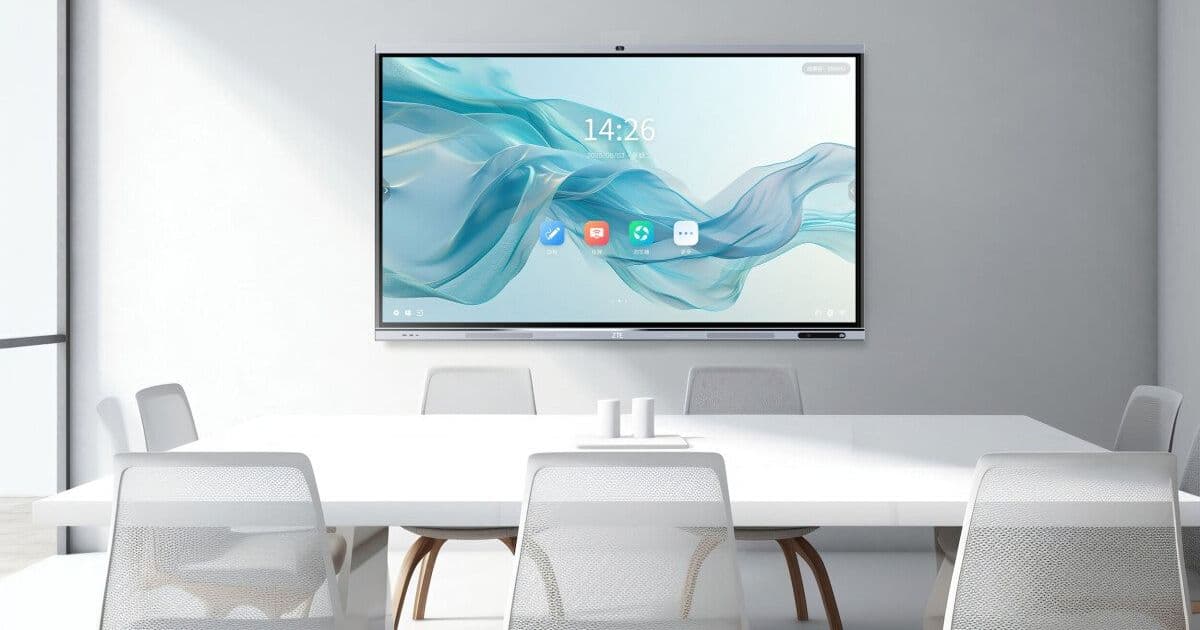
At the Broadband User Congress in Brazil, ZTE unveiled an AI‑powered interactive flat panel aimed at offices, elder‑care facilities, and classrooms. While the device’s deep integration with cloud‑meeting tools and on‑board AI assistants generated excitement, analysts question its pricing, data‑privacy posture, and the real need for such a heavyweight solution in already crowded markets.
ZTE’s AI Interactive Flat Panel Draws Mixed Reactions at Brazil’s Broadband User Congress
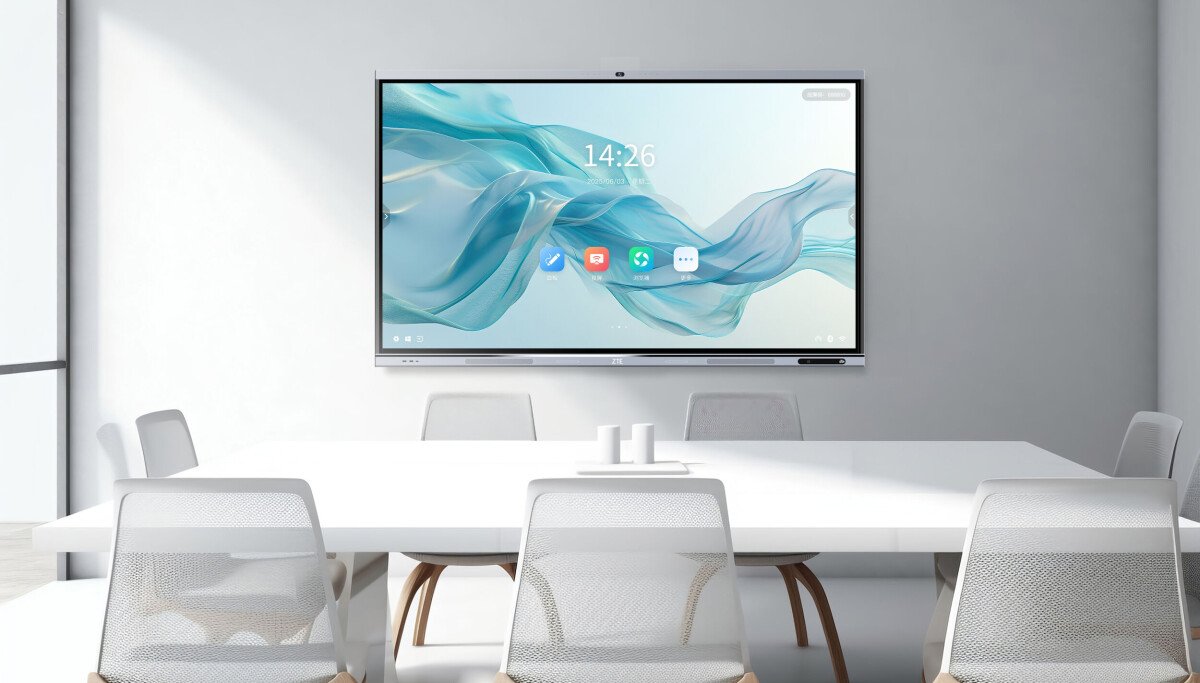
ZTE used its slot at the Broadband User Congress in São Paulo to launch an AI‑enhanced interactive flat panel that promises to serve three distinct verticals – corporate collaboration, senior‑care monitoring, and classroom teaching. The hardware combines a 75‑inch 4K touchscreen with on‑board AI that can transcribe meetings, flag abnormal vital signs, and archive teaching sessions. Its headline claim is an "open ecosystem" that plugs directly into Zoom, Microsoft Teams, Google Meet, as well as ZTE’s own cloud services.
Why the announcement matters
- Convergence of hardware and AI services – The panel blurs the line between a traditional digital whiteboard and a dedicated AI assistant. By embedding a meeting‑minute generator and a health‑monitoring module, ZTE is positioning the device as a single‑point solution for organizations that already purchase separate video‑conferencing boxes, health‑monitoring wearables, and interactive displays.
- Strategic push into Brazil – Brazil represents one of the fastest‑growing broadband markets in Latin America. ZTE’s emphasis on local operator partnerships suggests it hopes to lock in long‑term service contracts that could offset the device’s relatively high bill‑of‑materials cost.
- Potential ripple effect for competitors – If the panel gains traction, rivals such as Samsung, Lenovo, and Huawei may accelerate their own AI‑centric display roadmaps, tightening the competition in a segment that has historically been price‑driven.
Evidence from the launch floor
- Deep integration with existing platforms – ZTE demonstrated a live Zoom call where the AI assistant automatically captured action items and pushed them to participants via a sidebar. The same workflow was repeated with Microsoft Teams and Google Meet, showing that the panel can act as a universal front‑end for any cloud‑meeting service.
- Elder‑care health module – A simulated senior‑care scenario displayed a non‑contact pulse‑oximeter built into the panel’s camera array. When the system detected a reading outside the normal range, an alert popped up on the screen and a notification was sent to a caregiver’s mobile app. The demo highlighted ZTE’s partnership with the Brazilian health‑tech startup Saúde Conectada.
- Education workflow – In a classroom mock‑up, an instructor used the panel’s AI teaching archive to record a lesson, automatically tag key concepts, and generate a quiz for students. The data was then uploaded to the school’s LMS via an open API.
- Pricing hints – While ZTE did not disclose a full price list, a representative indicated a starting price of roughly US$4,200 for the base model, with optional AI‑service subscriptions ranging from $12‑$30 per month per device.
Counter‑perspectives and cautionary notes
1. Cost vs. incremental value
The price point sits above many standard interactive displays that already support third‑party conferencing apps. For enterprises that already have room‑scale video‑conferencing hardware, the added AI meeting assistant may not justify the expense. Analysts at IDC Brazil note that “organizations tend to adopt AI features when they solve a clear, quantifiable problem, not when they are bundled as a premium add‑on.”
2. Data‑privacy and regulatory concerns
Embedding health‑monitoring capabilities raises questions about compliance with Brazil’s LGPD (General Data Protection Law). The panel streams video and biometric data to ZTE’s cloud for AI processing, which could be a red flag for hospitals and senior‑care facilities that must keep patient data on‑premise. Privacy‑focused groups such as DataRights Brazil have already called for clearer disclosures on data residency and encryption practices.
3. Ecosystem lock‑in risk
Although ZTE markets the device as “open”, the AI services are hosted on ZTE’s own cloud platform. Switching to a different provider would likely require a costly migration, potentially limiting flexibility for multinational customers that standardize on a single cloud vendor. Competitors like Microsoft Surface Hub already offer a more vendor‑agnostic approach.
4. Market saturation
The interactive display market is crowded, with established players offering similar hardware at lower price points. The differentiator here is the AI suite, but early adopters will need to demonstrate tangible ROI—such as reduced meeting‑note transcription time or measurable improvements in senior‑care response rates—before committing to large‑scale deployments.
Looking ahead
ZTE’s AI Interactive Flat Panel is a bold attempt to fuse three verticals under a single hardware umbrella. Its success will likely hinge on three factors:
- Clear subscription pricing that separates the hardware cost from AI services, allowing customers to opt‑in only to the features they need.
- Transparent data‑handling policies that satisfy LGPD and reassure health‑care operators.
- Real‑world case studies that quantify productivity gains or health‑outcome improvements, giving decision‑makers concrete reasons to upgrade from a conventional display.
If ZTE can address these concerns, the panel could become a niche staple for organizations seeking an all‑in‑one smart room. If not, it may remain an interesting prototype that underscores the industry’s rush to embed AI everywhere, even where the value proposition is still being debated.
*For more details on ZTE’s product specifications, see the official announcement on the ZTE website.*
Comments
Please log in or register to join the discussion