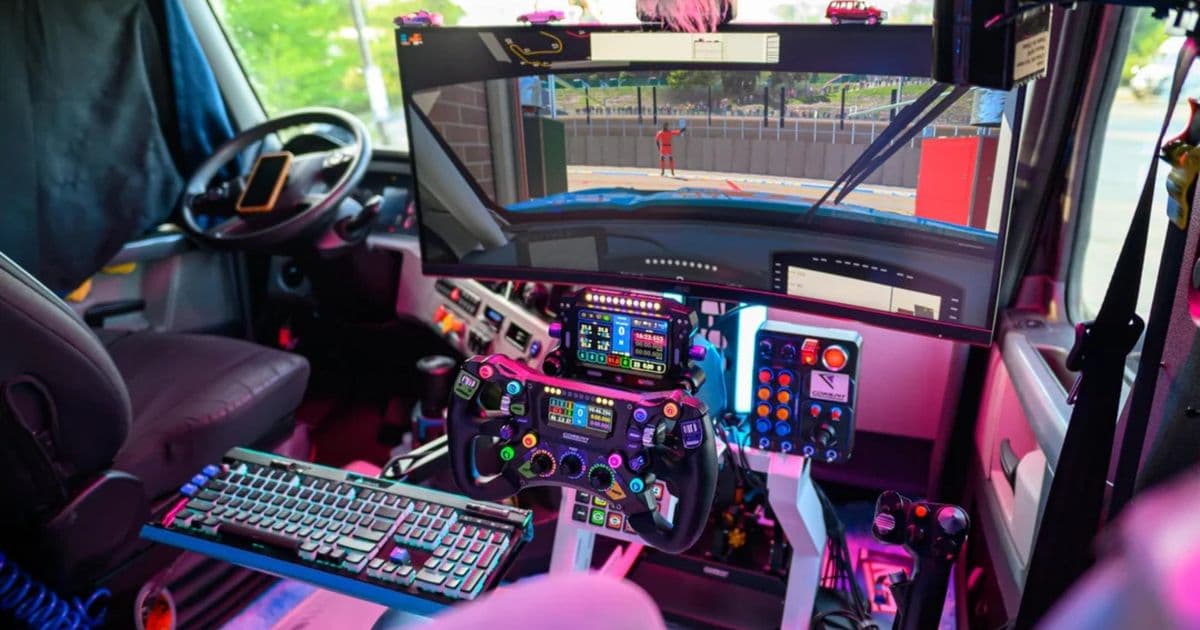
A trucker's upgraded sim racing setup demonstrates the convergence of high-end gaming technology with mobile lifestyles, showcasing the capabilities of modern gaming hardware in unconventional environments.
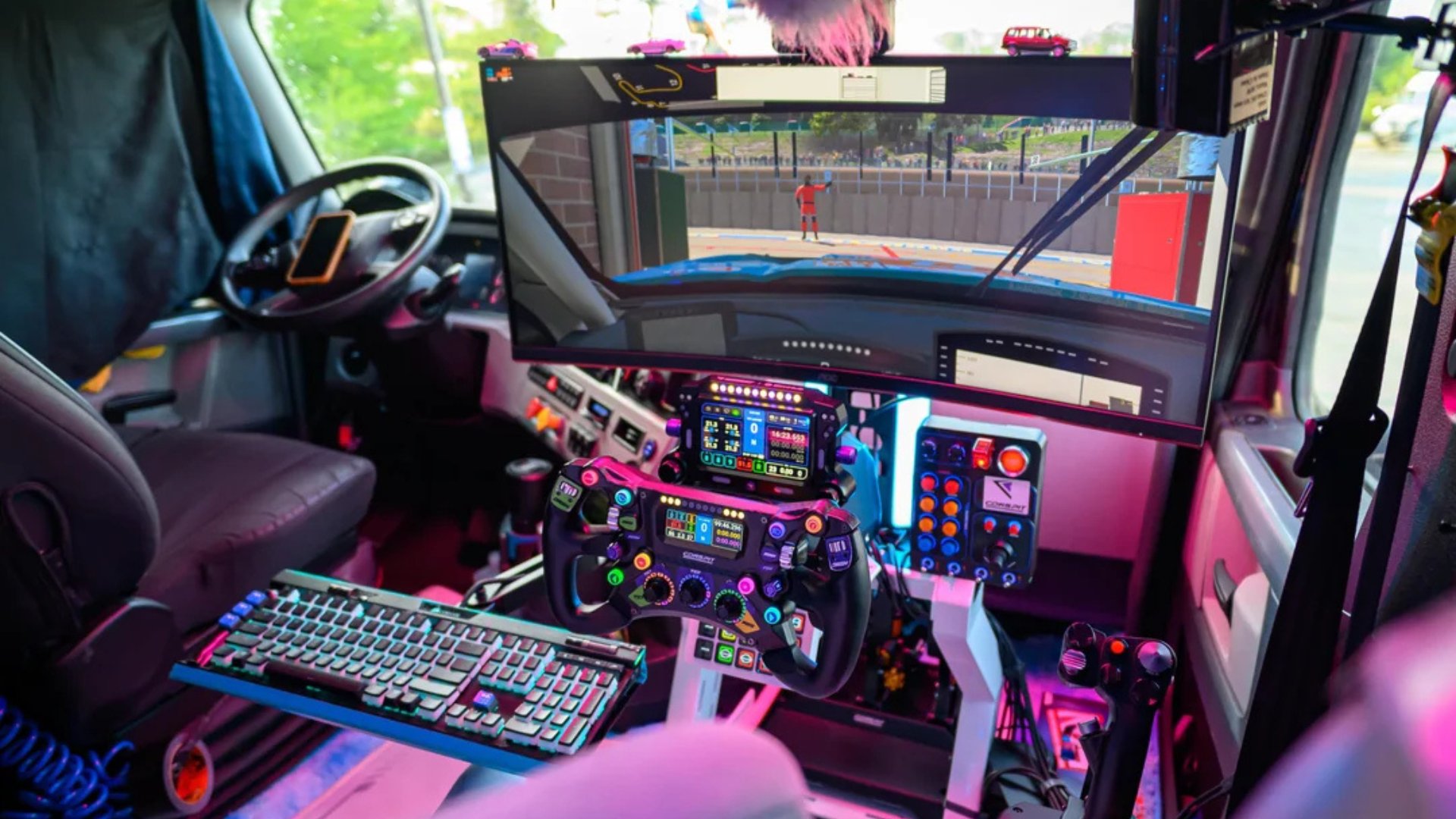
The recent upgrade to a trucker's $6,000 semi-truck sim racing rig offers fascinating insights into the capabilities of modern gaming hardware and its adaptation to unconventional environments. ZanaZamora, a U.S.-based trucker and sim racing enthusiast, has transformed the passenger side of their semi-truck into a high-end gaming cockpit, demonstrating how cutting-edge gaming technology can be integrated into mobile lifestyles.
At the heart of this upgraded setup is the white GT-Lite racing rig featuring a white-and-blue Pro racing seat. This racing rig represents a significant evolution from the previous build, offering a smaller footprint while maintaining robust performance. The proper racing bucket seat not only enhances comfort during long gaming sessions but also improves posture, allowing for better feedback reception from the controls—a critical factor in sim racing where tactile feedback is essential for performance.
The control system includes several high-end components that showcase the current state of gaming hardware:
Conspit CPP Evo 3 Pedals: These high-end pedals likely utilize Hall effect sensors for precise input measurement, offering adjustable resistance and programmable buttons. The pedal set represents a significant investment in realistic force feedback, which is crucial for truck simulation where pedal sensitivity can make the difference between a smooth delivery and a delayed one.
Ares Platinum Wheelbase: This premium wheelbase probably features direct drive technology, providing the most accurate force feedback available in consumer sim racing hardware. The direct drive system uses a powerful brushless motor connected directly to the steering shaft, eliminating the belts and gears found in lower-end systems. This level of precision is particularly valuable for truckers who want to maintain their driving skills during downtime or experience routes virtually before tackling them in real life.
Quick Adapter: This component likely allows for seamless switching between different wheel types, which could be valuable for a trucker who might want to switch between a truck wheel and a car wheel depending on the simulation being played.
Dashboard: The custom dashboard probably provides additional controls and information displays, further enhancing the simulation experience.
The peripheral upgrades are equally impressive:
- Corsair K95 RGB Platinum XT Keyboard: This premium mechanical keyboard features Cherry MX switches, per-key RGB lighting, and dedicated macro keys. It likely uses a proprietary ARM processor to handle the complex lighting effects and macro programming without impacting system performance.
- Stream Deck: This dedicated control surface with its own LCD screen and physical buttons provides programmable controls for streaming, OBS, and other applications. The Stream Deck contains a custom ARM processor that handles button programming and display updates.
From a semiconductor perspective, this setup represents several interesting trends:
Performance in Constrained Environments: The fact that this high-end setup can operate in a semi-truck cab demonstrates the capabilities of modern gaming hardware to perform in less-than-ideal conditions. The components likely include thermal management solutions that allow them to function despite potential temperature fluctuations and limited ventilation.
Power Efficiency: Given the limited power availability in a truck, these components must balance performance with power efficiency. The Ares Platinum wheelbase, for example, likely uses efficient brushless motors that provide high torque without excessive power draw.
Miniaturization: The article specifically mentions that the new parts and accessories are "much smaller and lighter than their previous build," highlighting the industry trend toward more compact designs without sacrificing performance. This miniaturization is driven by advances in semiconductor manufacturing, allowing for more powerful chips in smaller packages.
Integration: The seamless integration of these components demonstrates the maturity of the gaming hardware ecosystem, with standardized interfaces and protocols that allow different manufacturers' products to work together effectively.
The $6,000 price tag for this setup reflects the premium segment of the gaming hardware market, which has seen significant growth in recent years. This growth is driven by several factors:
- Increasing demand for realistic simulation experiences
- Advances in semiconductor technology enabling more powerful and precise hardware
- The rise of esports and sim racing as legitimate hobbies
- The pandemic-induced shift toward home entertainment
For truckers like ZanaZamora, such a setup offers several benefits:
- Maintaining driving skills during long hauls
- Experiencing routes virtually before tackling them in real life
- Providing entertainment during downtime
- Creating a sense of home on the road
The security considerations mentioned in the original article are also noteworthy. The fact that the equipment is bolted down and would require "time and tools" to steal reflects both the value of the components and the practical security measures employed in mobile environments. This highlights an often-overlooked aspect of high-end hardware: the need for physical security in addition to digital security.
From a supply chain perspective, this setup also demonstrates the resilience of the gaming hardware market. Despite global semiconductor shortages that have affected many industries, high-end gaming components remain available to enthusiasts willing to pay premium prices. This suggests that the gaming hardware sector has prioritized its supply chains effectively during the ongoing chip shortage.
The case of ZanaZamora's semi-truck sim racing rig also raises interesting questions about the future of mobile computing and entertainment. As semiconductor technology continues to advance, we can expect even more powerful and compact gaming hardware that could further blur the lines between stationary and mobile entertainment setups.
In conclusion, this $6,000 semi-truck gaming rig represents more than just an enthusiast's passion project. It showcases the capabilities of modern gaming hardware, demonstrates its adaptation to unconventional environments, and offers insights into the current state and future direction of the gaming hardware market. For the semiconductor industry, it highlights the continued demand for high-performance, power-efficient components that can operate in a variety of environments, from dedicated gaming rooms to the cabs of semi-trucks.
Comments
Please log in or register to join the discussion