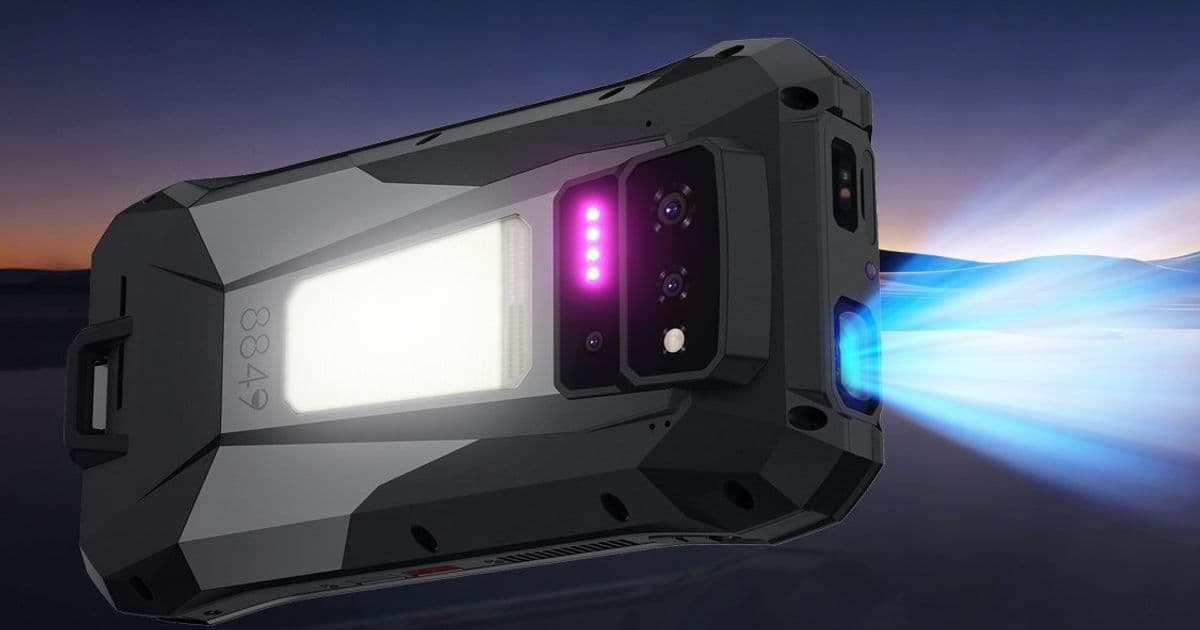
The Tank X is a rugged Android smartphone that pushes the boundaries of niche hardware integration, packing a 1080p DLP projector, a powerful camping light, and a laptop-sized battery into a single device. While its 31.9mm thickness and 750-gram weight make it impractical for daily carry, it represents a unique convergence of technologies for outdoor enthusiasts and professionals who need projection and power in a single, durable package.
The 8849 Tank X is a smartphone that defies conventional design priorities. Measuring 31.9mm (1.26 inches) thick and weighing 750 grams (1.65 pounds), it's a brick by modern smartphone standards. But this isn't a device built for pocketability. The Tank X is a ruggedized Android phone designed for extreme environments, and its bulk is the direct cost of integrating three features rarely seen together in a single device: a 1080p projector, a 1200-lumen RGB camping light, and a 17,600 mAh battery that rivals many laptops.
A Projector That Actually Makes Sense
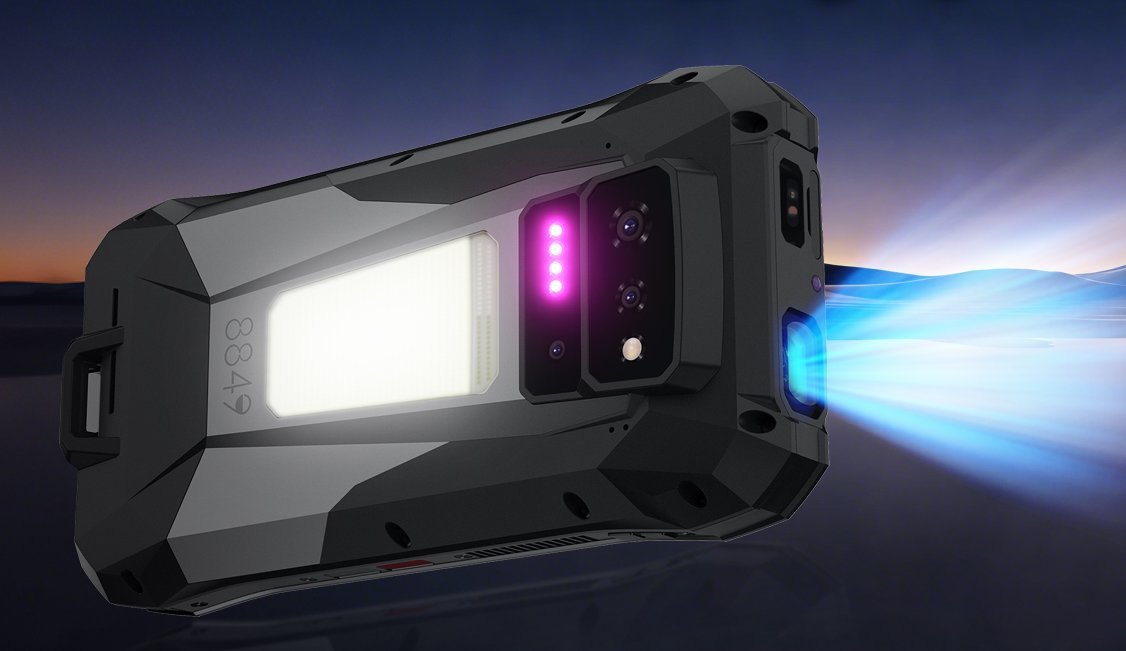
8849 Tech has been experimenting with projector phones for years, but previous models like the Tank 2 and Tank 3 were limited to 720p resolution and 100 lumens. The Tank X represents a significant leap forward with its 1080p DLP projector capable of 220 lumens and featuring laser auto-focus. While 220 lumens is still modest for daytime viewing, it's a substantial improvement for low-light scenarios like camping trips or impromptu presentations in dimly lit rooms.
The projector's placement is practical—it's positioned on the top edge of the phone, allowing you to prop the device on a flat surface and project onto a wall or ceiling. The laser auto-focus system is particularly useful for quick setup, automatically adjusting the projection distance without manual intervention. For developers considering apps that leverage this hardware, the projector essentially provides a second display output that can be controlled through standard Android display APIs, though you'll need to account for the unique aspect ratio and potential brightness limitations in your app design.
Power Management as a Core Feature
The 17,600 mAh battery (68.1 Wh) is the Tank X's most practical innovation. For context, that's larger than the battery in a MacBook Air (52.6 Wh) and nearly double the capacity of a typical flagship smartphone. This massive power reserve is necessary because the projector is power-hungry, but it also means the phone can function as a genuine power bank for other devices via 10W reverse charging.
From a development perspective, this battery size introduces interesting optimization challenges. Most Android apps are designed with the assumption that users will charge their devices daily. The Tank X's multi-day battery life means apps need to handle longer uptime gracefully—think about how your app manages background processes, data sync intervals, and memory management over extended periods without a charge cycle.
The 120W fast charging support is equally important. A battery this size would be impractical without rapid charging, and 120W means you can go from empty to full in under an hour. For developers, this means you should test your apps' behavior during and immediately after rapid charging, as thermal management and power draw patterns will differ from standard charging scenarios.
Hardware Specifications and Platform Considerations
The Tank X runs on a MediaTek Dimensity 8200 processor, which is a capable mid-range chip built on a 4nm process. It's paired with 16GB of RAM and 512GB of storage, which is generous for a device in this category. The 6.78-inch display runs at 2460 x 1080 resolution with a 120Hz refresh rate—standard specs for a modern Android phone, though the display is likely protected by thicker glass given the rugged design.
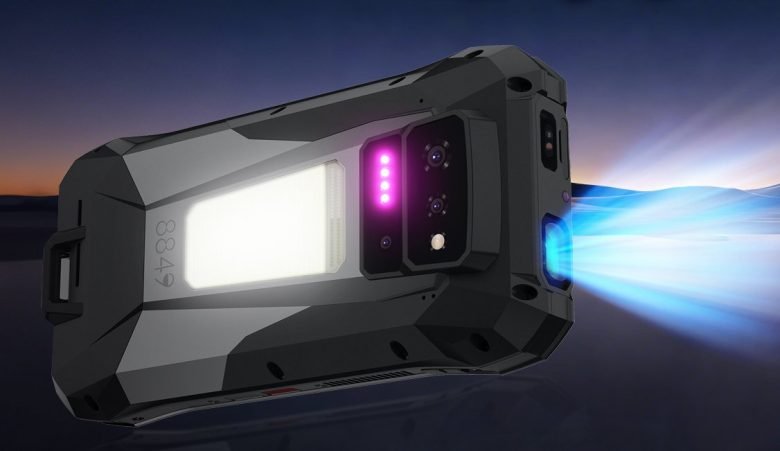
Connectivity is comprehensive: 5G NR, Wi-Fi 6, Bluetooth 5.4, GPS, and NFC are all present. The inclusion of a 3.5mm audio jack and an IR transmitter are welcome additions for a device targeting outdoor and utility use cases. The IR transmitter, in particular, could be leveraged by developers for custom remote control applications or integration with legacy equipment.
The camera system is interesting for a rugged phone:
- 50MP primary (Sony IMX766 sensor)
- 64MP night vision (Omnivision OV64B1B)
- 8MP 3X telephoto (SK Hynix HI847)
- 50MP front-facing (SK Hynix Hi5022Q or Omnivision OV50M40)
The night vision camera is particularly relevant for outdoor use cases, though developers should note that Omnivision's night vision sensors typically use infrared illumination, which means you'll need to handle the raw IR data appropriately in your camera app.
Rugged Design and Environmental Considerations
The IP68 rating means the Tank X can withstand dust ingress and submersion in water up to 1.5 meters for 30 minutes. This is standard for rugged phones, but the additional projector and light components add complexity to the sealing. For developers building apps for outdoor use, consider how your app's UI will function with wet or gloved hands, and whether your touch targets are large enough for less precise input.
The 1200-lumen RGB camping light on the back is another utility feature that could be programmable. While the article doesn't specify if there's an API for controlling the light's color and intensity, it's worth investigating for apps targeting outdoor recreation or emergency preparedness.
Development Implications
For mobile developers, the Tank X represents a unique testing platform. Its combination of features creates specific use cases:
Projection-optimized apps: Presentation tools, media players, and collaborative apps could leverage the projector as a second screen. Android's display manager APIs would need to handle the projector as an external display with specific resolution and brightness constraints.
Power-aware applications: Apps designed for multi-day use should implement efficient background sync strategies and consider the user's likely charging patterns. The Tank X's battery life means users might not charge for days, requiring careful memory and resource management.
Outdoor utility apps: The night vision camera and camping light create opportunities for apps in hiking, camping, and emergency response categories. Developers would need to work with the specific camera APIs for IR data and potentially control the RGB light programmatically.
Rugged interface design: The thick chassis and potential for use with gloves or wet fingers means touch targets should be larger than standard, and gesture recognition might need adjustment.
Platform and Availability
The Tank X runs Android, though the specific version isn't mentioned. For enterprise deployment or custom app development, you'd want to verify the Android version and security patch level. 8849 Tech has a track record of providing relatively long-term software support for their rugged devices, but this should be confirmed for the Tank X.
The device will be available for purchase starting February 1, 2026, through the 8849 Tech website. Pricing hasn't been announced, but given the specifications and previous Tank models, expect it to be in the premium rugged phone range, likely between $800-$1200.
Trade-offs and Practical Considerations
While the Tank X is impressive from a hardware integration perspective, it's important to understand its limitations. The projector, while improved, is still not suitable for bright environments. The 220-lumen output means you'll need near-darkness for a clear image, limiting its practical use to camping trips, indoor presentations in dim rooms, or emergency situations.
The weight and size make it impractical as a primary phone for most users. At 750 grams, it's nearly three times the weight of an iPhone 15 Pro Max (221 grams). This isn't a device you'll comfortably carry in your pocket all day. It's more of a specialized tool for specific scenarios.
Battery life with the projector active will be significantly reduced. While the 17,600 mAh battery can power the phone for days, running the projector will drain it much faster. Developers building projection-focused apps should consider implementing power-saving modes that reduce projector brightness or frame rate when battery levels drop.
The Broader Context
The Tank X sits at the intersection of several trends in mobile hardware: ruggedization for outdoor use, the integration of utility features beyond communication, and the push for devices that serve multiple purposes in extreme environments. It's not trying to compete with mainstream smartphones on thinness or weight; instead, it's carving out a niche for users who need a device that can survive harsh conditions while providing tools like projection and lighting.
For developers, this represents an opportunity to build apps for previously underserved markets. The outdoor recreation industry, field service professionals, emergency responders, and adventure travelers could all benefit from apps specifically designed for the Tank X's unique capabilities.
The device also highlights the challenges of integrating disparate technologies. The projector requires optical components, the camping light needs LEDs and diffusers, and the massive battery demands space. All of this must be packaged in a sealed, rugged enclosure. The result is a device that's functionally impressive but physically imposing—a trade-off that defines the rugged phone category.
As Android continues to evolve, devices like the Tank X push the boundaries of what's possible with mobile hardware. They serve as testbeds for technologies that might eventually become more mainstream, like integrated projectors or extreme battery capacities. For now, the Tank X remains a specialized tool, but one that demonstrates the potential for mobile devices to expand beyond communication and entertainment into utility and survival applications.
For developers interested in exploring the Tank X's capabilities, the first step would be to get hands-on with the device when it launches in February 2026. Testing your existing apps on its unique hardware configuration will reveal how they handle the different display characteristics, battery life patterns, and input methods. The projector in particular may require custom handling in apps that aren't designed for external display output.
The Tank X isn't for everyone, but for the right user in the right situation, it could be the only device they need. That's the promise of this rugged, feature-packed smartphone: not to replace your daily driver, but to serve as a reliable tool when conditions demand more than a conventional phone can provide.
Comments
Please log in or register to join the discussion