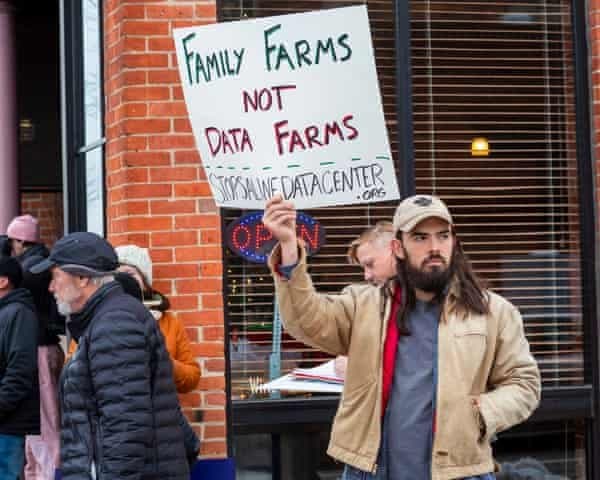
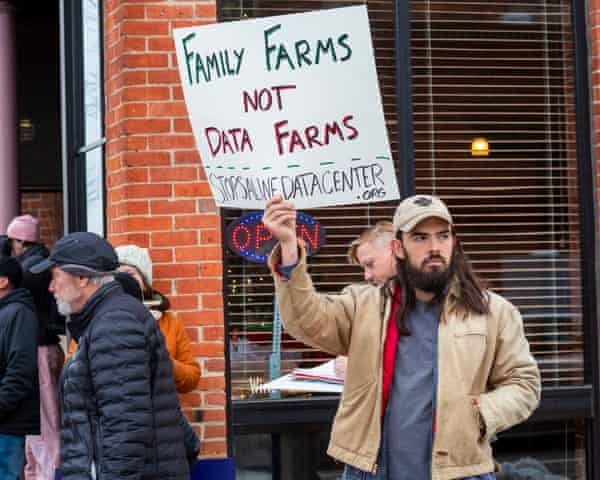
Farmers across the US are rejecting multimillion-dollar offers from tech companies seeking land for AI data centers, as the industry's insatiable appetite for compute power collides with agricultural heritage and food security concerns.
US farmers are increasingly rejecting multimillion-dollar offers from data center developers, creating a growing tension between America's agricultural heritage and the tech industry's insatiable appetite for land to power AI infrastructure.
The conflict highlights a fundamental challenge facing the AI industry: the massive physical footprint required to support artificial intelligence systems. Industry estimates suggest that approximately 40,000 acres of land globally will be needed for new AI projects, with much of that demand concentrated in the United States.
The Million-Dollar Question
Farmers across the country are finding themselves at the center of this land rush, facing offers that could transform their financial futures overnight. These multimillion-dollar proposals represent life-changing sums for many agricultural families who have worked the same land for generations.
However, many farmers are choosing to decline these lucrative offers, citing concerns about preserving their way of life, maintaining food production capacity, and protecting rural communities from the industrial transformation that massive data centers would bring.
The Scale of the Problem
The land requirements for AI infrastructure are staggering. Each data center complex can occupy hundreds of acres, and the industry's growth projections suggest dozens or even hundreds of new facilities will be needed in the coming years.
This creates a direct competition between two critical national interests: maintaining domestic food production capacity and securing the computational infrastructure needed to remain competitive in the global AI race.
Environmental and Community Impact
Beyond the immediate financial considerations, farmers and rural communities are weighing the broader impacts of hosting massive data centers. These facilities require enormous amounts of electricity, water for cooling, and create significant noise and light pollution.
Local governments are also grappling with how to balance the potential tax revenue from data center development against the transformation of rural landscapes and the strain on local infrastructure.
The Global Context
This American land conflict mirrors similar tensions emerging worldwide as countries race to build AI infrastructure. The 40,000-acre global estimate underscores the scale of the challenge facing the industry as it seeks to expand capacity to meet growing demand.
The situation also highlights the physical limitations of AI growth that often get overlooked in discussions about technological progress. While software can scale infinitely in theory, the hardware infrastructure required to run AI systems is constrained by real-world factors like available land, energy resources, and community acceptance.
Looking Ahead
As AI continues to advance and demand for computational power grows, the industry will need to find solutions that don't require converting vast swaths of agricultural land. This might include developing more efficient computing architectures, exploring alternative locations like repurposed industrial sites, or investing in technologies that reduce the physical footprint of AI infrastructure.
The current standoff between farmers and tech companies represents a critical juncture in the development of AI infrastructure, forcing the industry to confront the real-world constraints that will shape its future growth trajectory.
Comments
Please log in or register to join the discussion