
The pricing pressure around ChatGPT, Claude, DeepSeek, and open-source models is becoming a semiconductor story: inference economics now depend as much on HBM supply, TSMC advanced nodes, and rack-scale GPU utilization as on model quality.

Announcement
AI providers are running into a pricing ceiling that looks less like a software subscription problem and more like a semiconductor utilization problem. According to figures cited by Tom's Hardware from SemiAnalysis testing, heavy users can consume far more compute than their monthly plans recover in revenue. A $200-per-month Claude Max 20x subscription can reportedly map to about $8,000 of API-priced token usage when pushed to its weekly limits, while a $200-per-month ChatGPT Pro 20x plan can map to roughly $14,000 of API-priced usage.
That gap matters because inference is not a zero-marginal-cost cloud service. Every long-context prompt, coding agent loop, retrieval pass, tool call, and chain-of-thought-style reasoning step consumes accelerator time, high-bandwidth memory capacity, networking bandwidth, power, and cooling. SemiAnalysis estimates cited in the report suggest Anthropic's lower Claude Pro and Claude Max 5x plans break even around 20% utilization, while OpenAI's lower ChatGPT Plus and ChatGPT Pro 5x plans can lose money above 11.4% utilization. At the top end, the pressure is sharper: Anthropic reaches 0% gross margin around 10% utilization, and OpenAI moves into negative margin above 5.7% utilization.

The obvious software response is to raise prices or restrict usage. The market response is different. Enterprises are shifting workloads toward model routers, cheaper Chinese LLMs, and open-source or open-weight models, using premium frontier models only when the task justifies the cost. The Wall Street Journal reported that firms are seeing cost reductions of up to 95% by routing work across models, with DeepSeek, Alibaba's Qwen family, and other lower-cost options taking routine tasks. DeepSeek's own ecosystem is accessible through its official site, API documentation, and GitHub organization, which makes it a practical candidate for teams comparing hosted frontier APIs with self-managed inference stacks.
Technical specs
The subscription mismatch starts at the token level, but it is constrained at the chip level. A conversational query may be cheap when it uses a short prompt and a compact model. An agentic coding task can be orders of magnitude heavier because it may run dozens or hundreds of model calls, keep long context windows alive, inspect files, generate patches, validate output, and retry. The Tom's Hardware report says powerful agentic AI can use up to 1,000 times more tokens than an average model interaction. At that multiplier, even rapid declines in cost per token are not enough if usage expands faster than silicon efficiency.
Modern inference systems are built around a hierarchy of scarce hardware resources. Nvidia's H100 uses the Hopper architecture and exposes up to 80GB of HBM on the SXM version, 3.35TB/s of memory bandwidth, FP8 Tensor Core throughput listed at 3,958 teraFLOPS with sparsity, and up to 700W configurable power. Nvidia positions H100 as delivering up to 30x higher inference performance on the largest models versus A100-class systems in selected configurations, but the business implication is still simple: if users consume 40x to 70x the revenue value of their subscription, better hardware alone cannot carry the plan.
Blackwell shifts the curve, but it does not erase the cost base. Nvidia says its Blackwell architecture uses a custom TSMC 4NP process, packs 208 billion transistors across two reticle-limited dies, and links those dies with a 10TB/s chip-to-chip interconnect. The same platform introduces second-generation Transformer Engine features, FP4 support through NVFP4, fifth-generation NVLink, and rack-scale NVL72 systems with 130TB/s of GPU bandwidth inside a 72-GPU NVLink domain. Nvidia's GB200 NVL72 connects 36 Grace CPUs and 72 Blackwell GPUs, while GB300 NVL72 targets higher reasoning throughput.
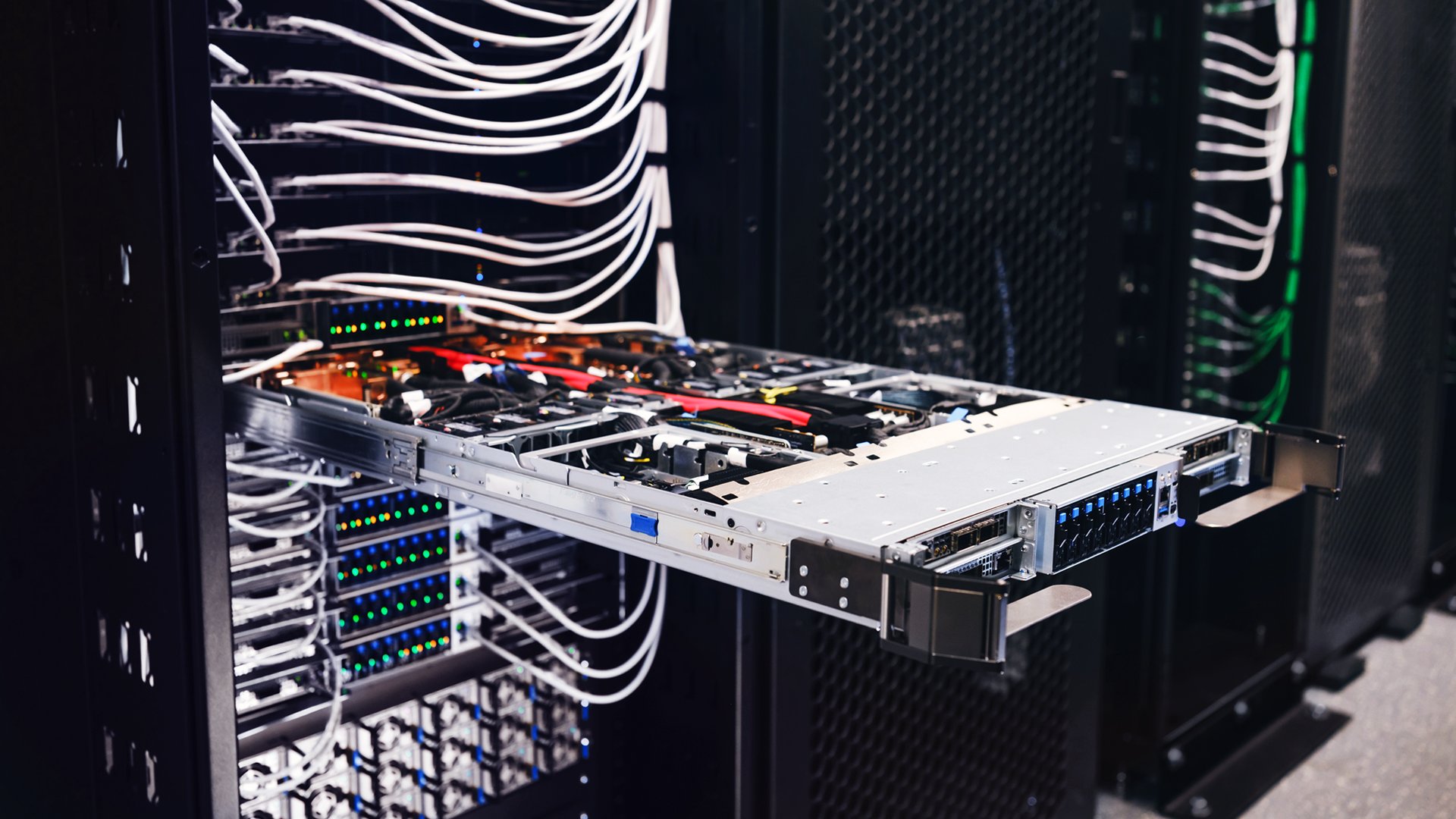
These figures explain why inference pricing now depends on manufacturing allocation. Blackwell-class accelerators require advanced TSMC capacity, advanced packaging, high-yield multi-die assembly, HBM3E or newer memory stacks, high-current power delivery, liquid cooling, and dense optical or copper networking. A lower API price is not just a sales decision. It assumes that Nvidia, AMD, Google, Amazon, Microsoft, or custom silicon suppliers can increase delivered tokens per watt, tokens per dollar of capex, and tokens per rack faster than demand expands.
Memory is the most visible bottleneck. Large language model inference repeatedly streams weights and maintains KV cache, making HBM capacity and bandwidth central to latency and cost. H100-class systems already sit in the multi-terabyte-per-second range, while Blackwell racks scale bandwidth across dozens of GPUs. But HBM supply comes from a narrow base of suppliers, mainly SK hynix, Samsung, and Micron. AI demand competes with broader DRAM and NAND markets, and long-term HBM supply agreements are becoming as strategically important as GPU purchase orders. When AI data centers absorb more HBM wafers, commodity DRAM availability can tighten, raising costs for servers, PCs, networking gear, and embedded systems.
The model architecture side is responding to the same pressure. Mixture-of-Experts models activate only a fraction of parameters per token, lowering compute compared with dense models of similar total parameter count. Quantization reduces weight traffic, with FP8 already mainstream in high-end accelerators and FP4 becoming a major Blackwell-era target. Speculative decoding can use a smaller model to draft tokens and a larger model to verify them, improving throughput when acceptance rates are high. Model routers add another layer, sending classification, summarization, extraction, and basic support queries to cheaper models, while reserving premium models for coding, complex reasoning, or high-liability workflows.
That is why DeepSeek and open-source models are gaining enterprise attention. A company does not need a frontier model for every ticket triage, invoice extraction, meeting summary, or internal search query. If a cheaper model handles 70% to 90% of calls at acceptable accuracy, the blended cost per completed task can fall even if the firm still pays OpenAI or Anthropic for the most difficult 10% to 30%. The relevant metric changes from cost per million tokens to cost per successful workflow.
Market implications
The first implication is that flat-rate AI subscriptions are likely to become more segmented. Consumer-style unlimited plans are attractive for adoption, but they create adverse selection when power users run long-horizon coding tasks, research agents, or automated workflows against a fixed monthly fee. Providers can respond with tighter caps, slower queues, lower default model quality, task-specific limits, or API-only access for the most expensive frontier models. The report's example is direct: if a $200 plan can expose $8,000 to $14,000 of token value under maximum use, the provider needs either much better utilization controls or much cheaper inference.
The second implication is that Chinese and open-source models gain share even when they are not the absolute best models. A 5% quality deficit can be acceptable if the cost reduction is 80% to 95% for a routine workflow. That creates a pricing umbrella problem for OpenAI and Anthropic. Their frontier models may remain ahead, but customers can reserve them for fewer tasks. Lindy founder Flo Crivello, cited in the report, said moving toward DeepSeek V4 saved millions of dollars while Anthropic models remained in use for advanced work such as coding. That pattern is likely to spread across enterprise AI procurement.
The third implication is that silicon roadmaps and model roadmaps are now coupled. OpenAI, Anthropic, Google, Meta, Microsoft, Amazon, and xAI are not only competing on benchmark scores. They are competing on how many useful tokens they can produce per HBM stack, per megawatt, per wafer start, and per rack. Nvidia's Blackwell and Blackwell Ultra messaging around lower cost for agentic AI shows that the chip supplier understands the economic target. AMD's Instinct accelerators, Google's TPU line, Amazon Trainium and Inferentia, and Microsoft's Maia program all aim at the same control point: reduce dependence on scarce general-purpose GPUs or improve bargaining power against them.
The fourth implication is that supply contracts become a competitive moat. If a cloud provider has secured GPUs, HBM, networking, and data center power ahead of rivals, it can offer lower model prices or higher usage limits for longer. If it has not, it must ration access, raise prices, or buy capacity at unfavorable terms. That is why memory supply stories now belong in AI pricing analysis. A model provider can publish lower API prices, but delivery depends on physical output from TSMC fabs, CoWoS-style advanced packaging lines, HBM assembly, substrate supply, and data center commissioning schedules.
For customers, the near-term playbook is becoming clearer. Keep a premium frontier model for high-value reasoning, coding, and tasks where failure is expensive. Use model routing for the rest. Evaluate open-weight models where data control, tuning, and unit cost matter. Track not only input and output token prices from OpenAI API pricing and Anthropic pricing, but also effective cost per resolved case, completed coding task, generated report, or automated workflow. The firms that measure only subscription spend will miss the real exposure until usage spikes.
The market is not rejecting frontier AI. It is repricing it. As inference shifts from occasional chat to persistent agents, the bottleneck moves from model access to industrial capacity. The winners will be the companies that align model quality, routing software, accelerator architecture, memory supply, and utilization discipline into a lower cost per useful answer.
Comments
Please log in or register to join the discussion