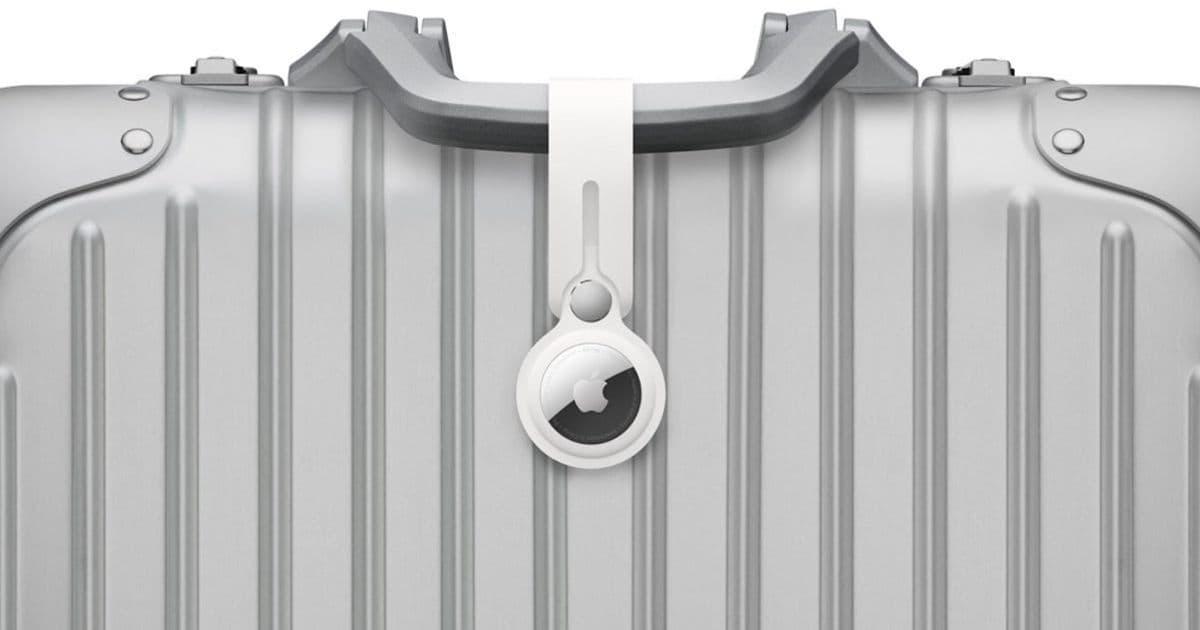
New data from SITA shows Apple's Find My system reduces truly lost bags by 90% and cuts recovery time by 26%, as airlines integrate Share Item Location feature into their baggage tracking systems.
The travel industry has a persistent problem: lost luggage. While most bags eventually find their way back to owners, a small percentage become "truly lost"—permanently separated from their owners. Apple's AirTag, combined with airline cooperation, is fundamentally changing this calculus.
New data from SITA, the air transport communications and information technology company behind the WorldTracer baggage tracking system used by all major airlines, reveals dramatic improvements. For bags equipped with an AirTag, the number of "truly lost" bags decreases by 90%. Additionally, airlines using the AirTag integration have seen a 26% reduction in recovery time for delayed bags.
This isn't just about consumer convenience—it represents a significant operational shift for airlines. The data comes from SITA's WorldTracer system, which processes baggage tracking data across the global airline network. When Apple launched its Share Item Location feature with iOS 18.2 in December 2024, it created a bridge between consumer tracking technology and airline operational systems.
How the Integration Works
The technical implementation is straightforward but elegant. When you lose your luggage, you can generate a shareable link directly from the Find My app. This link opens a web interface showing the AirTag's location on an interactive map, accessible to anyone with the link—including airline staff.
Apple has worked directly with airlines to integrate this capability into their baggage recovery workflows. The system is designed with privacy in mind: the shared location automatically disables once you're reunited with your luggage.
The airlines that currently support this feature include:
- United
- Delta
- British Airways
- Lufthansa
- American Airlines
- Air Canada
- Air New Zealand
- Turkish Airlines
- Aer Lingus
- Austrian Airlines
- Brussels Airlines
- Swiss
- Eurowings
- Iberia Airlines
This list represents a significant portion of global air travel capacity. The integration works not just with AirTags, but with any third-party accessory that integrates with Apple's Find My network, including products from companies like Chipolo.
The Broader Context
This development represents a convergence of consumer technology and enterprise systems. Airlines have long used RFID tags and barcode systems for baggage tracking, but these systems have limitations. They track bags at specific checkpoints (check-in, security, loading, unloading) but don't provide continuous location visibility.
An AirTag, by contrast, leverages Apple's Find My network—a crowdsourced system of hundreds of millions of Apple devices worldwide. When an AirTag moves within Bluetooth range of any iPhone, iPad, or Mac, its location is anonymously updated. This creates a continuous tracking capability that traditional airline systems cannot match.
The 90% reduction in "truly lost" bags suggests that many previously unrecoverable bags were simply in locations where airline systems couldn't track them—perhaps in airport storage areas, on tarmacs, or in transfer facilities. The AirTag's network fills these visibility gaps.
Practical Implications for Travelers
Beyond the statistics, this integration changes how travelers approach baggage handling. As the original article notes, AirTags allow travelers to monitor their luggage's journey to baggage claim in real-time. This visibility reduces anxiety and allows for more efficient airport navigation.
The 26% reduction in recovery time is particularly meaningful. For delayed bags, every hour matters. Faster recovery means less disruption to travel plans and reduced inconvenience for passengers.

Technical Considerations
For developers and tech-savvy travelers, there are important technical details to consider:
Battery Life: AirTags use CR2032 batteries that typically last about a year with normal use. For frequent travelers, this means annual replacement is sufficient.
Precision Finding: Newer iPhones (11 and later) support Precision Finding, which provides directional guidance to the AirTag when you're within close range. This is particularly useful for locating bags in crowded baggage claim areas.
Privacy Features: AirTags are designed to prevent unwanted tracking. If an unknown AirTag is moving with you, your iPhone will alert you. This balances utility with privacy protection.
Third-Party Options: For those who prefer alternatives to Apple's ecosystem, companies like Chipolo, Tile, and Samsung offer similar tracking devices. However, the airline integration specifically works with the Find My network, which limits compatibility to Apple-compatible devices.

The Future of Baggage Tracking
This development may represent the beginning of a broader trend. As more airlines adopt this integration, we might see:
Standardized protocols: The Share Item Location feature could become an industry standard for consumer-device-to-airline communication.
Enhanced airline apps: Airlines might integrate direct AirTag tracking into their mobile apps, providing a unified experience.
Insurance implications: Reduced loss rates could eventually affect baggage insurance premiums and policies.
Hardware evolution: Future iterations of tracking devices might include additional sensors (temperature, humidity, shock) that could provide even more valuable data to airlines.
A Pragmatic Approach
For mobile developers maintaining apps across iOS and Android, this represents an interesting case study in platform-specific advantages. The Find My network is a unique Apple ecosystem feature that provides value through integration across devices. While Android has similar capabilities through Google's Find My Device network, the airline integration specifically leverages Apple's system.
This highlights a common pattern in mobile development: platform-specific features that provide significant user value but require platform-specific implementation. For cross-platform apps, this often means maintaining separate feature sets or finding creative workarounds.
Bottom Line
The data is clear: AirTags and similar tracking devices significantly reduce the risk of permanently losing luggage and speed up recovery when bags are delayed. With major airlines now supporting the Share Item Location feature, the practical barrier to using these devices has largely disappeared.
For travelers who haven't yet adopted this technology, the question is no longer whether it works—it's whether the convenience and peace of mind justify the modest investment. Given the statistics from SITA's WorldTracer system, the answer appears to be yes.
The integration also demonstrates how consumer technology can solve enterprise problems. Rather than waiting for airlines to develop their own comprehensive tracking solutions, Apple leveraged its existing Find My network to create a system that works with existing airline infrastructure. This approach—building on top of established systems rather than replacing them—offers valuable lessons for developers working on enterprise mobile applications.
For those interested in the technical details, Apple's Share Item Location documentation provides additional implementation information for developers working with the Find My framework. The feature represents a practical application of Apple's broader privacy and security principles, balancing utility with user control over their data.
As travel continues to rebound globally, tools that reduce friction and uncertainty will become increasingly valuable. AirTags, with their proven effectiveness and growing airline support, appear positioned to become a standard travel accessory for frequent flyers.
Comments
Please log in or register to join the discussion