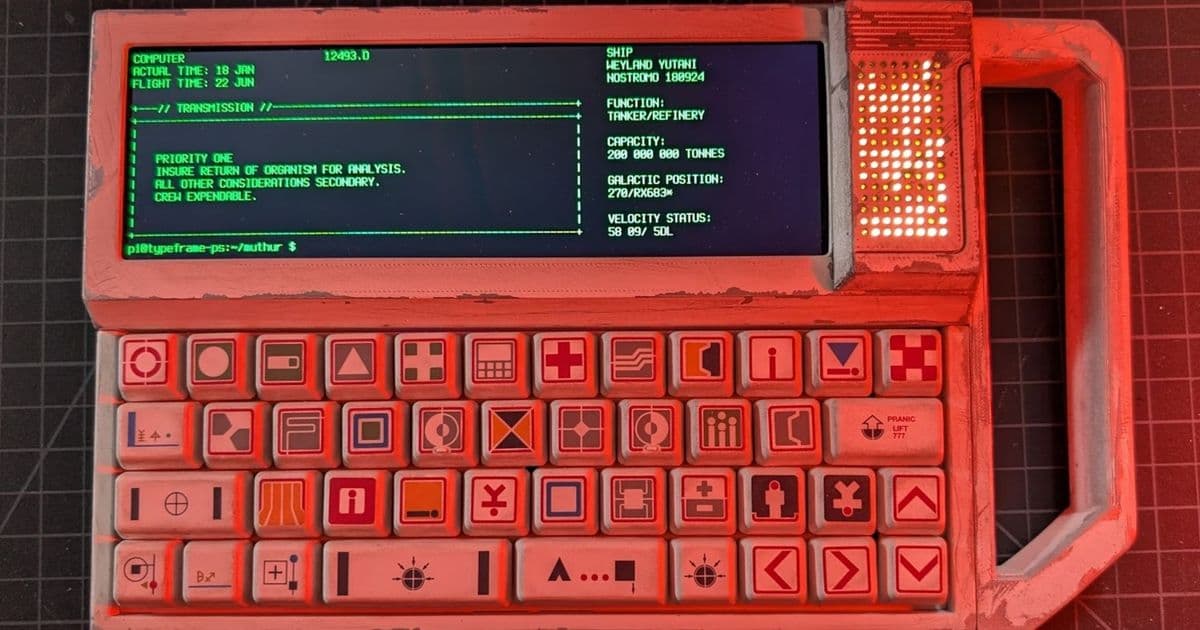
Jeff Merrick's Typeframe PS-85 cyberdeck leverages Raspberry Pi Zero 2W hardware within a meticulously crafted Alien-themed chassis, showcasing how accessible components enable complex retro-futuristic builds.
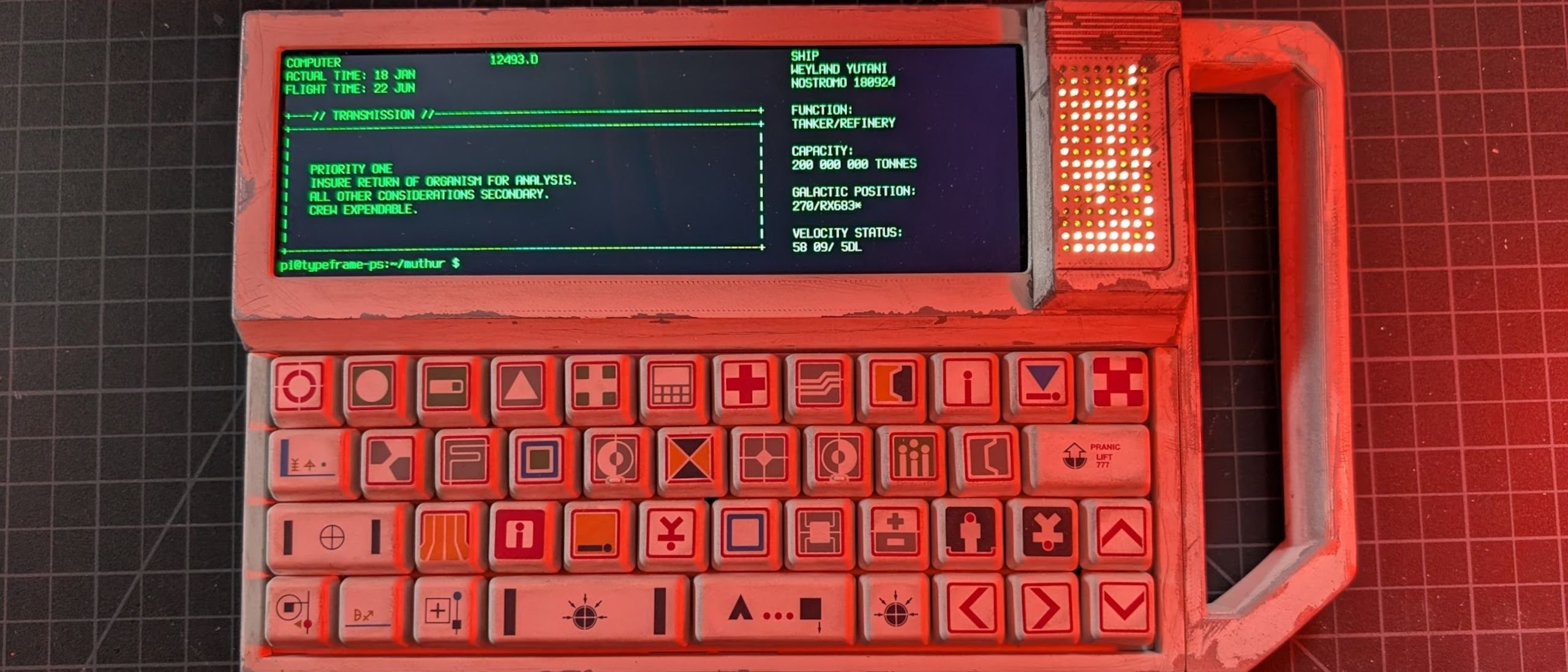
Jeff Merrick's Typeframe PS-85 cyberdeck project merges cinematic nostalgia with contemporary maker technology, demonstrating the Raspberry Pi ecosystem's versatility. This build recreates the industrial aesthetic of the Alien film series' technology using accessible components, with the Raspberry Pi Zero 2W serving as its computational core.
The cyberdeck's chassis employs 3D printing for its weathered, industrial appearance, achieving the signature look of the Alien universe's retro-futuristic technology. Inside, component placement prioritizes both functionality and thermal management. The Raspberry Pi Zero 2W occupies the upper corner with dedicated standoffs, ensuring stability while providing adequate airflow for the Broadcom BCM2710A1 processor's heat dissipation. This quad-core ARM Cortex-A53 chip delivers 40% more processing power than its predecessor while maintaining a 100MHz clock speed and 512MB RAM configuration.
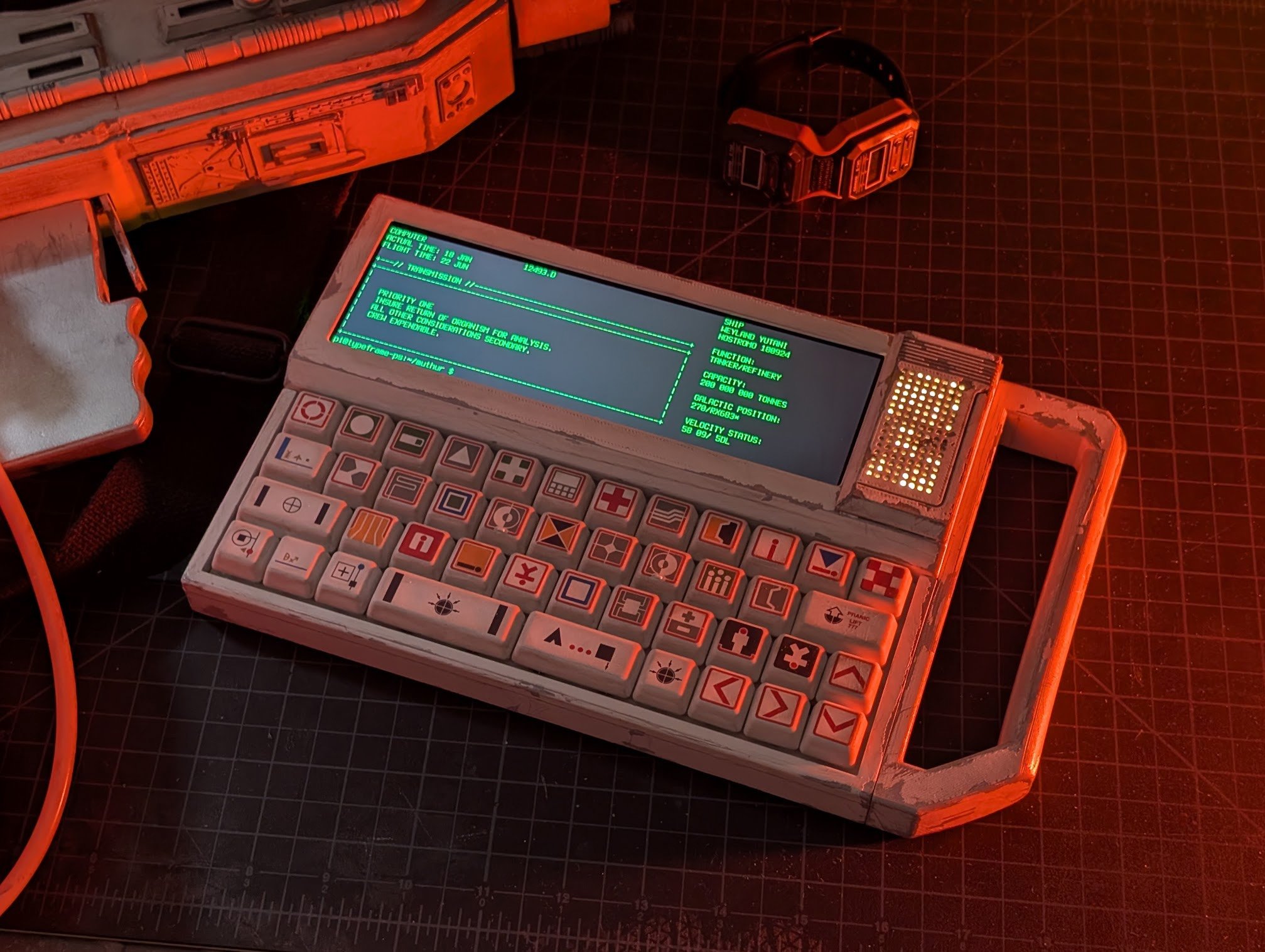
Power management utilizes an Adafruit PowerBoost 1000C module, converting output from a 3.7V 6000mAh LiPo battery to the required 5V at 1A. This configuration provides approximately 6-8 hours of continuous operation. The Waveshare 7.9-inch touchscreen displays terminal output via Raspberry Pi OS Lite, though touch functionality remains unused. Connectivity options include routed USB, HDMI, and full GPIO access through custom cabling.
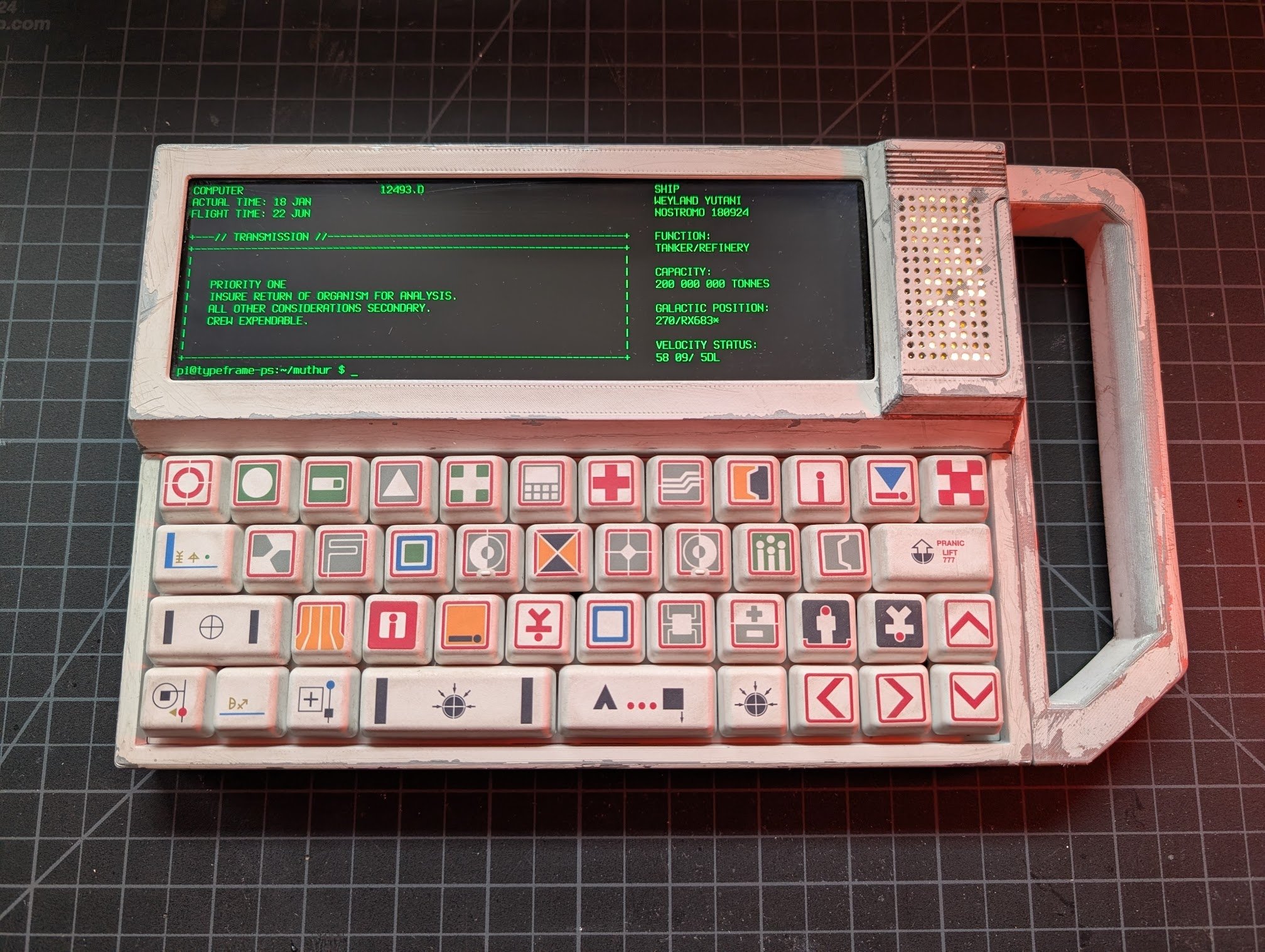
The right-side LED matrix replicates the MU/TH/UR computer interface from the Alien films using Adafruit's CharliePlex LED Matrix Bonnet. This 6x7 LED grid operates via I²C protocol, consuming minimal GPIO resources while delivering authentic visual feedback. The removable design preserves access to all 40 GPIO pins for expansion.
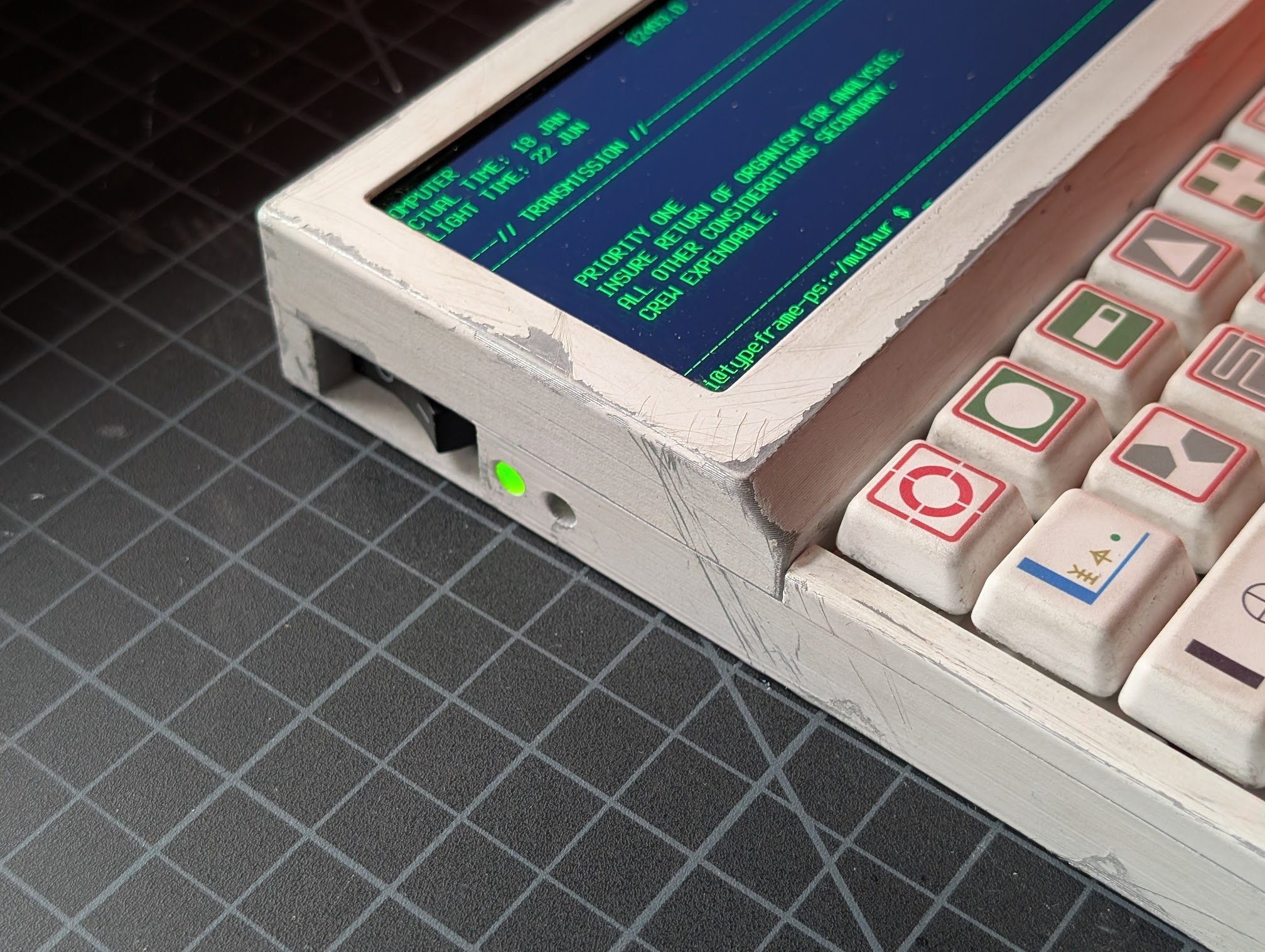
Keyboard implementation features a 40% mechanical design based on Penk Chen's Penkesu layout with Simon Deering's original Alien film iconography. Each hot-swappable key uses Kailh sockets, providing tactile feedback through Gateron Brown switches. Despite the non-intuitive symbols, the keyboard maintains full QWERTY functionality beneath its cinematic exterior.
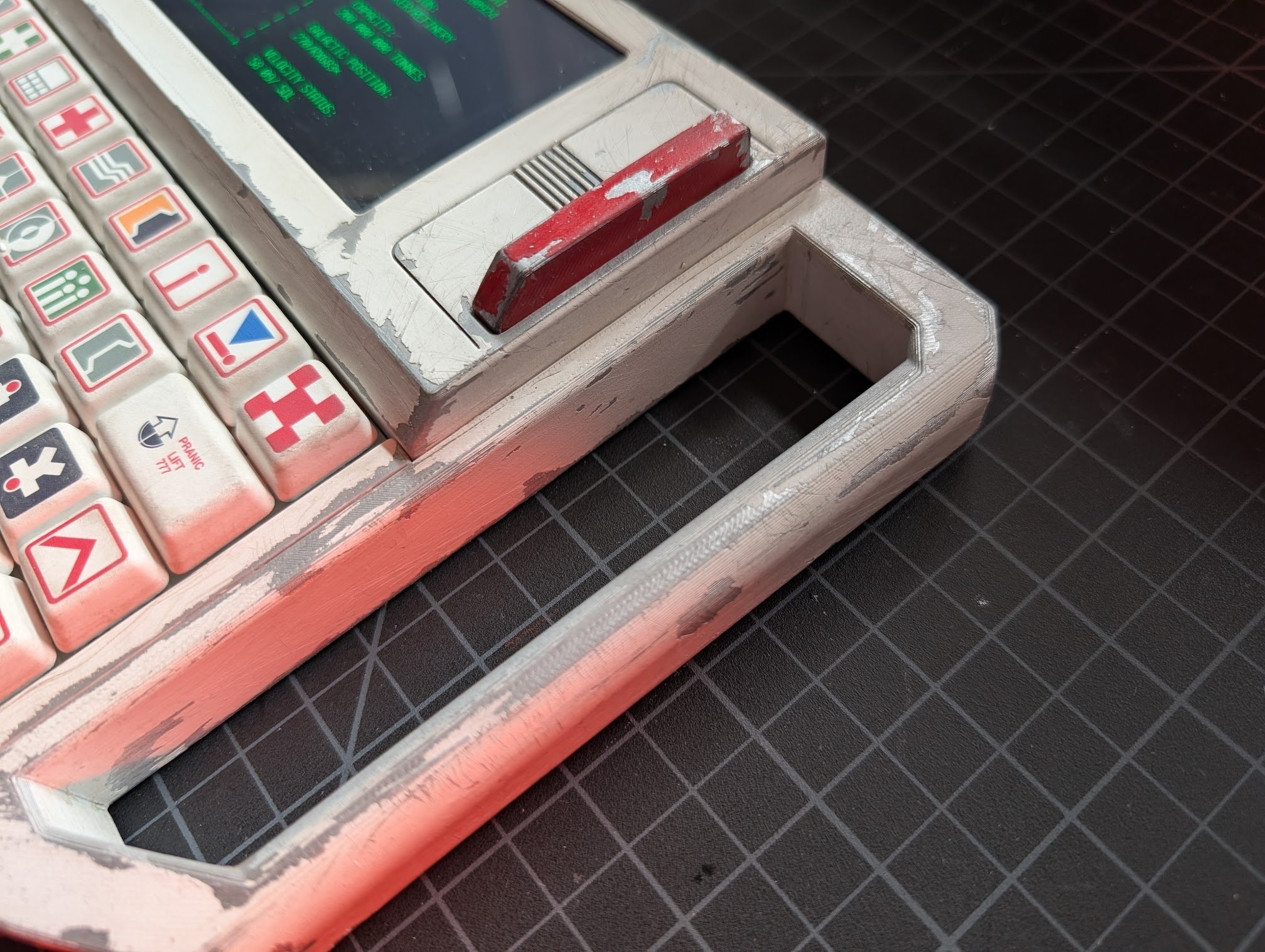
From a supply chain perspective, this build demonstrates the Raspberry Pi ecosystem's maturity. All primary components—including the $15 Raspberry Pi Zero 2W, $75 display, and $20 power controller—remain readily available despite broader semiconductor shortages, highlighting the stability of maker-focused hardware channels. Merrick's comprehensive build documentation enables replication, potentially driving increased demand for these specific components within the maker community. The project exemplifies how specialized aesthetics can be achieved through standardized hardware when combined with accessible manufacturing techniques like 3D printing.
Complete build instructions and parts lists are available through Merrick's project documentation.
Comments
Please log in or register to join the discussion