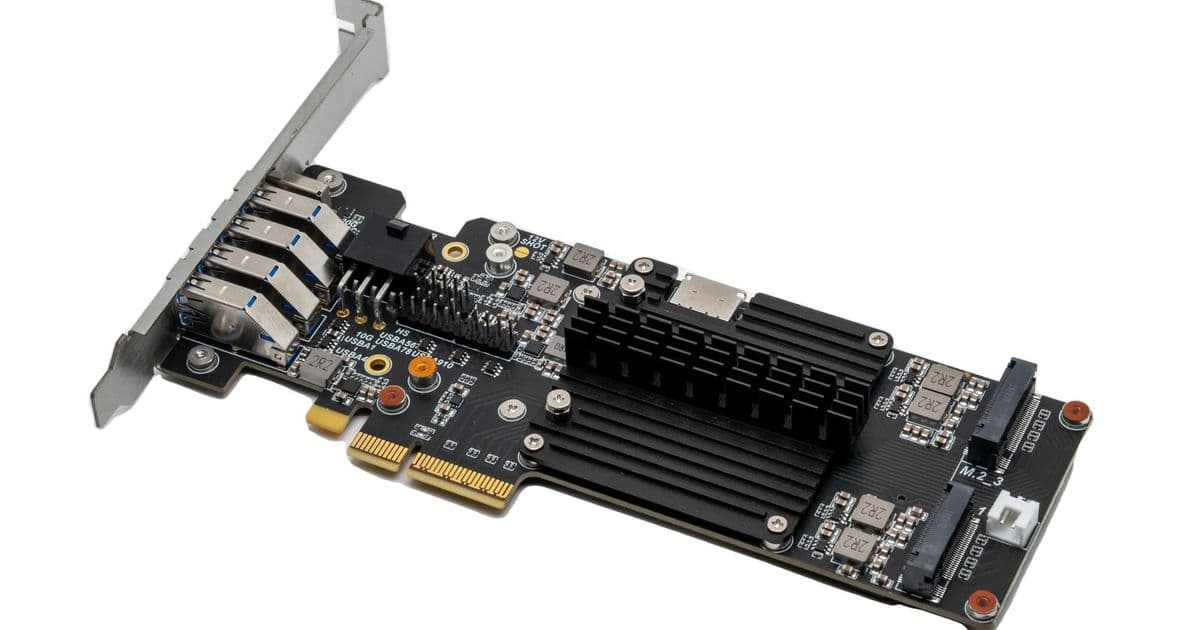
Retail availability of AMD Promontory 21 expansion cards enables significant I/O expansion for any PC with a PCIe slot, offering four M.2 slots and 11 USB ports starting at $199.
The PC industry has seen an interesting development with the retail availability of AMD B650 expansion cards, effectively democratizing high-end I/O capabilities for any system with a PCIe slot. These cards, led by WisdPi's PROM21 All In Expansion Card at $199, represent a strategic shift in how motherboard manufacturers and component suppliers approach system connectivity.
Technical Architecture and Capabilities
At the core of these expansion cards is the AMD Promontory 21 chipset, which functions essentially as a PCI Express I/O controller. Modern CPUs are built as System-on-Chip (SoC) designs, integrating essential functions to run the machine. The motherboard chipset has evolved into what amounts to a PCIe-attached I/O hub, exposing additional connectivity options.
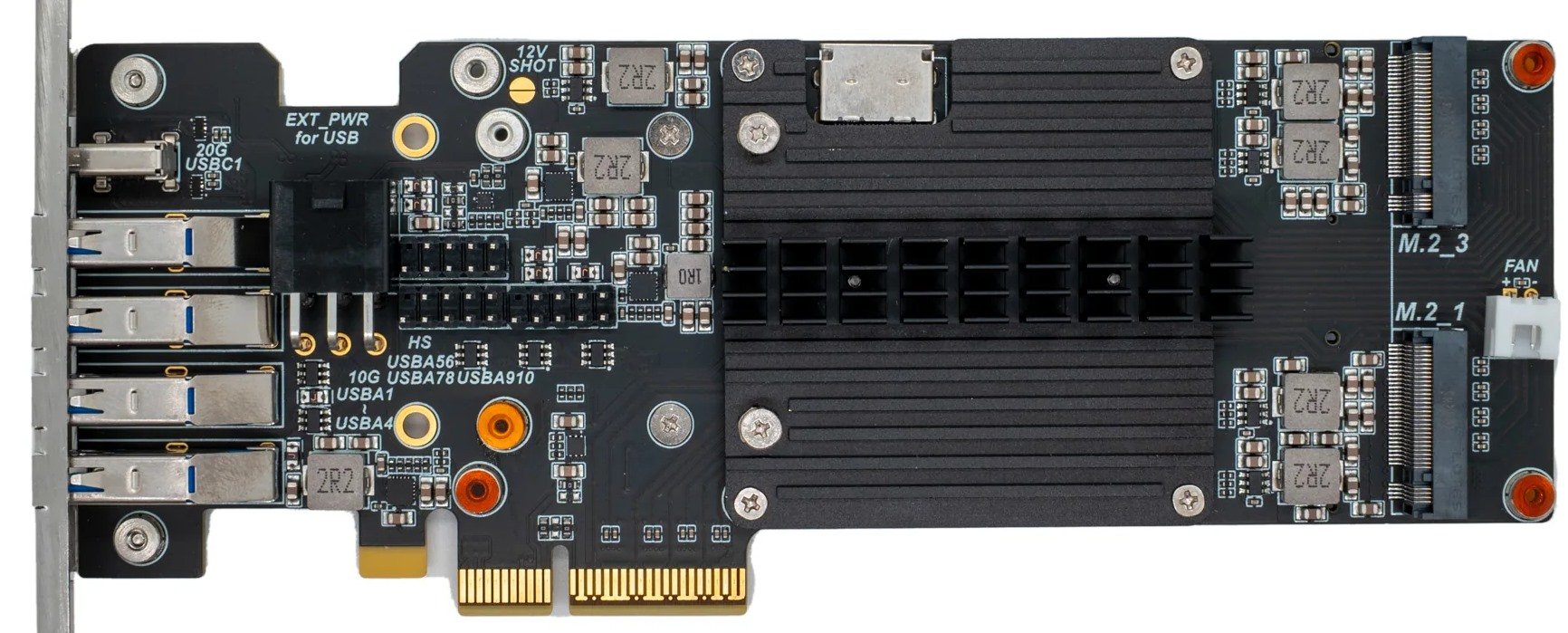
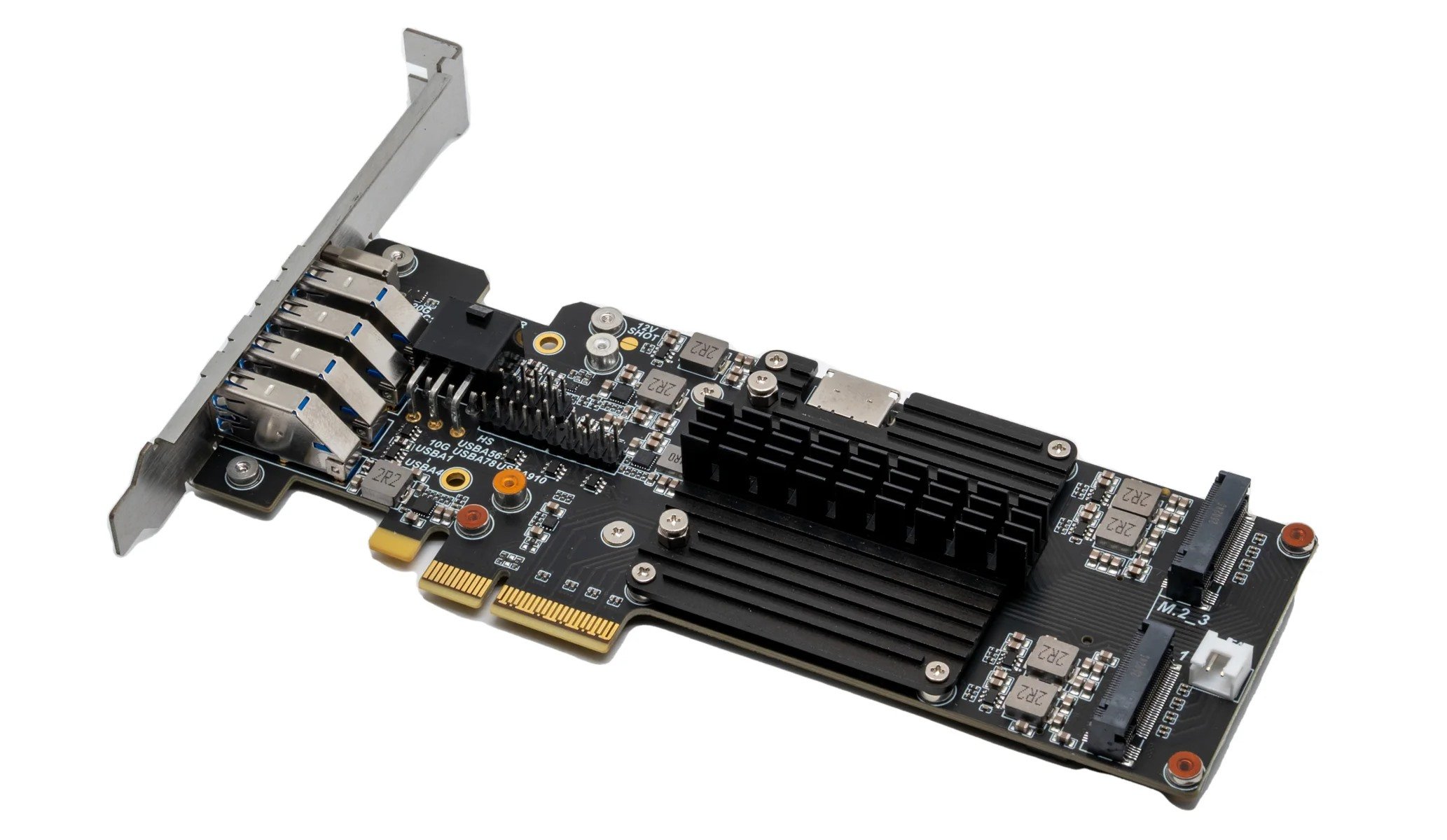
The WisdPi card specifically offers a comprehensive connectivity suite:
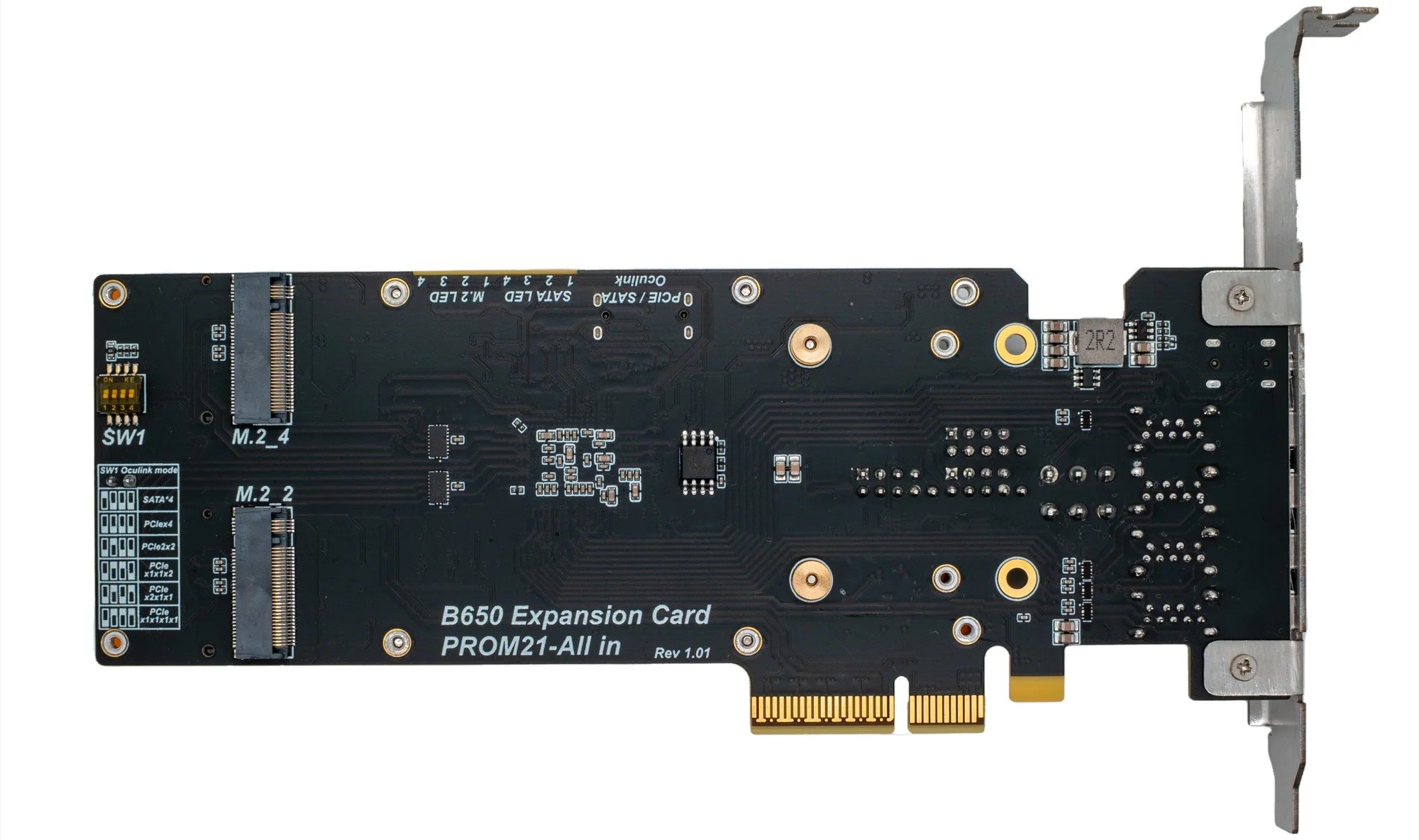
- Four M.2 slots (two on the front, two on the back)
- Five USB 10 Gbps ports
- Six USB 2.0 ports
- One OCuLink port supporting PCIe 4.0 or four SATA ports
This connectivity surpasses what many mainstream motherboards offer, particularly in the entry-to-midrange segments. The card operates over a single PCI Express 4.0 x4 link to the CPU, which is the same connection method used in high-end X670 motherboards. Interestingly, AMD's X670 chipset is created by simply wiring two Promontory 21 chips in series, demonstrating the scalability of this approach.
Market Context and Supply Chain Implications
The emergence of these expansion cards reflects several important trends in the PC component market:
Modular System Design: Rather than requiring users to purchase entirely new motherboards for enhanced I/O, these cards provide a more cost-effective upgrade path. This modular approach aligns with the broader industry trend of component standardization and flexibility.
Storage Market Evolution: With M.2 SSDs now dominating the storage market and traditional 2.5" drives becoming increasingly scarce, these cards address the growing need for M.2 connectivity, especially on older motherboards that typically offered only one M.2 slot (if any).
Cross-Platform Compatibility: The cards' compatibility with any PCI Express device—from AMD, Intel, Arm, or other architectures—demonstrates the industry's move toward greater hardware standardization and interoperability.
Supply Chain Optimization: For manufacturers like WisdPi (primarily a Raspberry Pi shop) and Minisforum, these expansion cards represent an opportunity to leverage existing chipset inventory and manufacturing capabilities to serve new market segments.
Competitive Landscape and Future Outlook
The market currently features at least two major players:
WisdPi PROM21 All In Expansion Card: Priced at $199, offers the most comprehensive connectivity package including SATA functionality through the OCuLink port. The card is available now but presents cooling challenges for the rear-mounted M.2 slots.
Minisforum PCIE TO 4 Card: Expected in Q3 2024, offers similar M.2 expansion but with fewer USB ports and no SATA functionality. However, it includes dedicated cooling with a blower fan and shroud, addressing one of the WisdPi card's limitations.
These expansion cards represent a significant development for system builders and upgraders. For users with entry-level motherboards or older systems, one of these cards could provide a substantial upgrade path without requiring a complete system overhaul. The $199 price point positions these cards as a premium but accessible upgrade option.
The emergence of these products suggests we may see more chipset-based expansion cards in the future, potentially extending to Intel's platform controller hubs or other specialized I/O controllers. This trend could fundamentally change how users approach system upgrades, shifting from complete motherboard replacements to targeted I/O expansion.
For system integrators and OEMs, these cards offer interesting possibilities for creating more modular product designs. Rather than locking specific features into motherboard tiers, manufacturers could offer base systems with standardized I/O and allow customers to customize their connectivity through expansion cards.
As the PC market continues to evolve, these expansion cards may become increasingly relevant, especially as the distinction between consumer and enterprise blurs and users demand more flexible system configurations. The success of these products will likely depend on their price-to-performance ratio, cooling solutions, and the extent to which motherboard manufacturers respond with competing solutions or integrated alternatives.
Comments
Please log in or register to join the discussion