
AMD is showing continued Linux support for their upcoming Halo Box mini PC with a new driver for the RGB LED light bar, indicating platform maturity as the AI development device approaches launch.
AMD continues to expand Linux support for their upcoming Halo Box mini PC with the recent introduction of a new driver specifically for the system's RGB LED light bar. This development signals that AMD is paying attention to the finer details of their Strix Halo-based AI development platform as it prepares to compete with NVIDIA's offerings in the AI hardware space.
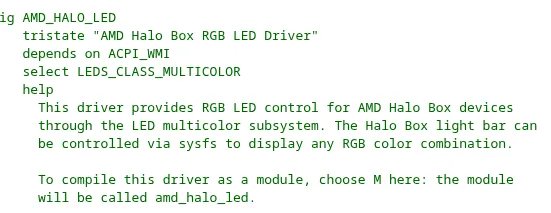
The new driver, appropriately named "amd_halo_led," was recently posted to the platform-driver-x86 mailing list for review. This x86 platform driver is designed to control the RGB LED light bar on the AMD Ryzen AI Max+ 395 powered system, registering with the Linux kernel's LED multi-color subsystem. The driver implementation allows users to set RGB values via sysfs interfaces, specifically through paths like /sys/class/leds/amd_halo:rgb:light_bar/multi_intensity and /sys/class/leds/amd_halo:rgb:light_bar/brightness.

While some might dismiss an RGB LED driver as trivial, its presence actually indicates significant platform maturity. The fact that AMD is already developing Linux drivers for non-essential components suggests that the core functionality of the Halo Box is well underway and they're now focusing on the user experience details. This approach contrasts with some manufacturers who prioritize basic functionality and overlook aesthetic elements in their Linux support.
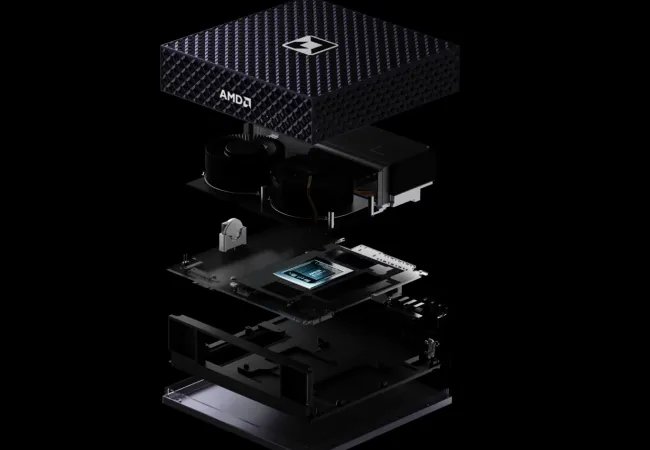
The "amd_halo_led" driver reveals several interesting technical aspects of the Halo Box's lighting system:
Multi-channel RGB Support: The driver notes that the Halo Box's RGB light bar supports three separate RGB channels that can be controlled independently. This granular control allows for more complex lighting patterns and customization options beyond simple single-color illumination.
Sysfs Integration: The driver integrates with the standard Linux sysfs interface for LED control, meaning users can expect familiar tools like
ledctlor custom scripts to work with the Halo Box's lighting system.Kernel Configuration: The driver introduces a new Kconfig option called "AMD_HALO_LED" which could potentially be included in the Linux v7.2 kernel, suggesting we might see this support in an upcoming kernel release.
The Halo Box represents AMD's entry into the compact AI development workstation space, aimed directly at competing with NVIDIA's DGX Spark and Dell's GB10-based products. Built around AMD's Strix Halo SoC (which powers the Ryzen AI Max+ 395), this mini PC packs significant AI capabilities into a small form factor.
AMD first showcased the Halo Box at CES 2026, where CEO Lisa Su presented it as an exciting AI development platform. The device joins a growing ecosystem of Strix Halo-based systems, including the larger Framework Desktop, which has already demonstrated strong Linux compatibility.
From a performance perspective, the Strix Halo SoC has shown impressive capabilities in previous reviews. The HP ZBook Ultra G1a and Framework Desktop equipped with Ryzen AI Max+ processors have delivered excellent Linux performance, particularly for AI workloads. This suggests the Halo Box should follow suit, providing a compelling alternative to NVIDIA-based solutions for Linux-focused AI developers.
For the Linux community, proper RGB LED support might seem like a minor feature, but it actually represents several important aspects of hardware support:
Complete Hardware Enablement: Full driver support for all components indicates a manufacturer's commitment to the Linux platform. When RGB lighting works out of the box, it typically means other subsystems are well-supported too.
Customization Potential: Linux users love to customize their systems, and RGB lighting is a popular avenue for personalization. The ability to control the Halo Box's light bar through sysfs opens up possibilities for custom scripts that could sync lighting with system status, temperature, or workload intensity.
Developer Experience: For an AI development platform, visual feedback can be valuable. The RGB light bar could potentially be programmed to indicate system status, AI model training progress, or alert the user to specific conditions.
AMD has shown increasing commitment to Linux support in recent years, particularly with their Ryzen AI processors. The Strix Halo SoC has demonstrated strong Linux compatibility, with most features working well out of the box. Previous reviews of the HP ZBook Ultra G1a and Framework Desktop have highlighted excellent Linux performance, particularly for AI workloads.
The Framework Desktop, which also uses the Strix Halo SoC, has been praised for its Linux compatibility, with most features working without configuration. This track record suggests that the Halo Box should continue AMD's trend of strong Linux support.
With AMD's Advancing AI 2026 event scheduled for July 23 in San Francisco, many industry observers speculate that this could be when the Halo Box is officially launched or at least when more details will be revealed. The timing of the Linux kernel patches surfacing now suggests that the "AMD_HALO_LED" driver could potentially be introduced in the Linux v7.2 kernel, which would align with a summer launch timeframe.
For Linux users interested in AI development, the Halo Box appears to be shaping up as a compelling alternative to NVIDIA-based solutions, with the added benefit of proper RGB lighting support for those who enjoy system customization. As we approach AMD's Advancing AI 2026 event in July, we can expect to learn more about this exciting new mini PC and its place in the AI development landscape.
The driver patches can be found on the platform-driver-x86 mailing list for those interested in reviewing the implementation details. For more information about AMD's AI initiatives, check out their Advancing AI 2026 event page.
Comments
Please log in or register to join the discussion