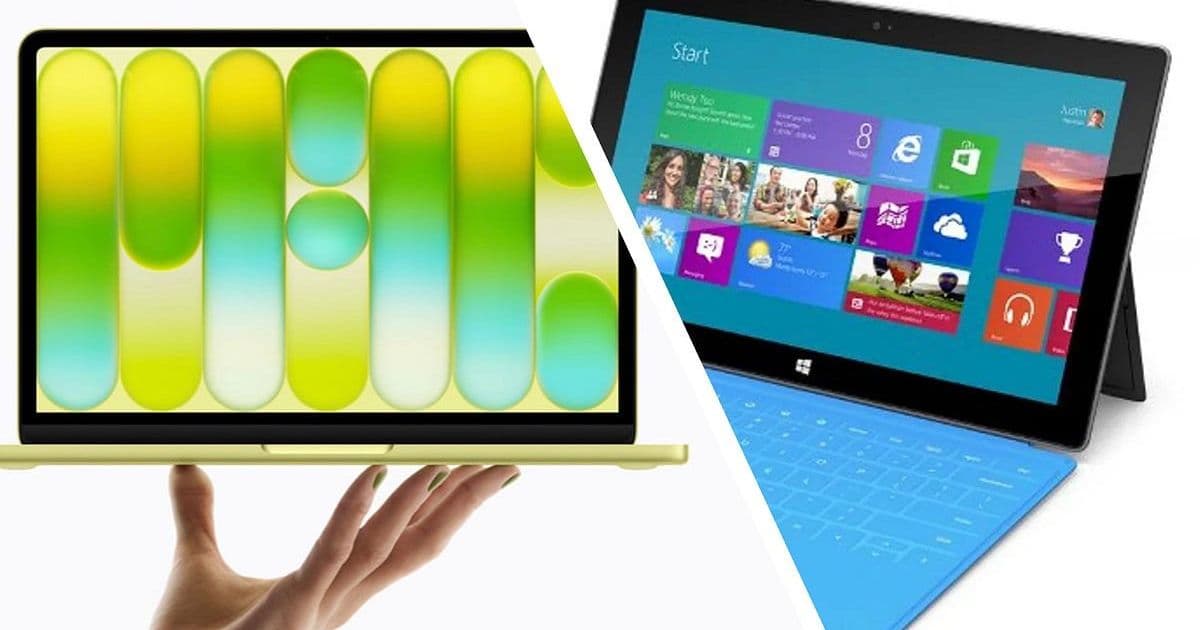
Steven Sinofsky reflects on how Apple's new MacBook Neo validates the Windows on ARM vision from 2012, while highlighting Microsoft's ongoing struggle with x86 compatibility constraints.
Steven Sinofsky, former Microsoft Windows chief, has published a fascinating reflection on Apple's new MacBook Neo that validates a vision he championed over a decade ago with Windows 8. In his Hardcore Software blog post, Sinofsky draws parallels between Apple's latest ARM-based laptop and the Windows on ARM initiative that began in 2012, while noting how Microsoft's commitment to x86 compatibility continues to hold back its ARM efforts.
The MacBook Neo represents Apple's latest evolution in its transition away from Intel processors, featuring custom silicon that delivers both performance and efficiency. For Sinofsky, who led the development of Windows 8 and the initial push for Windows on ARM, Apple's success validates the core vision of ARM-based computing that Microsoft attempted to pioneer.
The Windows on ARM Vision That Started in 2012
When Windows 8 launched in 2012, it included support for ARM processors through Windows RT, a version of the operating system that ran on devices like the Microsoft Surface RT. The vision was ambitious: create a new category of thin, light, always-connected devices that could deliver all-day battery life while maintaining compatibility with Windows applications.
However, Windows RT faced immediate challenges. The operating system couldn't run traditional x86 applications without modification, and the limited app ecosystem made it difficult for consumers to justify the switch. Microsoft's commitment to maintaining compatibility with the vast library of existing Windows software ultimately constrained what was possible with ARM-based devices.
Apple's Different Approach
Apple took a different path with its ARM transition. Rather than trying to maintain perfect compatibility with existing Intel-based software, Apple embraced the shift to ARM architecture and focused on building a robust ecosystem of native applications. The company's Rosetta 2 translation layer helps run older Intel applications, but the emphasis is clearly on native ARM development.
This approach has paid off handsomely. Apple's M-series chips have consistently outperformed Intel processors in both speed and efficiency, and the MacBook Neo represents the latest achievement in this transition. The device offers laptop-class performance with smartphone-like battery life, exactly the vision that Windows on ARM attempted to achieve.
The Compatibility Conundrum
Sinofsky's key insight is that Microsoft's ongoing commitment to x86 compatibility continues to limit what's possible with Windows on ARM devices. While Microsoft has made progress with its ARM-based Surface devices and Qualcomm's Snapdragon processors, the need to support legacy applications creates compromises in performance, efficiency, and user experience.
Apple, by contrast, could make clean breaks with its transition. The company controlled both hardware and software, allowing it to optimize the entire stack for ARM architecture. This vertical integration, combined with a willingness to push developers toward native ARM applications, has enabled Apple to deliver a superior ARM experience.
Lessons from the ARM Transition
The MacBook Neo's success validates several key lessons from the Windows on ARM experiment:
Ecosystem matters more than compatibility: While Microsoft focused on maintaining compatibility with existing Windows software, Apple invested in building a robust ARM-native ecosystem. The result is that Apple's ARM devices offer a better experience for most users, even if they occasionally need to use translation for older applications.
Hardware-software integration is crucial: Apple's control over both the M-series chips and macOS allowed for deep optimization that wouldn't be possible with off-the-shelf ARM processors. Microsoft's Windows on ARM efforts were constrained by the need to support a wide variety of hardware configurations.
Performance expectations have changed: When Windows 8 launched, users expected desktop-class performance from their laptops. Today, many users are satisfied with the performance that ARM processors provide, especially when balanced against dramatically improved battery life and thermal characteristics.
The Future of ARM Computing
Looking ahead, Sinofsky suggests that Microsoft faces an ongoing challenge in balancing its commitment to x86 compatibility with the potential benefits of a more ARM-native approach. The company has made progress with Windows on ARM, particularly with the release of Copilot+ PCs featuring Qualcomm's Snapdragon X Elite processors, but the fundamental tension remains.
For Apple, the MacBook Neo represents the maturation of a vision that began with the iPhone and iPad. The company has successfully scaled ARM architecture from smartphones to laptops to desktops, creating a unified computing platform that offers compelling advantages over traditional x86 systems.
What This Means for the Industry
The success of Apple's ARM transition and the continued evolution of Windows on ARM suggest that ARM architecture is likely to become increasingly dominant in personal computing. However, the paths taken by Apple and Microsoft highlight different philosophies about how to manage technological transitions.
Apple's approach demonstrates that bold, decisive moves toward new architectures can pay off handsomely when executed well. Microsoft's experience shows the challenges of trying to maintain compatibility while pursuing innovation, particularly in a market where users have come to expect their existing software to continue working.
As the industry continues to evolve, the contrast between Apple's clean ARM transition and Microsoft's more cautious approach offers valuable lessons for other companies facing similar technological shifts. The MacBook Neo stands as validation of a vision that began over a decade ago, while also highlighting the ongoing challenges that Microsoft faces in realizing its own ARM ambitions.
The story of Windows on ARM and the MacBook Neo is ultimately about the trade-offs between innovation and compatibility, between bold vision and practical constraints. Apple chose the bold path and is reaping the rewards, while Microsoft continues to navigate the complex challenge of moving forward while maintaining support for the past.
Comments
Please log in or register to join the discussion