
A technical exploration of moving beyond pixel-based ASCII rendering by quantifying character shape through multi-dimensional vectors, enabling crisp edges and intelligent character selection that preserves contours rather than blurring them into low-resolution approximations.
The fundamental mistake in most ASCII rendering is treating characters as pixels. When we sample an image and map lightness values directly to character density, we're essentially performing nearest-neighbor downsampling—a technique that produces jaggies and blurry edges. The characters become mere placeholders for grayscale values, ignoring their inherent shapes. This is why many ASCII animations look smooth in motion but reveal their pixelated nature when examined closely.
Consider a rotating cube rendered with traditional methods. The edges follow the cube's contours poorly because each character is chosen based on a single lightness sample. The result is jagged, aliased boundaries that lack the crispness we expect from quality ASCII art. The problem isn't insufficient sampling—adding more samples per cell and averaging them only produces a slightly smoother low-resolution image. The core issue is that we're still rendering a pixelated image, just with characters instead of squares.
The solution requires recognizing that ASCII characters have distinct shapes. The character 'T' is top-heavy, 'L' is bottom-heavy, and 'O' is balanced. These aren't just aesthetic differences—they represent how visual density is distributed within a monospace cell. By quantifying these shapes numerically, we can match characters to image regions based on shape similarity rather than just lightness.
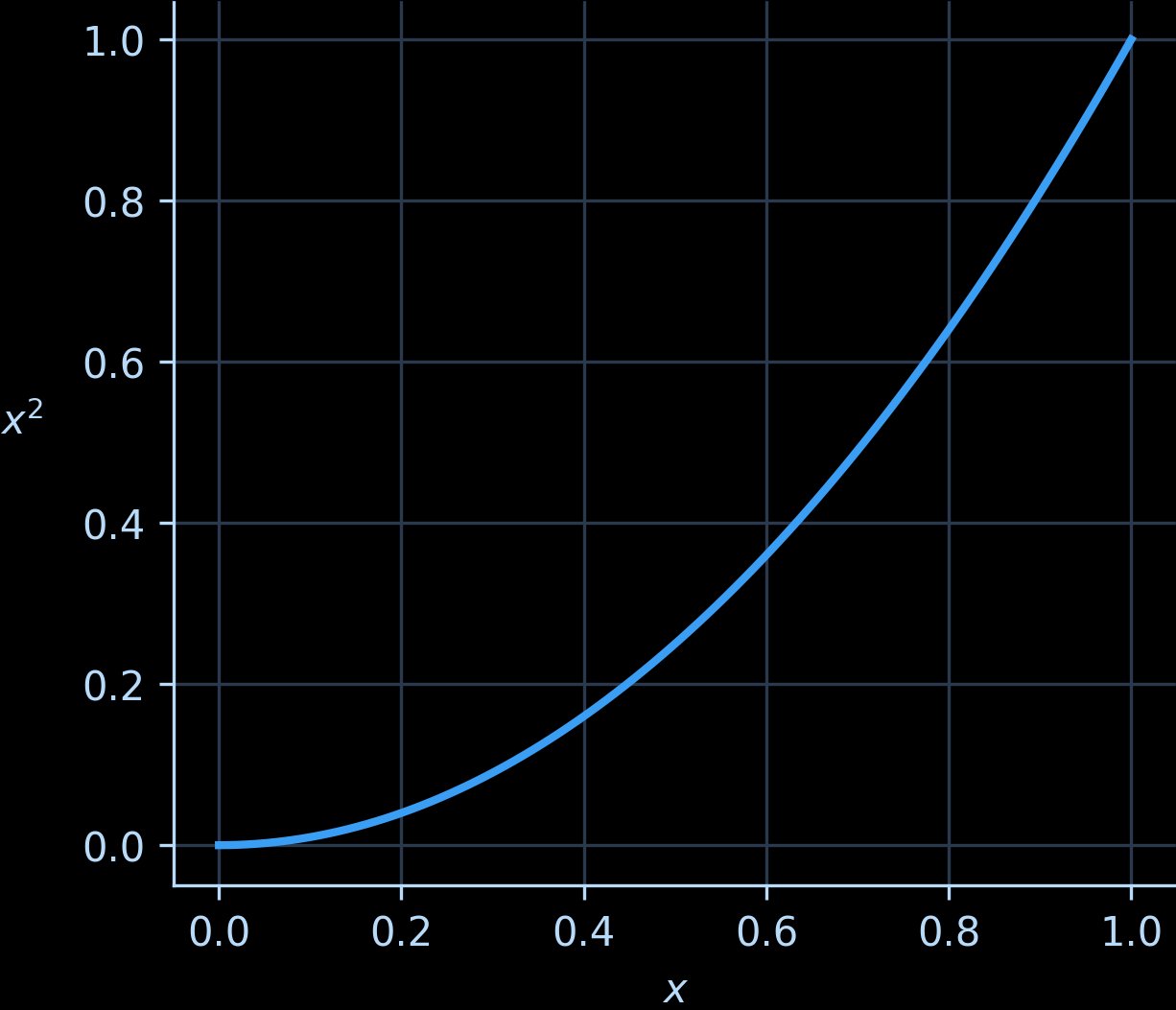
To quantify shape, we define sampling circles within each grid cell. For a basic 2D approach, we place one circle in the upper half and one in the lower half. For each character, we compute the fraction of samples that fall within the character's glyph for each circle. This gives us a 2D shape vector: [upper_overlap, lower_overlap].
For example, 'T' might have a vector like [0.8, 0.2], while 'L' could be [0.2, 0.8]. We precompute these vectors for all 95 printable ASCII characters once, storing them for lookup. When rendering an image, we calculate a corresponding sampling vector for each cell by sampling the source image within those same circles.
The character selection becomes a nearest-neighbor search in this 2D vector space. We find the ASCII character whose shape vector is closest to the cell's sampling vector. This approach produces dramatically better results—characters follow contours rather than blurring them.
However, 2D vectors have limitations. They can't distinguish between left-right differences (like 'p' vs 'q') or capture complex shapes like diagonal strokes. We need more dimensions.
Expanding to 6 dimensions provides much better shape coverage. We arrange sampling circles in a grid pattern: three columns and two rows. This captures top, middle, and bottom regions across left and right sides. The 6D shape vector for 'L' might look like [0.9, 0.1, 0.8, 0.1, 0.7, 0.1], clearly showing the L-shaped density pattern.
With 6D vectors, we can represent complex character shapes more accurately. The character selection algorithm remains the same—Euclidean distance in 6D space—but the results are significantly improved. Edges become sharp, and contours are followed precisely.
Yet even with 6D shape vectors, boundaries between different colored regions can appear soft. When two surfaces meet at an edge, the sampling vectors from cells along that boundary might produce characters that don't clearly distinguish the transition. This is where contrast enhancement becomes valuable.
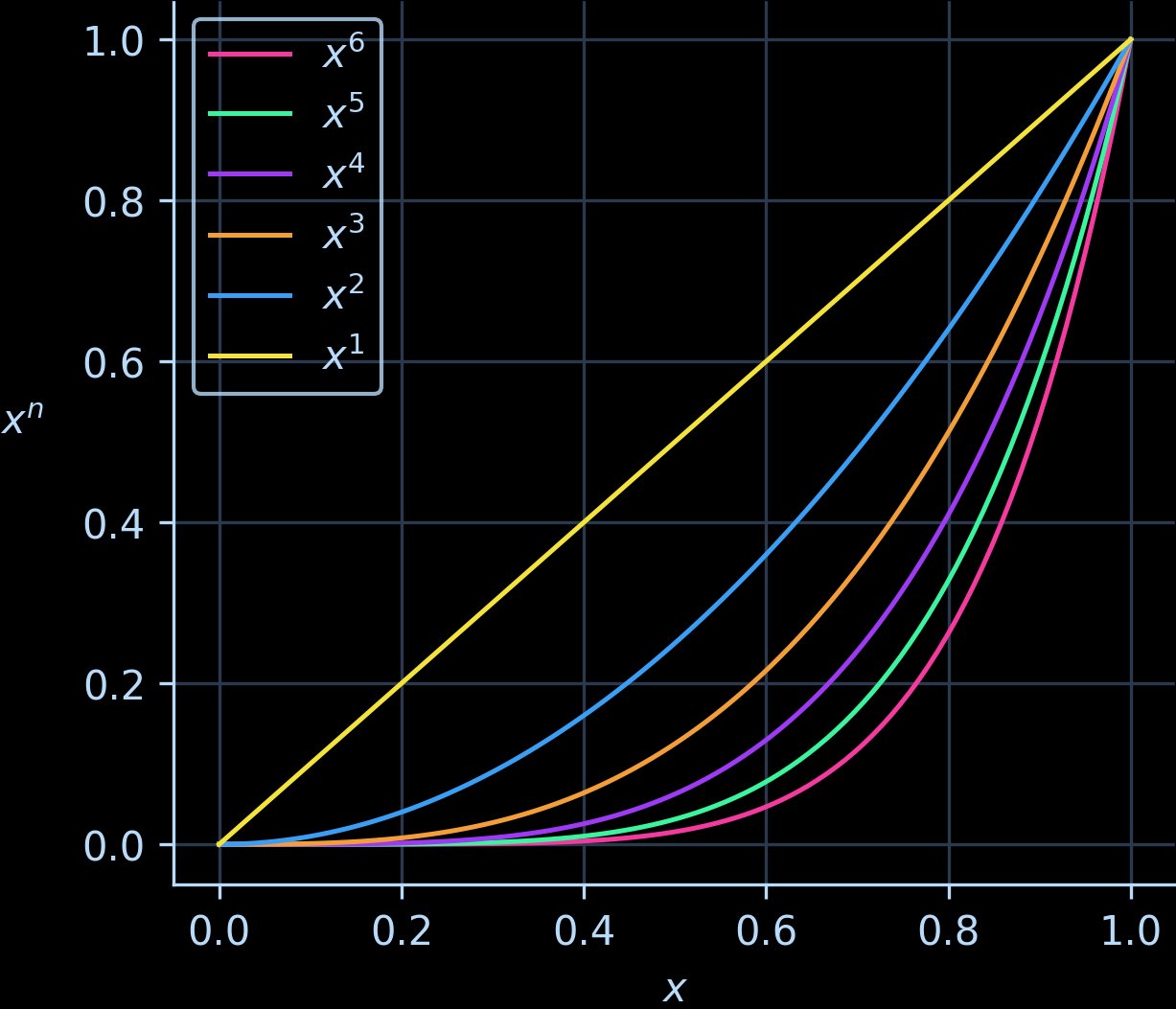
The first technique is global contrast enhancement. For each sampling vector component, we normalize it relative to the maximum component in that vector, apply an exponent to increase contrast, then denormalize. This "crunches" darker values while preserving lighter ones, exaggerating differences within the vector.
For example, a vector like [0.65, 0.65, 0.31, 0.31, 0.22, 0.22] might become [0.65, 0.65, 0.09, 0.09, 0.03, 0.03] with a high exponent. This makes the character selection more sensitive to the lighter components, producing characters that better emphasize the boundary.
However, global contrast enhancement can cause staircasing artifacts at edges. As we move horizontally across a boundary, the sampling vector components change gradually, but the contrast enhancement creates sudden jumps in character selection, producing a staircase pattern.
The solution is directional contrast enhancement. We add external sampling circles that reach into neighboring cells. For each internal sampling circle, we consider the maximum value from affected external circles when normalizing. This allows contrast enhancement to propagate across cell boundaries, smoothing the transition.
The implementation requires careful mapping of which external circles affect which internal ones. With 10 external circles arranged around each cell, we can spread contrast information in all directions. The result is smooth, sharp boundaries without staircasing.
Combining 6D shape vectors with both global and directional contrast enhancement produces ASCII renderings that rival the quality of hand-drawn ASCII art. The characters follow contours precisely, edges are sharp, and gradients remain smooth.
Performance considerations become critical when rendering animated scenes. A 60x40 grid contains 2,400 cells. For each cell, we need to compute 16 sampling values (6 internal + 10 external) and perform a nearest-neighbor search in 6D space. With 95 characters, that's 228,000 distance calculations per frame.
Brute-force search is too slow. A k-d tree data structure provides efficient nearest-neighbor lookups in multi-dimensional space, offering roughly 10x speedup. For further optimization, we can cache results by quantizing sampling vectors to 5-bit values, reducing the 6D vector space to 2^30 possible keys. While this introduces minor quality loss, the performance gain is substantial.
Even with these optimizations, sampling collection remains expensive. Moving the sampling process to the GPU via WebGL shaders provides massive parallelism. Each shader pass can compute sampling vectors for thousands of cells simultaneously. The pipeline involves multiple render passes: collecting internal and external samples, computing maximum values, applying directional enhancement, then global enhancement.
The GPU approach transforms the renderer from single-digit FPS on mobile devices to smooth 60 FPS performance, making real-time ASCII rendering practical for interactive applications.
This shape-based approach to ASCII rendering demonstrates a broader principle: when converting between representations, preserving structural information yields better results than simple value mapping. The same concept applies to other domains—font rendering, data visualization, or even machine learning embeddings. By quantifying the essential characteristics of our elements and using multi-dimensional similarity metrics, we can create more intelligent and visually coherent transformations.
The techniques described here represent just one point in a vast solution space. Different sampling layouts, alternative distance metrics, or learned character embeddings could produce different aesthetic qualities. The key insight remains: characters are shapes, not pixels, and treating them as such unlocks the full potential of ASCII art.
Comments
Please log in or register to join the discussion