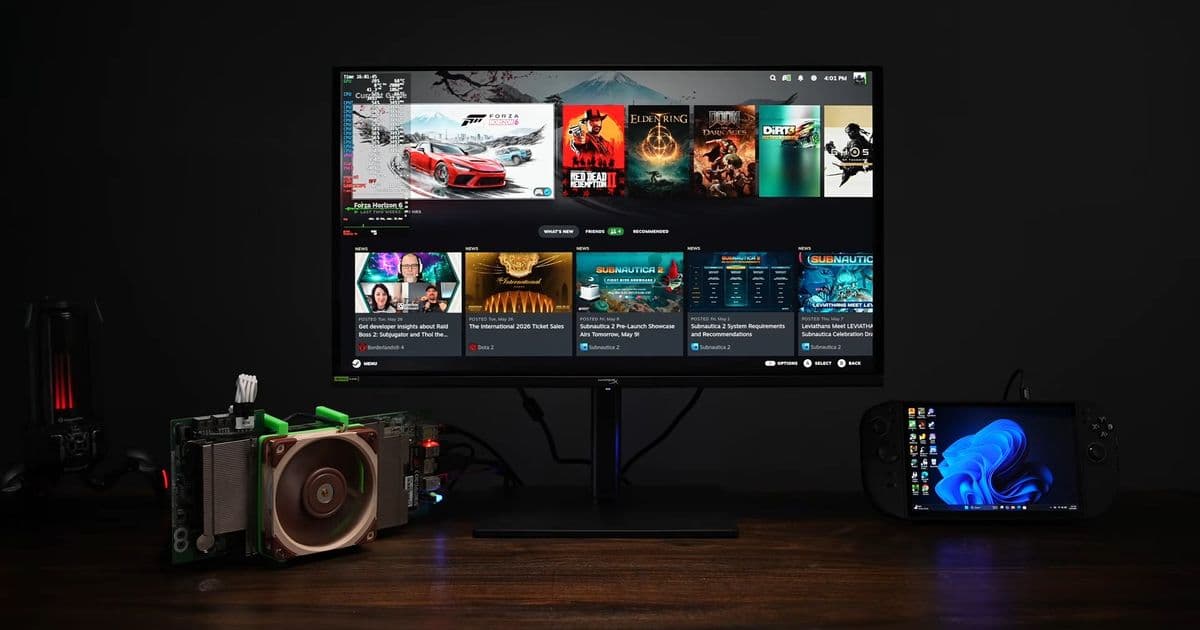
A driver‑level register patch released on GitHub enables the ASRock BC‑250 mining board to activate all 40 GPU compute units, delivering up to 28 % performance gains in modern games and positioning the board as a budget‑friendly gaming solution amid ongoing memory shortages.
ASRock BC‑250 Steam Machine Hack Unlocks Full 40 Compute Units, Surpassing PS5 GPU Core Count
Announcement
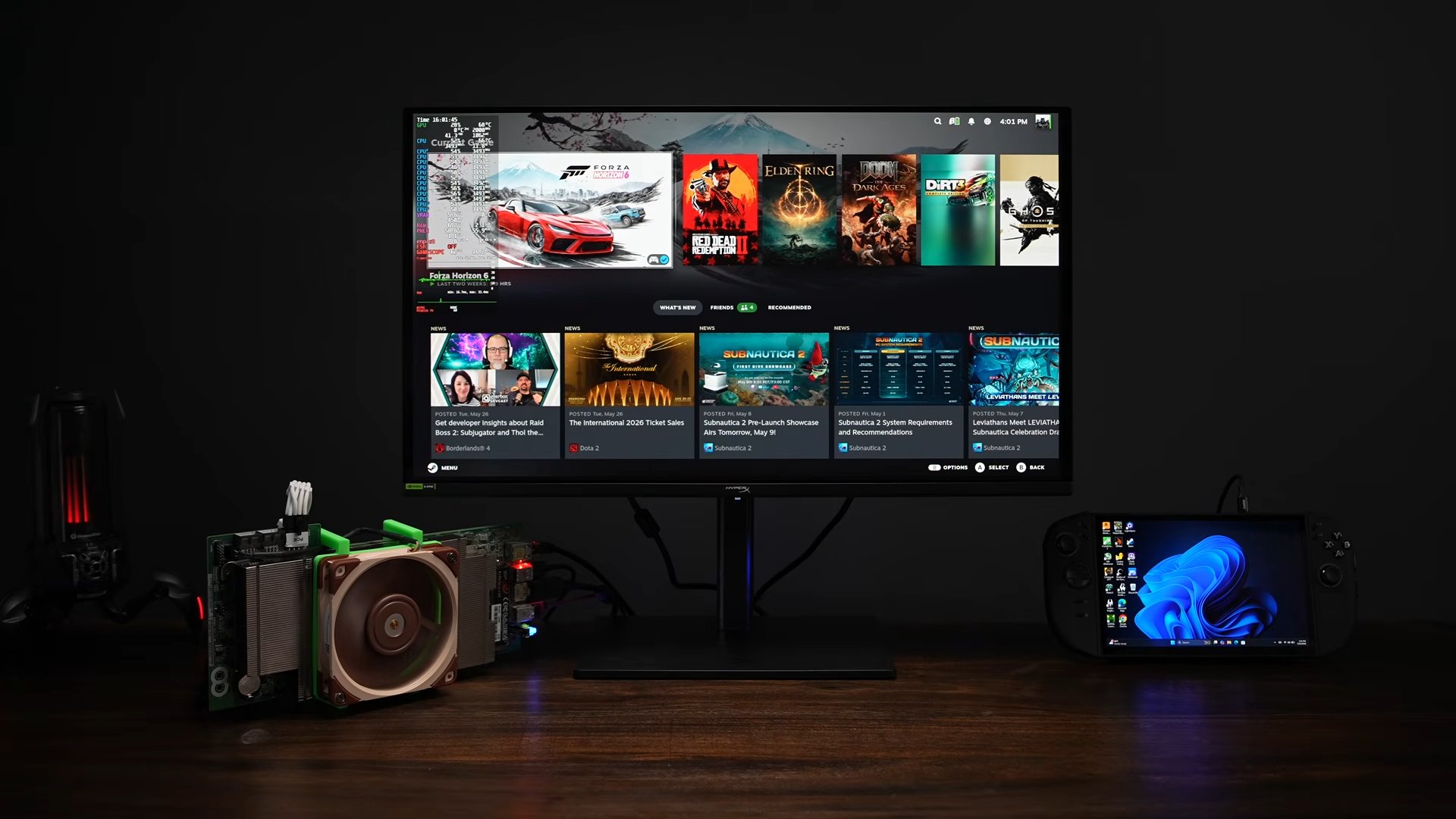
DIY gamers have been repurposing ASRock’s BC‑250 mining boards as low‑cost "Steam Machines" since late 2025. The boards, originally sold for under $150 on secondary markets, ship with a PS5‑derived AMD Zen 3‑based APU and 16 GB of GDDR6 memory. On 27 May 2026, YouTuber ETA Prime highlighted a new GitHub patch that unlocks the APU’s full 40 graphics compute units (CUs). The patch, authored by user duggasco, writes to two hardware registers during driver initialization, effectively removing the factory‑imposed limit of 24 active CUs.
Technical specifications and performance impact
| Specification | Stock BC‑250 | Unlocked 40 CU configuration |
|---|---|---|
| GPU architecture | AMD RDNA 2 (PS5 die) | Same silicon, all CUs enabled |
| Active compute units | 24 (B‑grade die) | 40 (full die) |
| Core clock (default) | 1 500 MHz @ 900 mV | 1 500 MHz @ 900 mV (recommended) |
| Power draw (default) | ~85 W | ~125 W |
| Memory | 16 GB GDDR6 @ 14 Gbps | Unchanged |
| TDP limit (BIOS) | 100 W | 125 W (via driver patch) |
The patch adds a kernel‑module parameter that writes to the GPU_CU_ENABLE and POWER_LIMIT registers. ETA Prime’s benchmarks, run at 1080p with high settings and the GPU clocked to 2 GHz, show the following gains over the stock configuration:
- Cyberpunk 2077: 42 FPS vs 36 FPS → +17 %
- Hitman 3: 69 FPS vs 58 FPS → +19 %
- GTA V: 72 FPS vs 58 FPS → +24 %
- Spider‑Man 2: 46 FPS vs 36 FPS → +28 %
These numbers translate to a roughly 0.5 FPS per extra CU at the tested settings, confirming a linear performance relationship for the workloads examined. The increase in power draw requires users to raise the voltage to 900 mV; pushing the clock to 2 GHz without additional cooling leads to thermal throttling, as the board’s passive heatsink was designed for mining workloads rather than sustained gaming loads.
Silicon lottery considerations
The BC‑250 uses B‑grade PS5 dies, meaning a subset of the 40 CUs may be defective. The patch will activate any functional CU, but if a board contains more than a few bad cores, stability can suffer. The driver includes options to enable 32 or 38 CUs, allowing users to work around partially defective silicon while still gaining a measurable uplift.
Market implications
- Supply‑driven price advantage – With global DRAM shortages driving up system memory costs, the BC‑250’s 16 GB of on‑board GDDR6 offers a self‑contained solution. At $149 per unit on the secondary market, the unlocked board undercuts entry‑level pre‑built gaming PCs by 30‑40 %.
- Extended product life for discontinued silicon – The PS5‑derived APU was officially discontinued in 2024. By unlocking dormant hardware, the community effectively extends the useful lifespan of the die, delaying e‑waste and creating a niche resale market.
- Potential impact on low‑end console competition – The unlocked 40‑CU configuration exceeds the base PS5’s 36 CUs, delivering higher raw shader throughput. While the BC‑250 cannot match the console’s optimized software stack, it offers a PC‑style ecosystem at a comparable price point, which could attract price‑sensitive gamers during console supply crunches.
- Risk of warranty voidance and regulatory scrutiny – The patch modifies hardware registers at the driver level, a practice that most manufacturers consider a warranty breach. If ASRock or AMD were to enforce warranty exclusions, the community may face reduced support for future firmware updates.
Outlook
The BC‑250 hack demonstrates how open‑source driver development can unlock latent performance in legacy silicon. As long as the supply chain continues to provide affordable GDDR6‑equipped boards, DIY builders will likely adopt the unlocked configuration for budget gaming rigs, especially in regions where console availability remains constrained. Continued community testing will be needed to map defect rates across production batches and to refine cooling solutions that can sustain the higher 125 W power envelope.
For the full driver patch and build instructions, see the GitHub repository linked in the video description.
Aaron Klotz is a contributing writer covering CPUs, GPUs, and system‑level hardware trends.
Comments
Please log in or register to join the discussion