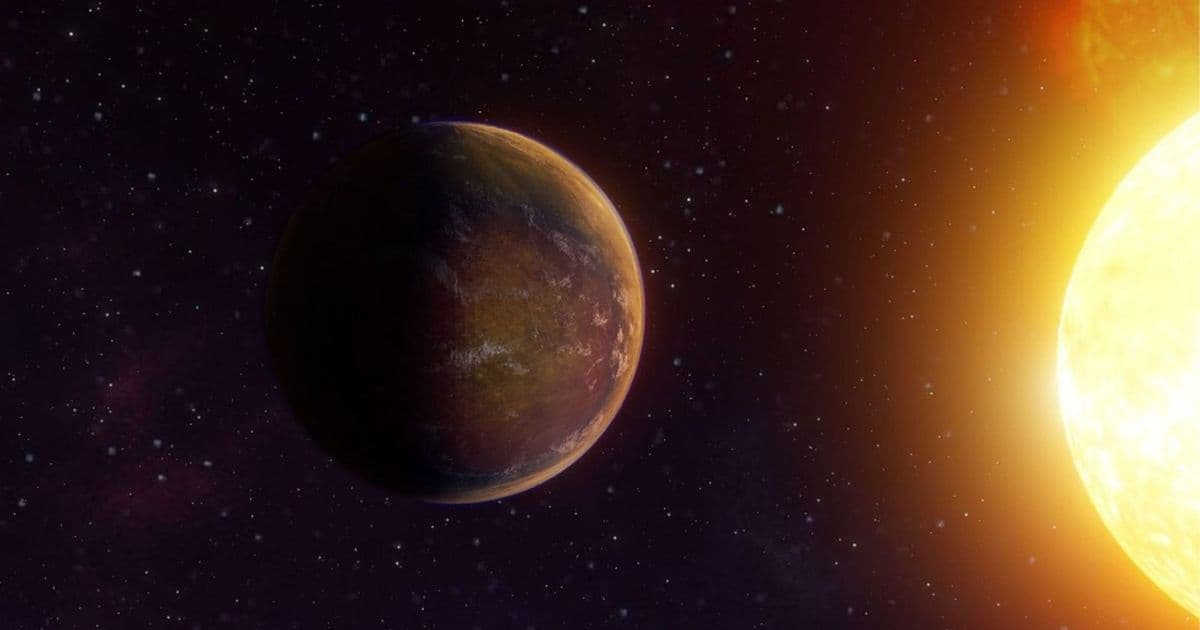
New research reveals massive lava waves on 55 Cancri e, a scorching super-Earth where tidal forces from its host star create violent molten phenomena.
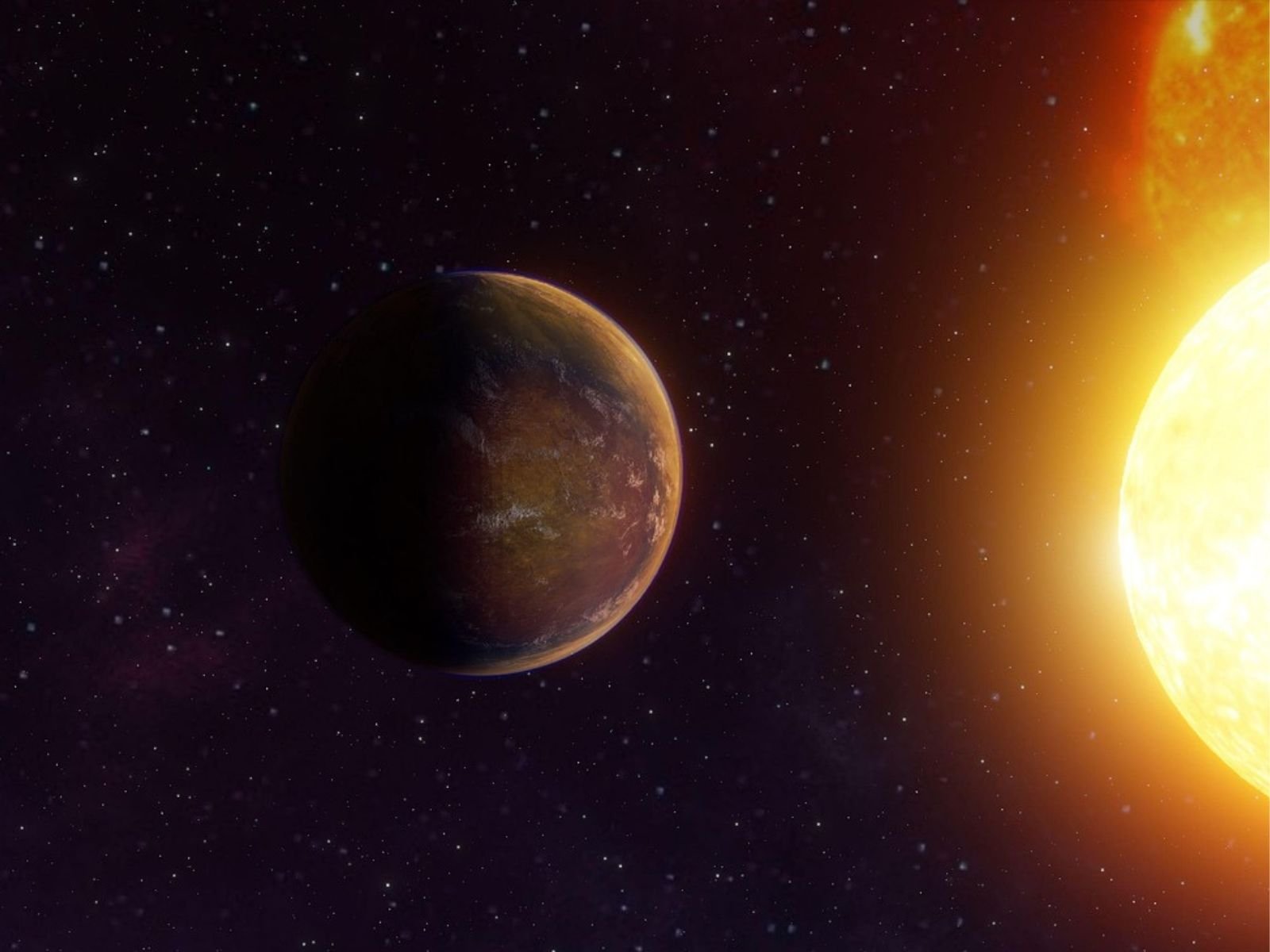
Astronomers have documented evidence of colossal lava tsunamis on 55 Cancri e, a super-Earth exoplanet located 40 light-years away. Published on arXiv by researchers Mohammad Farhat and Eugene Chiang, the study analyzes tidal dynamics on this extreme world orbiting perilously close to its host star.
55 Cancri e completes an orbit around its yellow dwarf star every 18 hours—a proximity that creates surface temperatures exceeding 2,000°C. This heat maintains a global magma ocean, but the new research reveals the star's gravitational pull generates tides powerful enough to create massive waves in this molten sea. Unlike Earth's tides influenced by the moon, 55 Cancri e experiences tidal flexing directly from its star, causing lava waves several meters high that propagate rapidly across the surface.
The team modeled tidal interactions using data from previous observations, including Spitzer Space Telescope thermal measurements showing significant temperature variations across the planet. Their calculations indicate tidal forces deform the rocky surface itself, pushing molten material into rhythmic surges. These waves likely travel at speeds comparable to seismic waves on Earth, creating a continuous churning effect across the entire planet.
Compared to other known lava planets like K2-141b, 55 Cancri e exhibits uniquely energetic tidal behavior due to its combination of size (about twice Earth's radius), density, and orbital configuration. While most exoplanets in such tight orbits become tidally locked, the researchers suggest residual orbital eccentricity might amplify tidal heating, sustaining the violent lava movements.
This discovery provides critical insights into planetary evolution under extreme conditions. The dynamics observed could explain anomalous heat distribution patterns detected in earlier studies and offer parallels for understanding early Earth's magma ocean phase. Future observations with the James Webb Space Telescope could verify these models by mapping thermal emissions in higher resolution.
As astronomers identify over 5,500 confirmed exoplanets, findings like these demonstrate how exotic planetary mechanics challenge Earth-centric assumptions. Continued study of 55 Cancri e's lava tsunamis will refine models of tidal interactions, potentially revealing how such forces influence planetary atmospheres and geological activity across the cosmos.
Comments
Please log in or register to join the discussion