
The latest Asus ROG Zephyrus Duo 2026 brings significant multitasking improvements with its dual identical touchscreens, but sacrifices raw power compared to its predecessor. This detailed comparison examines the performance trade-offs and who this unique dual-screen laptop is actually for.
What's New in the ROG Zephyrus Duo 2026
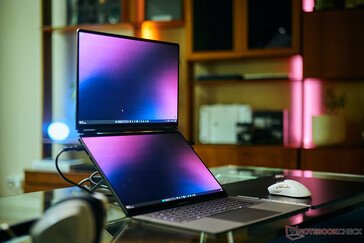
Asus has refined its dual-screen laptop concept with the ROG Zephyrus Duo 2026, representing a significant evolution from previous generations. The most notable improvement is the adoption of two identical touchscreens, similar to the Zenbook Duo and the latest ROG Zephyrus Duo models. This design change, combined with Asus's ScreenXpert software, dramatically enhances multitasking capabilities.
Unlike earlier models that featured a large main screen with a smaller secondary display, the 2026 model uses two screens of equal quality and resolution. This eliminates previous issues with scaling, color accuracy, and content shifting between displays. Users can now seamlessly move applications and windows between screens without experiencing visual inconsistencies or performance degradation.

The new model also introduces multiple operating modes through the ScreenXpert software, making the device incredibly versatile for different use cases. Whether you're gaming, content creation, or running multiple productivity applications simultaneously, the dual-screen setup adapts to your workflow needs.
However, this design evolution comes with significant trade-offs in performance. The cooling system in the 2026 model appears to be less capable than its predecessor, resulting in substantial power limitations that affect raw computing power.
Performance Comparison: 2026 vs. 2023 Models
When examining the specifications and performance metrics between the ROG Zephyrus Duo 2026 and the 2023 model, several critical differences emerge that potential buyers should carefully consider.
Processor Performance
The most striking difference lies in the thermal design and power delivery for the processor. The 2026 model's CPU can only utilize up to 70 watts of power, a significant reduction from the 130 watts available to the previous generation. This substantial power limitation directly impacts multi-core performance, making the 2026 model considerably slower in multi-threaded workloads.
On the other hand, the 2026 model does show improved single-core performance. This boost comes from the more advanced processor generation, but it's important to note that this improvement is largely offset by the multi-core deficit. For applications that heavily rely on multi-threading performance, such as video rendering, 3D modeling, or certain scientific computing tasks, the 2023 model will outperform its successor.
Graphics Performance
The graphics card situation presents a more nuanced picture. The new model features the mobile GeForce RTX 5090 with 24GB of VRAM, representing an upgrade in memory capacity and newer architecture. However, the power delivery to this GPU is similarly constrained, with the RTX 5090 limited to 135 watts in Turbo mode, compared to the 175 watts available to the RTX 4090 in the 2023 model.

In practical graphics benchmarks, the performance difference between the two models is surprisingly small. The newer Blackwell architecture and increased VRAM don't translate to proportional performance gains due to the power limitations. This suggests that Asus may have prioritized thermals and battery life over peak performance in this generation.
The RTX 5090 does offer advantages in terms of features and ray tracing capabilities, but these improvements are somewhat negated by the reduced power envelope. For gaming enthusiasts expecting the full potential of a flagship GPU, this will be a significant consideration.
Overall System Impact
The combination of reduced CPU and GPU power delivery creates a system that, while technically newer, doesn't necessarily represent a step forward in raw performance. The 2026 model trades processing power for improved multitasking capabilities and potentially better battery life.
For users whose primary workloads are single-threaded or GPU-intensive with moderate power requirements, the 2026 model may perform adequately. However, for professionals and power users who consistently push their hardware to its limits, the 2023 model remains the more capable device in terms of raw performance.
Who Should Consider the ROG Zephyrus Duo 2026?
Despite its performance limitations, the ROG Zephyrus Duo 2026 occupies a unique position in the laptop market. Its dual-screen design offers capabilities that no other laptop can match, making it an attractive option for specific user groups.
Ideal Users
The 2026 model is best suited for:
Multitasking Enthusiasts: Professionals who need to constantly reference multiple documents, applications, or data sources simultaneously will benefit immensely from the dual identical screens. The improved ScreenXpert software and identical display quality make this workflow more seamless than ever.
Content Creators: Video editors, graphic designers, and digital artists who can utilize both screens for different aspects of their workflow will find the setup invaluable. For example, editing on one screen while referencing source material on the other.
Developers: Programmers who can use one screen for code and another for documentation, testing, or virtual machines will appreciate the productivity boost.
Financial Traders: Those who need to monitor multiple markets, charts, and data feeds simultaneously will find the dual-screen setup particularly useful.
Who Should Look Elsewhere
The 2026 model may not be the best choice for:
Raw Performance Seekers: Users who prioritize maximum CPU and GPU performance for gaming, rendering, or other intensive tasks may be disappointed by the power limitations compared to the 2023 model.
Budget-Conscious Buyers: At over $5500 for the SKU with 32GB RAM, this is an extremely expensive laptop. For that price, users could purchase more powerful single-screen alternatives.
Portability Priority: While not explicitly mentioned, dual-screen laptops are typically heavier and have shorter battery life than their single-screen counterparts.
The Niche Appeal
What makes the ROG Zephyrus Duo series unique is its position as essentially the only dual-screen gaming laptop with a powerful discrete GPU on the market. For users who absolutely need this combination, there is simply no alternative. This creates a niche product that, despite its compromises, will appeal to a specific segment of the market.
The decision to purchase a 2026 model versus a 2023 model ultimately comes down to prioritizing multitasking capabilities over raw performance. For users who can fully leverage the dual-screen setup and don't require maximum processing power, the 2026 model offers a refined experience. For those who need every bit of performance they can get, the 2023 model remains the more powerful option.
Asus has clearly made a deliberate choice with this generation, focusing on the unique selling proposition of the dual-screen design while accepting performance trade-offs. Whether this approach succeeds will depend on how well the target market values the dual-screen functionality versus raw computing power.
For more detailed specifications and benchmark results, readers can refer to our comprehensive review of the new ROG Zephyrus Duo GX651.
Comments
Please log in or register to join the discussion