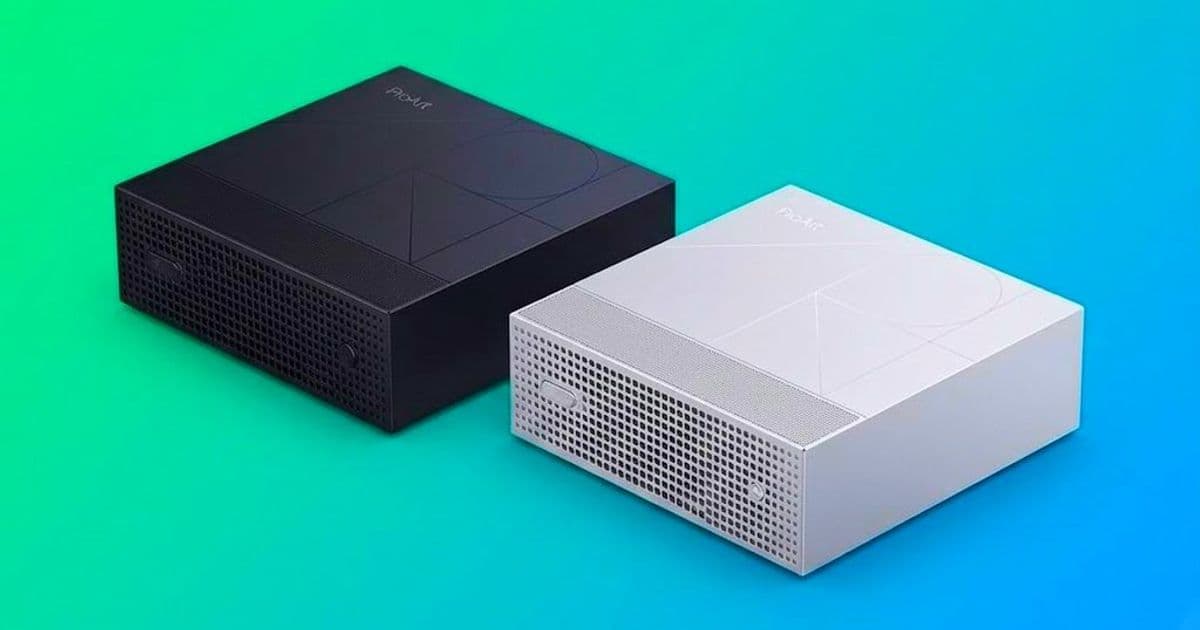
Asus’ new ProArt Mini PC packs a Blackwell‑based RTX Spark chip, up to 128 GB unified memory and 140 W of cooling into a 150 × 150 × 51 mm chassis, positioning it as a direct competitor to Apple’s Mac Studio and HP’s OmniDesk mini workstation.
Asus ProArt Mini PC – a workstation‑class AI engine in a 150 mm cube
Asus announced the ProArt Mini PC alongside its ProArt P16 and P14 laptops, targeting creators and developers who need desktop‑class AI performance without a full‑size tower. The device is built around Nvidia’s new RTX Spark superchip, which combines a Blackwell‑based GPU with a 20‑core Grace CPU on a single package. The result is a compact system that can claim 1 peta‑flop of AI throughput, according to Asus’ internal benchmarks.
What’s new?
| Specification | Detail |
|---|---|
| Form factor | 150 × 150 × 51 mm (5.9 × 5.9 × 2.0 in) aluminum enclosure |
| Processor | Nvidia Grace CPU, 20 cores, 2.5 GHz base clock |
| GPU | Nvidia RTX Spark, 6,144 CUDA cores, Tensor‑3.0, RT‑4.0 |
| Unified memory | Up to 128 GB LPDDR5X, shared between CPU and GPU |
| Thermal headroom | 140 W continuous, active vapor‑chamber + dual‑fan design |
| Storage | 2× M.2 PCIe Gen 5 x4 slots (up to 8 TB NVMe) |
| Networking | Integrated 10 GbE, Wi‑Fi 7, Bluetooth 5.4 |
| Ports | 2× USB‑C (DP 1.4 / Power Delivery), 2× USB‑A 3.2, HDMI 2.1, 3.5 mm audio |
| OS | Windows 11 Pro (AI‑optimized build) or Linux Ubuntu 24.04 LTS |
| Availability | Fall 2026, pricing TBD |
The most striking change is the unified memory architecture. By allowing the CPU and GPU to draw from the same 128 GB pool, the system can allocate memory dynamically for workloads that traditionally required separate system and video RAM. Asus claims this enables the ProArt Mini PC to load 90 GB+ 3D scenes or run 120‑billion‑parameter LLMs with up to 1 million tokens of context without swapping to slower storage.
How it compares to the competition
| Feature | Asus ProArt Mini PC | Apple Mac Studio (M2 Ultra) | HP OmniDesk (Xeon E‑2288G) |
|---|---|---|---|
| CPU | Nvidia Grace 20‑core, 2.5 GHz | Apple M2 Ultra, 24‑core (CPU) | Intel Xeon E‑2288G, 8‑core, 3.7 GHz |
| GPU | RTX Spark, 6,144 CUDA cores | Apple‑designed 76‑core GPU | Nvidia RTX A6000 (48 GB) |
| Memory | 128 GB unified DDR5X | 128 GB unified LPDDR5 | |
| Peak AI performance | 1 PFLOP (FP16) | ~0.5 PFLOP (Apple matrix) | |
| Thermal budget | 140 W sustained | ~150 W (passive) | |
| Dimensions | 150 × 150 × 51 mm | 197 × 197 × 96 mm | 210 × 210 × 84 mm |
| Price (expected) | TBD, likely $3,500‑$4,500 | $3,999 (base) | $4,199 (base) |
The ProArt Mini PC’s biggest advantage over the Mac Studio is the dedicated RTX Spark GPU, which retains full CUDA, Tensor and RT support. For developers who rely on Nvidia‑specific libraries (CUDA, cuDNN, TensorRT) the Asus box is a clear win. Compared with HP’s OmniDesk, Asus offers a smaller footprint and a unified memory model that eliminates the need for separate VRAM, simplifying large‑scale model training on a single device.
Who should consider it?
| Use case | Why the ProArt Mini PC fits |
|---|---|
| Generative AI research | 1 PFLOP of FP16 AI compute, 128 GB unified memory, and 10 GbE for rapid dataset movement make it suitable for fine‑tuning LLMs or training diffusion models locally. |
| High‑resolution 3D rendering | The RTX Spark GPU’s 6,144 CUDA cores and 140 W thermal envelope can sustain real‑time viewport performance on 90 GB+ scenes without throttling. |
| Edge AI deployment | Compact size and integrated 10 GbE allow the unit to be mounted in rack‑mount or wall‑mounted enclosures for on‑site inference. |
| Creative studios with limited desk space | The 150 mm cube fits into a standard monitor stand or a small rack, freeing up valuable workspace while delivering desktop‑class performance. |
| Cross‑platform developers | Supports Windows 11 Pro and Ubuntu, with full Nvidia driver stack, making it easy to integrate into existing pipelines. |
Thermal engineering in a tiny chassis
Keeping 140 W of continuous power under control in a box no larger than a coffee mug required Asus to redesign the cooling system. The ProArt Mini PC uses a vapor‑chamber spreader that contacts both the CPU and GPU dies, coupled with dual centrifugal fans that push air through a series of micro‑fins. Thermal simulations show the system can maintain GPU boost clocks above 2.1 GHz for more than 30 minutes under a full AI workload, a notable improvement over earlier mini‑PC designs that would dip below 1.5 GHz after a few minutes.
Software ecosystem
Asus bundles the hardware with its ProArt Creator Hub, a dashboard that monitors power, temperature and memory allocation in real time. The hub also integrates MuseTree and StoryCube, AI‑assisted content‑creation tools that offload rendering and inference to the RTX Spark chip. For developers, Asus provides a CUDA‑ready SDK and pre‑configured Docker images with popular frameworks such as PyTorch 2.4, TensorFlow 2.16 and NVIDIA NeMo, all optimized for the unified memory layout.
Verdict
The ProArt Mini PC is the most ambitious attempt yet to squeeze workstation‑grade AI performance into a truly pocket‑sized form factor. Its combination of a Blackwell‑based GPU, Grace CPU, and 128 GB unified memory sets a new benchmark for mini PCs. While pricing has not been disclosed, the spec sheet suggests a target around the high‑end desktop segment, where it will compete directly with Apple’s Mac Studio and HP’s OmniDesk. For professionals who need Nvidia‑centric AI tooling, or studios constrained by desk space, the ProArt Mini PC offers a compelling, future‑proof platform.
{{IMAGE:2}}
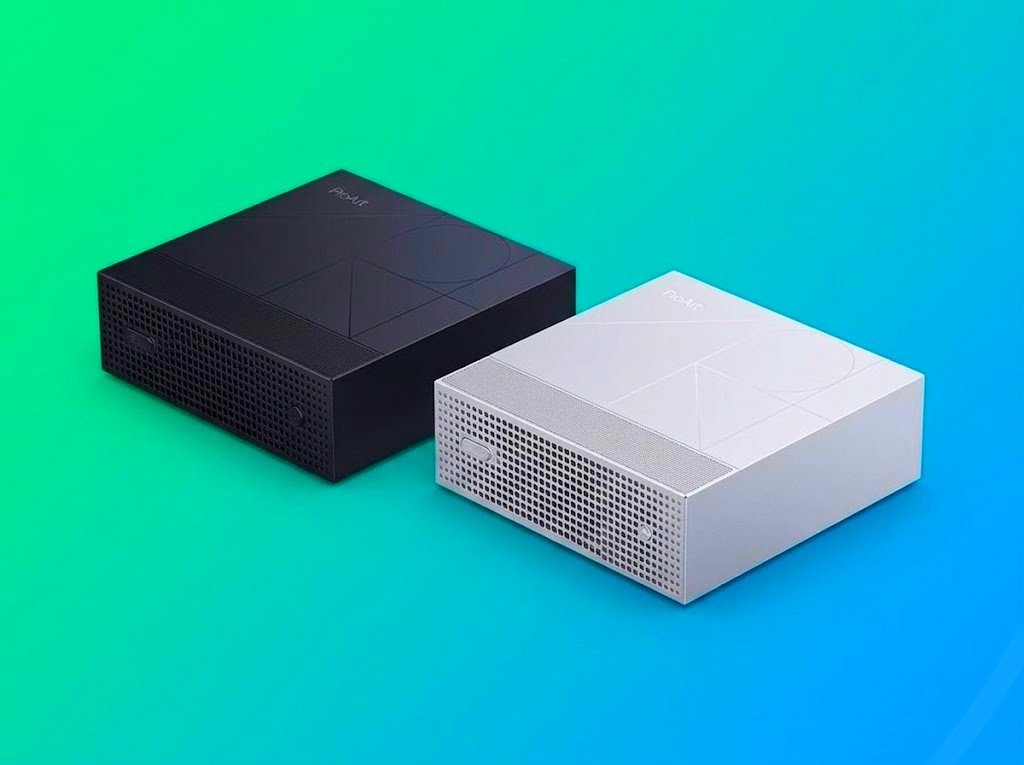
The new ProArt Mini PC is meant to rival the Mac Studio and the new HP OmniDesk Mini Desktop PC.
Comments
Please log in or register to join the discussion