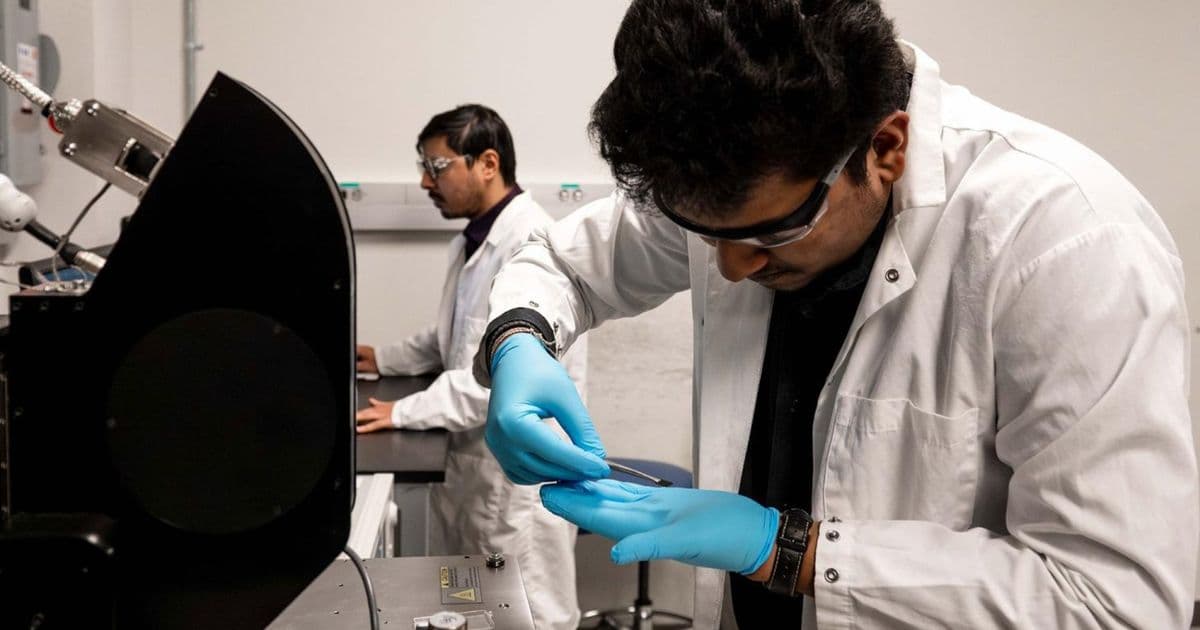
Penn State researchers have developed microscopic temperature sensors built from bimetallic thiophosphates that can detect temperature changes in just 100 nanoseconds and be embedded directly into processor chips, potentially enabling far more precise thermal management than current external sensors allow.
Researchers at Penn State University have developed microscopic temperature sensors that are small enough to embed directly into processor chips, potentially transforming how modern processors manage heat. The breakthrough, detailed in a paper published March 6 in Nature Sensors, could enable chips to detect and respond to temperature changes millions of times faster than the blink of an eye.
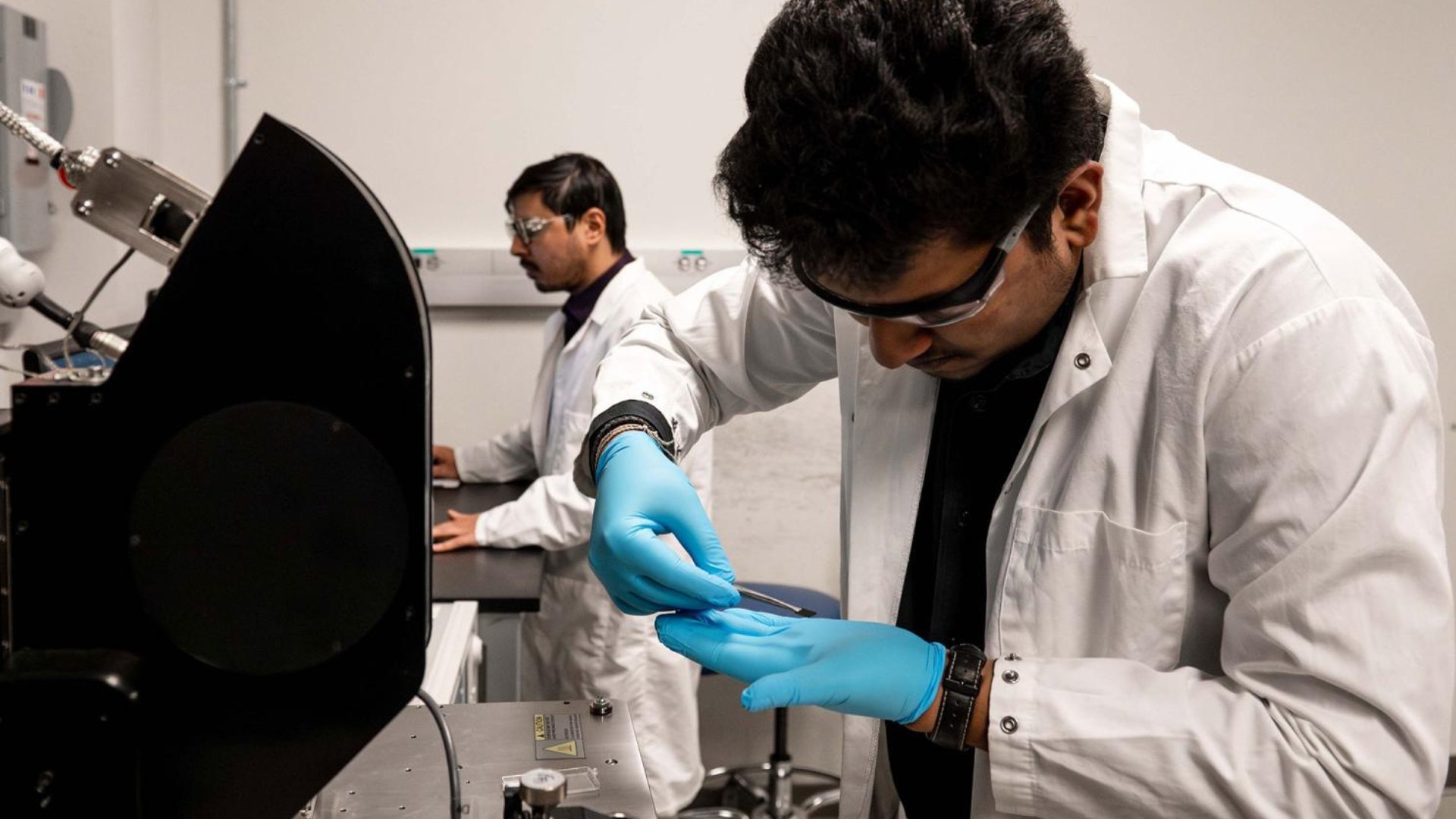
The sensors, built from a novel class of two-dimensional materials called bimetallic thiophosphates, can detect temperature changes in just 100 nanoseconds and pack down to a mere one square micrometer in size. To put that scale in perspective, thousands of these sensors could be placed on a single processor chip.
Current processors rely on temperature sensors placed outside the chip die itself, which creates a significant limitation. Individual transistors can spike in temperature faster than external sensors can register, forcing chips to apply conservative thermal throttling across entire cores rather than responding to localized hotspots. This one-size-fits-all approach to thermal management means processors often run slower than they could if they had more precise temperature data.
Penn State's design addresses this fundamental limitation by integrating sensing directly into the silicon, using the same electrical currents already running through the chip. The key innovation lies in exploiting a property that chip engineers normally try to eliminate: the free movement of ions when exposed to electrical current.
"What is generally unwanted by industry in transistors is actually great for thermal sensing, so we really tried to exploit that in our design," said Saptarshi Das, professor of engineering science and mechanics at Penn State and corresponding author on the paper. The team coupled ion transport for temperature detection with electron transport for reading that thermal data, creating a sensor that requires no extra circuitry or signal converters.
The material's unique properties allow the sensors to draw up to 80 times less power than conventional silicon-based thermal sensors while maintaining extreme accuracy. This power efficiency is crucial for practical implementation, as adding power-hungry sensors to already power-constrained processors would be counterproductive.
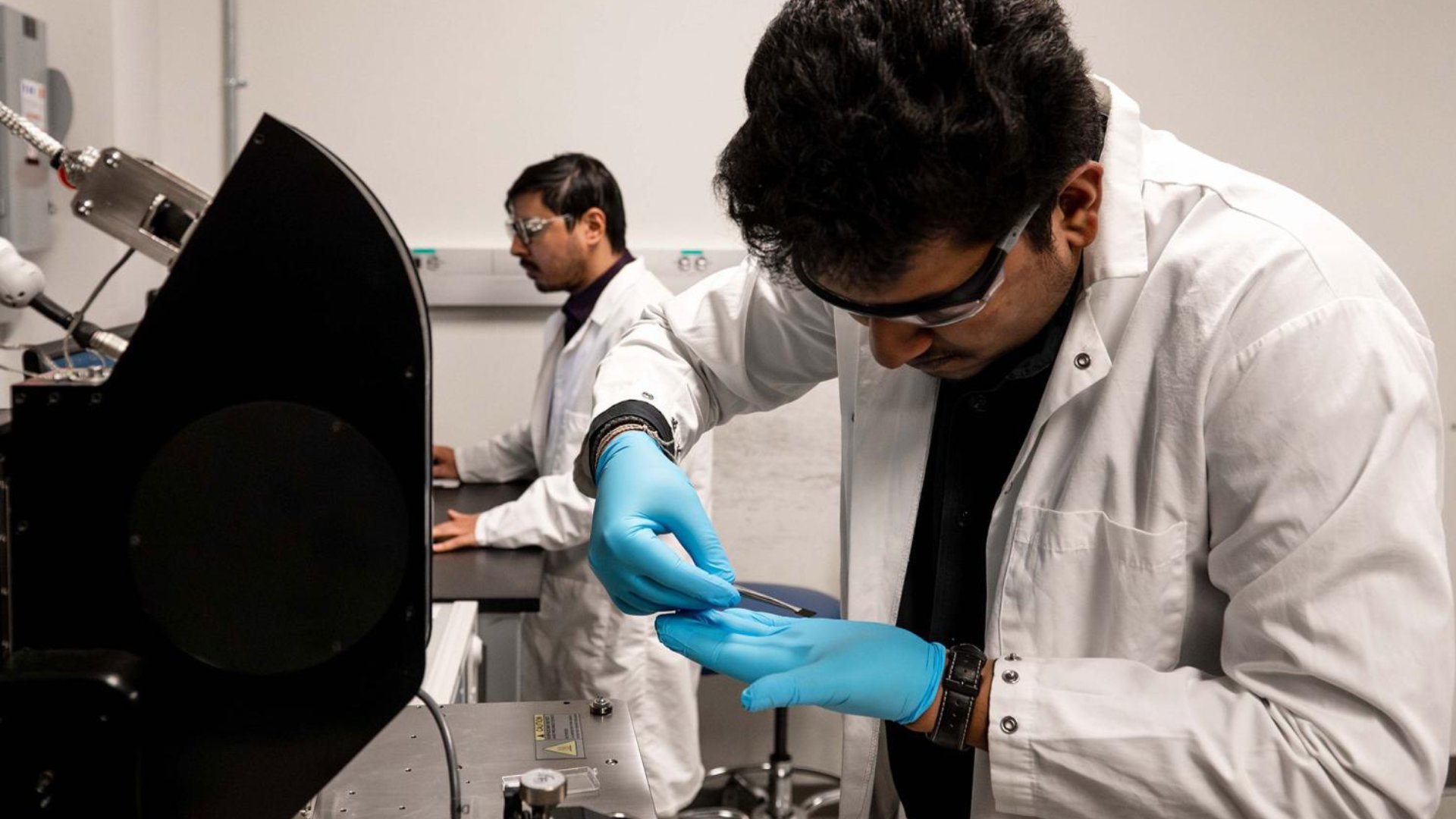
The development represents a significant advance over existing thermal monitoring solutions. Current high-performance processors like Intel's Core Ultra series and AMD's Ryzen chips use sophisticated thermal management systems, but these still rely on external temperature sensing that can miss rapid, localized temperature spikes. Apple's M-series chips have pushed thermal management further with their unified memory architecture, but even these designs face the fundamental limitation of external sensing.
For data centers and high-performance computing applications, the implications are particularly significant. Servers running AI workloads or complex simulations could potentially operate at higher sustained performance levels with more precise thermal monitoring, reducing the need for conservative throttling that limits computational throughput.
The path to commercial implementation, however, remains challenging. While the sensors have been manufactured and tested in the lab using Penn State's Materials Research Institute Nanofabrication Laboratory, integrating them into production silicon would require chipmakers to validate the process at scale. Major manufacturers like TSMC, Intel, and Samsung would need to adapt their fabrication processes to accommodate these new materials and sensor designs.
Das emphasized that this work represents a proof of concept rather than a ready-to-deploy technology. The demonstrated specifications—100-nanosecond response time, one square micrometer footprint, and no need for additional circuitry—address some of the key constraints that have kept on-die thermal monitoring out of production silicon.
The research comes at a critical time as the semiconductor industry pushes toward smaller process nodes and higher transistor densities. As chips become more powerful and compact, managing heat becomes increasingly challenging. Traditional cooling solutions and thermal management strategies may soon reach their limits, making innovations like these atom-thin sensors essential for the next generation of processor design.
For consumers, the technology could eventually translate to faster, more efficient devices that maintain peak performance longer without overheating. For data centers, it could mean higher computational density and reduced cooling costs. The ability to detect and respond to temperature changes in just 100 nanoseconds represents a fundamental shift in how processors could manage their own thermal characteristics, potentially unlocking performance levels that current thermal monitoring simply cannot support.
Comments
Please log in or register to join the discussion