Samsung's smartphone business may post its first-ever annual loss due to exploding DRAM and NAND memory costs, even as its memory division thrives from AI demand. Flagship BoM could rise $100-$150, with memory comprising 41% of that increase, despite strong Galaxy S26 sales and market leadership in Q1 shipments.
Samsung finds itself in an unprecedented position: its memory division is reaping record profits from the AI boom while its smartphone business risks posting its first annual loss ever. This stark divergence stems from the very component that powers both businesses—memory chips—whose prices have surged due to insatiable demand from AI hyperscalers, squeezing smartphone margins even as Samsung leads global smartphone shipments.
The core issue lies in the bill of materials for flagship devices. According to Counterpoint analysis cited in the report, BoM costs for $800+ smartphones could increase by $100-$150 this year. Memory accounts for the lion's share of this increase—23% for RAM and 18% for NAND storage, totaling 41% of the projected cost surge. For context, the Galaxy S26 Ultra's base configuration includes 12GB of LPDDR5X RAM, a specification that would have been considered excessive just a few years ago but is now standard for flagship AI-enabled devices. This isn't merely about higher specs; it's about the fundamental economics of memory pricing being rewritten by non-smartphone demand.
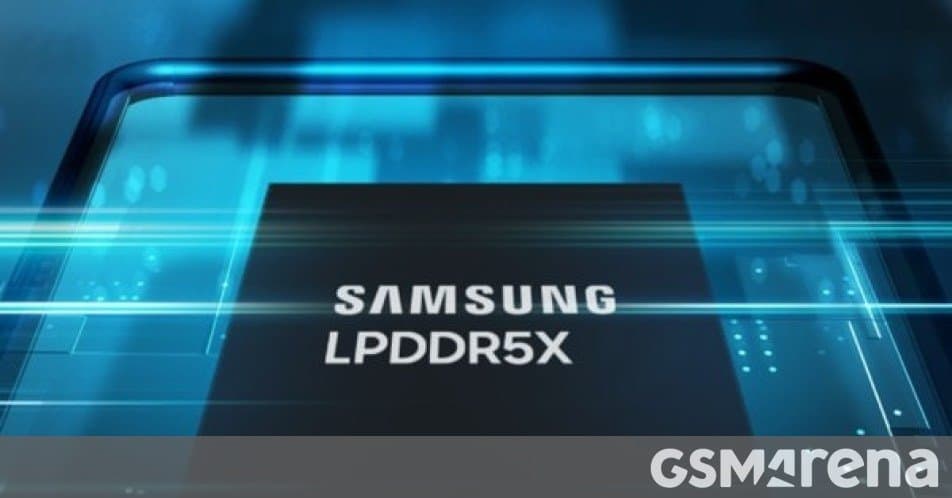
What's driving this memory price explosion? AI data centers are increasingly adopting LPDDR memory—traditionally used in mobile devices—for server applications due to its lower power consumption compared to conventional DDR. As one industry insight noted in the source, a single AI supercomputer requires as much RAM as would be needed to build 4,600 smartphones. This unexpected crossover has created fierce competition for the same memory chips that go into Galaxy phones, with TSMC's constrained capacity and rising foundry costs exacerbating the squeeze. Samsung's own strategic move to retire LPDDR4 lines in favor of LPDDR5X production further tightens supply for legacy nodes while boosting capacity for the newer standard—benefiting its memory division but doing little to immediately alleviate cost pressures on its smartphone arm.
Despite these headwinds, Samsung's smartphone business shows surprising resilience. The Galaxy S26 series broke pre-order records in Korea and saw 25% higher U.S. pre-orders versus the S25 line, with Europe showing 20% growth. Crucially, sales are heavily skewed toward the S26 Ultra—the most expensive model and thus the most vulnerable to memory cost increases. Yet Samsung still shipped 62.8 million smartphones in Q1 2026, a 3.6% year-over-year gain that secured the top vendor spot according to IDC, even as the overall market contracted by 4%. This suggests strong brand loyalty and product appeal are temporarily offsetting margin erosion.
The predicament highlights a profound strategic tension within Samsung. While Device Solutions (memory) posted record Q1 guidance, TM Roh—who oversees both the DX and MX divisions—has reportedly warned management about the mobile division's profitability outlook. This isn't a case of poor execution; it's a structural challenge where Samsung's greatest strength in one division directly undermines another. Adding complexity, Counterpoint notes that rising foundry costs from TSMC may push Qualcomm to shift Snapdragon 8 Elite Gen 6 production to Samsung's fabs, potentially increasing chipset costs further and creating a "double trouble" scenario for flagships.
For the industry, this development underscores how AI demand is reshaping semiconductor economics in unpredictable ways. Component costs that were once stable variables in smartphone pricing models are now volatile inputs driven by data center demand. Samsung's situation may foreshadow similar pressures for other vertically integrated players, though few match its scale in both memory and mobile. Until memory supply catches up with AI-driven demand—or smartphone makers successfully shift to alternative architectures—the company's mobile division faces a difficult balancing act between maintaining competitiveness and preserving profitability in an era where its own memory chips are becoming both its greatest asset and its most expensive liability.
Comments
Please log in or register to join the discussion