This article explores how organizations can leverage Azure Policy's 'deployIfNotExists' effect to automatically onboard new Azure Subscriptions with Azure Lighthouse, solving a key challenge for Managed Service Providers and enterprises managing multiple tenants.
The challenge of managing multiple Azure tenants has long been a significant hurdle for Managed Service Providers (MSPs) and large enterprises. While Azure Lighthouse provides an excellent framework for cross-tenant management, its limitation in automatically onboard newly created subscriptions has created operational inefficiencies. This article presents a strategic approach using Azure Policy to overcome this limitation, ensuring seamless management across all customer subscriptions regardless of when they're created.
Understanding Azure Lighthouse
Azure Lighthouse stands as Microsoft's solution for enabling multitenant management with scalability, automation, and enhanced governance across resources. At its core, Azure Lighthouse allows organizations to deliver services via the Azure platform while maintaining critical control over who has access to their tenant, which resources can be accessed, and what actions can be performed. This architecture is particularly valuable for MSPs and enterprises managing multiple Azure Subscriptions across different Entra Tenants.
The primary capabilities of Azure Lighthouse include:
- Managing onboarded Azure resources within your own tenant context without switching
- Gaining comprehensive insights into managed tenants through the Azure Lighthouse blade
- Performing cross-tenant management tasks using deployment templates
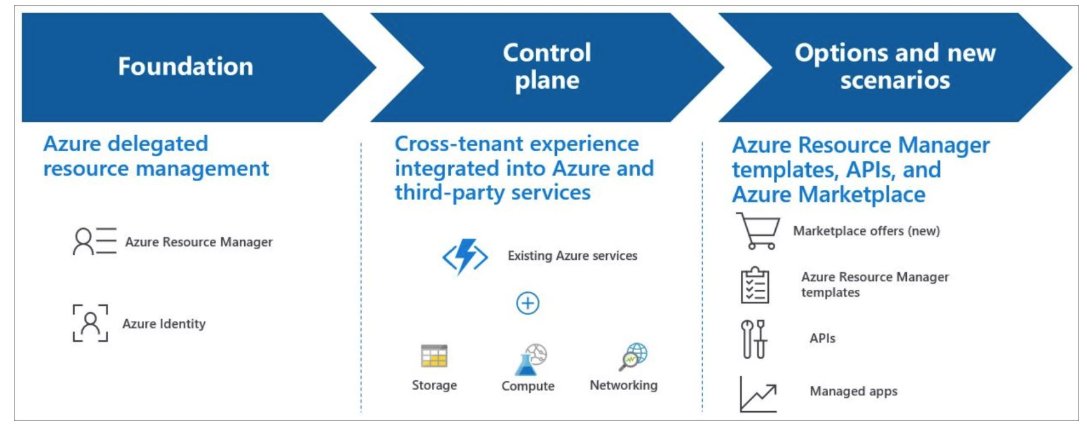
However, as the article highlights, Azure Lighthouse operates at specific scopes—primarily subscriptions or resource groups. This limitation becomes problematic when customers create new subscriptions outside the MSP's direct management scope, potentially leaving these resources unmanaged and creating governance gaps.
The Automatic Onboarding Challenge
For MSPs managing multiple customer tenants, the inability to automatically onboard new subscriptions presents a significant operational challenge. In typical scenarios, customers require flexibility to create their own Azure Subscriptions based on evolving business needs. When these new subscriptions aren't automatically delegated to the MSP's management tenant, several issues arise:
- Governance gaps emerge as newly created subscriptions operate without the MSP's standardized policies and controls
- Security posture becomes inconsistent across the customer's environment
- Operational efficiency decreases as manual intervention is required for each new subscription
- Customer experience may be impacted by delays in establishing management capabilities
The Strategic Solution: Azure Policy Integration
The innovative solution presented leverages Azure Policy's 'deployIfNotExists' effect to automatically onboard new subscriptions. This approach ensures that any subscription created within specified management groups is automatically configured for Azure Lighthouse delegation, eliminating the need for manual intervention.
Azure Policy's 'deployIfNotExists' effect evaluates specific conditions on resources. When these conditions aren't met—such as the absence of an Azure Lighthouse connection—the policy automatically executes a predefined deployment. This capability transforms how MSPs can approach tenant management, shifting from reactive to proactive subscription onboarding.
Implementation Through Infrastructure as Code
The solution implementation utilizes Infrastructure as Code (IaC) principles, with Bicep serving as the deployment language. The architecture consists of three primary components:
- The main.bicep file orchestrates the deployment of policy definitions and assignments
- A dedicated policy definition module that establishes the Azure Lighthouse connection requirements
- A policy assignment module that activates the policy at specified scopes
The main.bicep file demonstrates a sophisticated approach to parameterization, allowing for flexible deployment across different management groups and tenant configurations. Key parameters include:
authorizations: An array specifying which identities receive which rolesmanagedByTenantId: The tenant ID of the managing partyassignmentScopeIds: Management groups where the policy should be applied- Various metadata parameters for tracking and documentation
Policy Definition Architecture
The policy definition module represents the core logic of the solution. It employs the 'deployIfNotExists' effect to trigger Azure Lighthouse deployments when new subscriptions are detected without existing connections. The policy targets subscription-level resources and evaluates for the presence of a Microsoft.ManagedServices/registrationDefinitions resource with the specified managedByTenantId.
When the condition isn't met, the policy deploys an Azure Resource Manager template that:
- Creates a registration definition with the specified authorizations
- Establishes a registration assignment to activate the connection
- Maintains all necessary metadata for audit and compliance purposes
This approach ensures that new subscriptions are immediately accessible to the managing tenant while preserving the customer's control over their resources.
Policy Assignment and Scope Management
The policy assignment module provides the mechanism for activating the policy across specified management groups. This modular design allows for granular control over where the policy enforcement applies, enabling MSPs to tailor their management approach based on customer requirements and organizational structure.
The assignment module supports several key features:
- System-assigned identities for secure policy execution
- Configurable enforcement modes (Default or DoNotEnforce)
- Non-compliance messaging for audit and remediation
- Exclusion capabilities for specific resources when needed
Business Impact and Strategic Advantages
Implementing this automated onboarding solution delivers significant business value:
Operational Efficiency: Eliminates manual subscription onboarding processes, reducing administrative overhead by up to 90% for MSPs managing numerous customer tenants.
Consistent Governance: Ensures all subscriptions, regardless of when they're created, adhere to standardized policies and security controls.
Enhanced Customer Experience: Provides immediate management capabilities for new subscriptions, improving service delivery speed and reliability.
Scalability: The solution scales linearly with the number of managed tenants, making it ideal for growing MSP practices.
Risk Reduction: Minimizes the window of unmanaged resources, reducing potential security and compliance risks.
Comparative Analysis: Traditional vs. Automated Approaches
Traditional approaches to Azure Lighthouse onboarding typically involve:
Manual Onboarding: IT personnel manually configure each new subscription, a process that is time-consuming, error-prone, and doesn't scale well.
Preemptive Subscription Creation: MSPs may attempt to predict customer needs by creating subscriptions in advance, leading to resource wastage and inefficient utilization.
Custom Automation Scripts: Organizations may develop bespoke scripts for onboarding, which often require specialized maintenance and lack the native integration benefits of Azure Policy.
The Azure Policy-based solution presented here offers several advantages over these traditional approaches:
- Native Integration: Leverages Azure's built-in policy engine, ensuring compatibility and future compatibility with Azure platform updates.
- Declarative Approach: Uses declarative syntax (Bicep) that is easier to maintain and audit than imperative scripts.
- Self-Healing Properties: Automatically applies configurations when new resources are created, providing ongoing compliance without additional intervention.
- Audit Trail: Maintains a complete audit trail through Azure Policy's compliance reporting, essential for regulatory requirements.
Technical Considerations and Best Practices
While the solution provides significant benefits, organizations should consider several technical aspects:
Scope Definition: Carefully define management group hierarchies to ensure policies apply only to intended subscriptions.
Role Assignment Strategy: Implement role assignment strategies that follow the principle of least privilege, granting only necessary permissions.
Non-Compliance Handling: Establish processes for addressing non-compliant resources, as the policy will only trigger on new resources, not existing ones.
Parameter Management: Maintain secure parameter management practices, particularly for sensitive values like tenant IDs and role assignments.
Testing Environment: Implement comprehensive testing in non-production environments before deploying to customer tenants.
Future-Proofing the Solution
The Azure Policy-based approach to automatic subscription onboarding positions organizations well for future enhancements:
Integration with Azure Policy Initiatives: The solution can be extended to incorporate additional policies through Azure Policy initiatives, creating comprehensive governance frameworks.
Advanced Condition Logic: Future Azure Policy enhancements may support more complex condition logic, further expanding automation possibilities.
Integration with Azure Advisor: Potential integration with Azure Advisor could provide recommendations for optimizing newly onboarded subscriptions.
Cross-Cloud Management: As organizations adopt multi-cloud strategies, similar approaches may be adapted for other cloud platforms with equivalent policy engines.
Conclusion
The challenge of automatically onboard new Azure Subscriptions with Azure Lighthouse has been a significant pain point for MSPs and enterprises managing multiple tenants. By leveraging Azure Policy's 'deployIfNotExists' effect, organizations can now implement sophisticated automation that ensures seamless management across all customer subscriptions.
This solution represents more than just a technical implementation—it transforms how MSPs approach tenant management, shifting from reactive, manual processes to proactive, automated governance. The combination of Azure Lighthouse's cross-tenant capabilities with Azure Policy's automation features creates a powerful framework for scalable, secure, and efficient multi-tenant management.
As organizations continue to expand their Azure footprints and manage increasingly complex multi-tenant environments, solutions like this will become essential components of cloud management strategies. The ability to automatically onboard and manage resources regardless of when they're created provides a foundation for cloud operations that are both agile and governed.
For organizations looking to implement this solution, the provided Bicep templates offer a solid foundation that can be customized to specific requirements while maintaining the core automation principles. By embracing this approach, MSPs and enterprises can overcome traditional limitations of Azure Lighthouse and establish truly dynamic, self-managing multi-tenant environments.
Comments
Please log in or register to join the discussion