AWS used its June 15 roundup to point cloud teams toward agent-driven cost control, broader model options in Bedrock, and new infrastructure choices for Graviton migrations.
AWS highlighted several launches June 15 that matter for cloud teams planning 2026 budgets, AI platforms, and migration work. The AWS Weekly Roundup centers on FinOps Agent in preview, new Gemma models in Amazon Bedrock, M9g instances, OpenSearch MCP Apps, and AWS CLI v1 maintenance mode.
AWS FinOps Agent gives finance and engineering teams a new way to ask cost questions, investigate anomalies, and push optimization work into Jira. The agent draws from AWS Cost Optimization Hub and AWS Compute Optimizer to surface rightsizing, idle resource, and Savings Plans recommendations.
The preview points to a broader change in cloud management. AWS wants teams to move from dashboard review to scheduled cost workflows. You can ask for a report, route findings to Slack, and create tickets for engineers without building a separate reporting stack.
That matters because FinOps work often stalls between finance and platform teams. Finance sees the bill. Engineers control the resources. FinOps Agent gives both groups a shared workflow, if teams connect the agent to ticketing, chat, and cost governance rules.
Azure and Google Cloud already offer mature cost tools through Microsoft Cost Management and Google Cloud Billing. AWS has long offered Cost Explorer, Budgets, Compute Optimizer, and Trusted Advisor. FinOps Agent packages that cost data into a task-oriented assistant, which should help AWS customers who run large account structures and need faster routing from recommendation to remediation.
Pricing teams should treat the preview with care. Agentic cost tools can help you find waste, but they can also create noise if your tagging, account ownership, or chargeback model lacks discipline. Before you let an agent open Jira tickets, assign owners for shared services, define thresholds, and agree on savings actions that engineers can accept.
Gemma 4 on Bedrock broadens model choice
AWS also said Google DeepMind's Gemma 4 models reached Bedrock in three variants: Gemma 4 31B, Gemma 4 26B-A4B, and Gemma 4 E2B. The lineup gives customers options for reasoning, coding, low-latency interaction, and multimodal workloads across text, image, video, and audio.
Bedrock keeps gaining value as a model marketplace and control plane. AWS customers can compare Anthropic, Meta, Amazon, Mistral, Cohere, and Google models through one service, then apply shared guardrails, logging, and access controls. That model choice reduces migration friction for enterprises that want to test providers without rebuilding security reviews for each API.
Gemma's arrival also puts more pressure on procurement teams to compare model cost by workload, not brand. A larger model may suit code generation or long-context analysis. A smaller model may handle chat support, classification, or workflow routing at lower latency. Platform teams should build benchmarks around their prompts, data shape, and response quality rules.
Amazon Bedrock competes with Azure AI Foundry and Google Vertex AI. Azure gives Microsoft-heavy enterprises a strong route into OpenAI models and Microsoft identity controls. Vertex AI gives Google Cloud teams tight access to Gemini and data science tooling. Bedrock's strength sits in AWS account governance, private networking patterns, and broad model selection for customers already invested in AWS.
M9g instances push Graviton migrations forward
AWS said Amazon EC2 M9g and M9gd instances reached general availability. AWS built the instances on Graviton5 processors and the sixth-generation Nitro System. The company claims up to 25% better compute performance than Graviton4-based instances, with stronger gains for web applications, machine learning inference, and databases.
The release gives platform teams another reason to revisit x86 cost assumptions. Graviton migrations can reduce compute spend for services that compile cleanly on Arm, especially stateless applications, Java services, container platforms, and managed runtimes. Teams with commercial software, native dependencies, or older agents need a slower migration path.
M9gd adds local NVMe storage for workloads that need fast scratch space, cache layers, or temporary data handling. Both instance types support Instance Bandwidth Configuration, which lets teams adjust bandwidth allocation between Amazon EBS and VPC networking by up to 25%.
AWS also described Nitro Isolation Engine as a formal verification enhancement for Nitro. Security teams should watch that feature because regulated workloads often require stronger evidence for tenant isolation. A formal proof does not replace your controls, but it can support risk reviews for financial services, health care, and public sector workloads.
Migration planners should test three areas before moving production fleets: dependency compatibility on Arm, performance per dollar under real traffic, and observability agent support. Teams that use Kubernetes should test mixed-node pools first, then move services with clean build pipelines and limited native dependencies.
OpenSearch MCP Apps bring observability into agent tools
Amazon OpenSearch Service added MCP Apps for agentic observability. Developers can use compatible tools such as Claude Desktop and VS Code to investigate incidents with logs, traces, metrics, and alerts stored in OpenSearch domains and collections.
The feature reflects a practical direction for operations work. Engineers spend incident time switching between dashboards, terminals, runbooks, and chat. MCP Apps let an agent query observability data and return both a text summary and a visualization in the same thread.
That workflow can help on-call teams during triage, but teams should set permissions with care. An agent that can search production telemetry may expose sensitive payloads, customer identifiers, or internal service names. Start with read-only access, limited indexes, and clear audit logs.
AWS CLI v1 maintenance mode raises migration pressure
AWS CLI v1 enters maintenance mode, and AWS recommends migration to AWS CLI v2. AWS said future v1 releases will focus on critical bug fixes and security issues.
The packaging change matters for build systems and long-lived environments. AWS will vendor botocore and s3transfer into the CLI v1 codebase, so upgrading those libraries outside CLI v1 will no longer change the versions that CLI v1 uses.
Platform teams should inventory CI images, developer laptops, automation hosts, and container images that still call CLI v1. The migration usually takes limited code change, but scripts that depend on output format quirks or old authentication behavior need tests.
Kiro Pro Max and AI-native development
AWS also pointed to Kiro Pro Max, a higher-usage tier for agentic development work. The roundup connects the launch to a post from Swami Sivasubramanian about AI-native development across Amazon engineering teams.
The cited examples show a clear management pattern. Teams gained speed after they wrote better agent context, scoped tasks into smaller units, and moved tests earlier in the workflow. That lesson applies across providers. Coding agents need repo structure, intent, and fast feedback before they can help with production work.
For CIOs, the cost question goes beyond subscription tiers. AI development tools change spending across model tokens, developer time, review effort, and security oversight. Teams should measure cycle time, escaped defects, and rework before they expand access.
Business impact
AWS's June 15 roundup gives cloud leaders three planning signals. First, AWS will push agentic workflows into cost management and operations, not only software development. Second, Bedrock will keep competing through model choice and enterprise controls. Third, Graviton remains a core AWS cost lever for teams that can run Arm workloads.
The provider comparison comes down to operating model. Azure fits teams that center on Microsoft identity, Microsoft 365, and Azure OpenAI. Google Cloud fits teams that want Vertex AI, BigQuery, and Gemini-led data workflows. AWS fits teams that need mature infrastructure breadth, strong account governance, Bedrock model diversity, and Graviton economics.
For AWS customers, the next steps are concrete. Test FinOps Agent against a real cost center. Benchmark Gemma 4 against your current Bedrock models. Run M9g pilots for services that already support Arm. Move CLI v1 out of build systems before maintenance mode turns into a security concern.
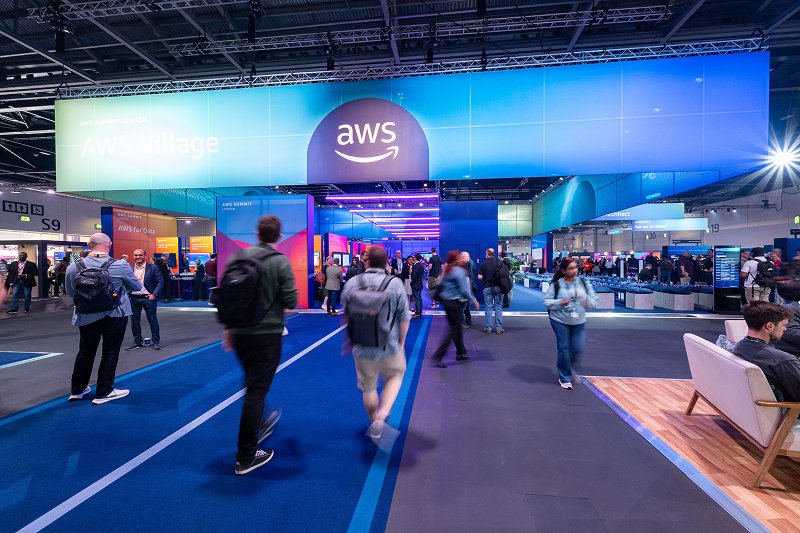
AWS Summit New York runs June 17 at the Javits Center, with a keynote livestream featuring Dr. Swami Sivasubramanian and Chet Kapoor. The AWS Events calendar also lists upcoming summits and community days for teams that want hands-on sessions before they commit migration or AI platform budgets.
Comments
Please log in or register to join the discussion