
AWS expands serverless .NET support with native .NET 10 integration, introduces simplified Client VPN deployment, and showcases cross-modal search capabilities with Amazon Nova embeddings.
AWS kicked off 2026 with significant updates that address developer pain points around runtime management, network security setup, and AI-powered search capabilities. The January 12 roundup reveals a pattern of reducing operational friction while expanding architectural options for modern cloud workloads.
AWS Lambda Adds Native .NET 10 Support
The headline announcement is AWS Lambda's support for .NET 10 applications through both managed runtimes and container base images. This matters because .NET developers can now build serverless functions using the latest framework version without managing runtime updates themselves.
AWS automatically handles runtime updates and base image patches, which means security fixes and framework improvements flow through without manual intervention. For teams running production workloads, this managed approach eliminates the maintenance burden of tracking .NET releases while ensuring compatibility.
The container base image option provides additional flexibility for teams with custom dependencies or specific deployment requirements. You can start with the managed runtime for simplicity, then migrate to containers as complexity grows.
Simplified Client VPN Deployment
AWS Client VPN received a quickstart option that reduces setup steps. Previously, configuring a Client VPN endpoint required navigating multiple configuration stages: creating a Client VPN endpoint, associating subnets, configuring authorization rules, and establishing client connections.
The quickstart automates these steps through CloudFormation templates, making it easier for organizations to provide secure remote access to VPC resources. This is particularly valuable for teams that need temporary VPN access for contractors or require rapid disaster recovery setups.
Cross-Modal Search with Amazon Nova
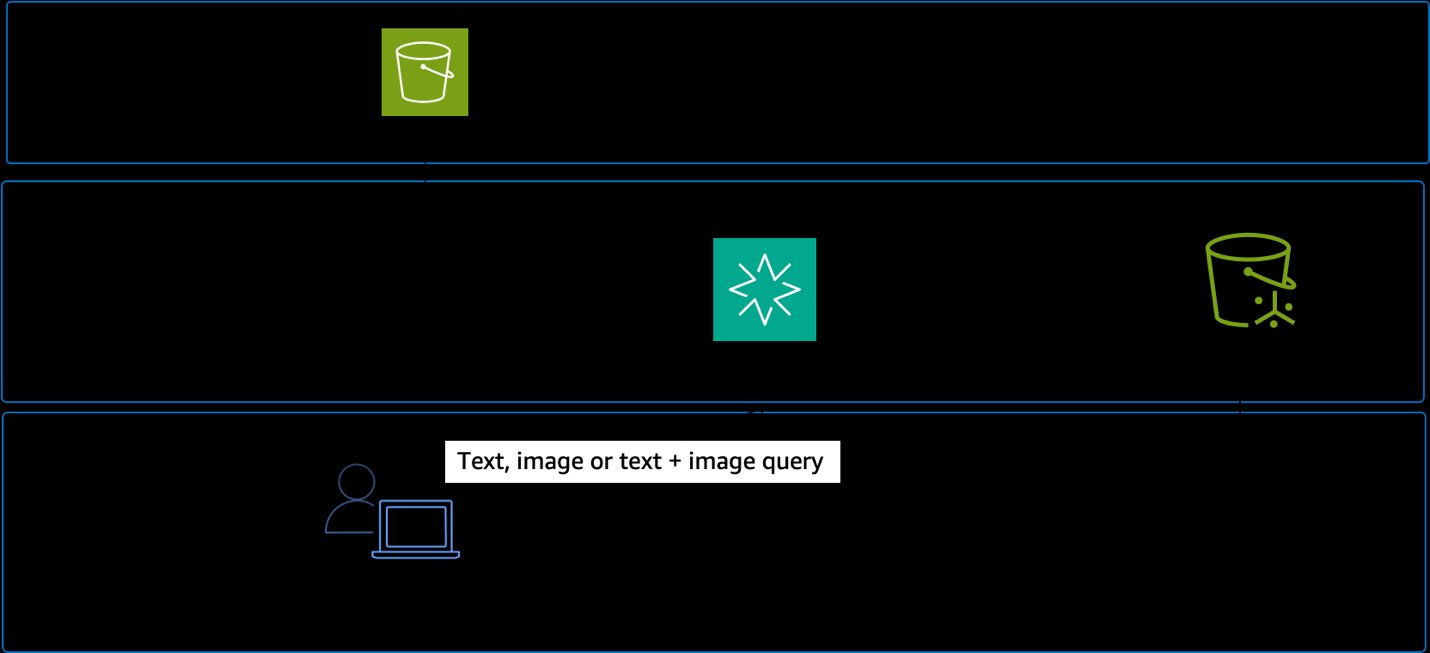
The cross-modal search implementation using Amazon Nova Multimodal Embeddings represents a practical application of AI for enterprise search. The approach generates embeddings across text and image data, enabling queries like "find images containing the red dashboard from last week's report" or "locate documents discussing the architecture shown in this diagram."
The implementation includes working code examples for:
- Generating embeddings for diverse data types
- Building query interfaces that understand multiple modalities
- Measuring search performance and relevance
This pattern addresses a common enterprise challenge: finding information when you don't know exactly where it lives or what format it takes.
Additional Service Updates
Amazon ECS tmpfs Support: Linux tasks on Fargate and managed instances can now use memory-backed file systems. This enables high-performance temporary storage for processing sensitive data that shouldn't persist to disk.
AWS Config Expansion: Enhanced discovery and remediation capabilities for EC2, SageMaker, and S3 Tables. This improves compliance automation by providing better visibility into resource configurations across key services.
Amazon MQ Authentication: RabbitMQ brokers now support HTTP-based authentication and mutual TLS. These additions provide more flexible security models for message-based architectures.
Amazon MWAA Airflow 2.11: The managed workflow service adds Apache Airflow 2.11 support, which includes preparation for Airflow 3 migration paths.
EC2 Instance Expansion: M8i, C8i, C8i-flex, R8i, R8i-flex, and I7ie instances are now available in more regions, expanding compute options globally.
Amazon Quick Suite AI Integration: The low-code automation platform added integrations with GitHub, Notion, Canva, Hugging Face, and other developer tools, enabling AI agents to orchestrate workflows across these services.
Modernization and Migration Patterns
The week also highlighted several architectural patterns for evolving existing applications:
Automated SDK Migration: The AWS Transform tool for Java v1 to v2 upgrades demonstrates how to modernize applications programmatically. This approach reduces the manual effort and risk associated with dependency updates, especially for large codebases.
Aurora Advanced Features via JDBC: The AWS Advanced JDBC Wrapper enables applications using standard JDBC drivers to access Aurora-specific capabilities like fast failover and read scaling without code changes. This is crucial for legacy applications that can't be easily refactored.
Multi-Region Aurora DSQL Routing: An automated solution for redirecting database traffic between regional endpoints addresses disaster recovery and latency optimization scenarios. The approach uses Route 53 health checks and Lambda functions to manage failover without application changes.
Upcoming Opportunities
Best of AWS re:Invent (January 28-29): This free virtual event will distill the most impactful announcements from re:Invent 2025. Jeff Barr's opening session will highlight key architectural patterns and service capabilities.
Global 10,000 AIdeas Competition: Running until January 21, this competition offers $250,000 in prizes and AWS credits. Participants submit ideas, and semifinalists build applications using Kiro within Free Tier limits. The competition provides hands-on experience with next-generation AI tools and potential re:Invent 2026 exposure.
Architectural Implications
These updates reflect AWS's continued focus on reducing operational complexity while expanding architectural options. The .NET 10 Lambda support demonstrates managed runtime evolution, where AWS absorbs the burden of framework lifecycle management. The Client VPN quickstart shows infrastructure-as-code patterns becoming more accessible.
The cross-modal search implementation with Nova embeddings illustrates how AI services are moving from experimental to production-ready patterns. Rather than requiring deep ML expertise, these services provide APIs that handle the complexity while exposing tunable parameters for optimization.
For architects, the pattern is clear: AWS is abstracting infrastructure complexity while providing building blocks for sophisticated capabilities like AI-powered search and automated compliance.



Comments
Please log in or register to join the discussion