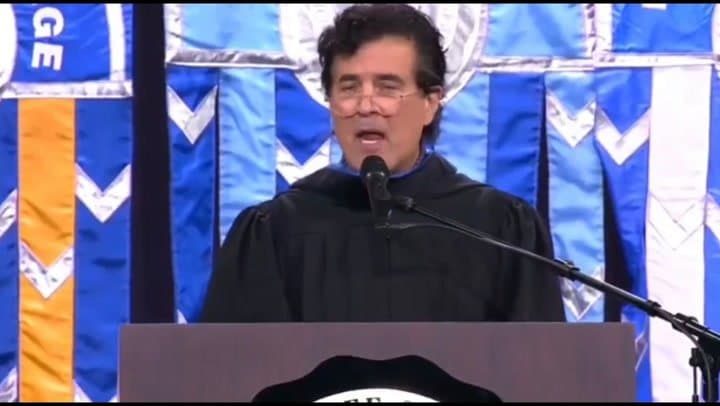
Scott Borchetta warned music students that AI is reshaping production, prompting jeers from the graduating class. The episode highlights a gap between industry optimism about generative tools and the concerns of emerging artists about creative control and compensation.
Big Machine CEO’s AI Remarks Spark Boos at MTSU Graduation
Scott Borchetta, the chief executive of Big Machine Records, addressed a graduating class at Middle Tennessee State University (MTSU) on Thursday. He told the students that “AI is rewriting production as we sit here,” a statement that was met with audible boos and heckling.
What was claimed?
Borchetta framed AI as a tool that will become part of every producer’s workflow. He suggested that artists who ignore it will either have to “hear me now or pay me later,” implying that the technology will soon be a non‑negotiable part of the music‑business value chain.
What is actually new?
The claim that AI is already influencing music production is not new. Over the past year, several commercial products have emerged that generate melodies, drum patterns, or even full vocal tracks from textual prompts. Notable examples include:
- OpenAI’s Jukebox model, which can synthesize singing in a range of styles, though it remains a research‑grade system.
- Google’s MusicLM, which produces high‑fidelity audio from descriptive text, but is currently limited to internal use.
- Meta’s AudioGen, an open‑source model that can create short sound effects and loops.
These tools are being piloted by a handful of producers for inspiration or rapid prototyping, but they have not yet displaced human musicians in mainstream releases. The industry is still grappling with practical questions such as copyright attribution, royalty split mechanisms, and the quality gap between AI‑generated and human‑crafted arrangements.
Limitations and why the audience reacted
- Creative agency – Most students in a music program view composition and performance as personal expression. An AI that can generate a chord progression or lyric line feels like a shortcut that threatens that agency.
- Economic uncertainty – The comment about “pay me later” taps into a broader fear that AI could be used to underpay session musicians, songwriters, and producers. No clear legal framework exists for compensating contributors to AI‑generated works.
- Technical maturity – While the demos are impressive, current models still struggle with:
- Long‑form structure (songs longer than a minute often lose coherence).
- Nuanced dynamics and human feel, especially in genres that rely on improvisation.
- Accurate vocal timbre replication without noticeable artifacts.
- Bias and homogenisation – Training data for these models is heavily weighted toward popular Western pop. This can reinforce existing stylistic trends and marginalise niche or regional sounds.
Practical takeaways for new graduates
- Treat AI as a sketchpad, not a finished product. Use it to generate ideas quickly, then apply human expertise to refine melody, arrangement, and performance.
- Stay informed about licensing. When an AI model incorporates copyrighted material in its training set, the output may inherit legal risk. Keep records of prompts and generated stems.
- Develop complementary skills. Knowledge of signal‑processing, mixing, and mastering will remain valuable, as AI cannot replace the critical listening and decision‑making that shape a final mix.
- Engage with industry standards. Organizations such as the Music Publishers Association and RIAA are beginning to draft guidelines for AI‑generated content; early involvement can help shape fair compensation models.
Bottom line
Borchetta’s warning reflects a genuine shift: AI tools are moving from research labs into the hands of producers. However, the technology is still far from replacing the creative judgment and emotional nuance that human musicians bring to a track. The boos at MTSU were less about rejecting AI outright and more about demanding clarity on how these tools will affect artistic control and livelihood.
For a deeper dive into the current state of music‑generation models, see the recent survey on generative audio by arXiv (https://arxiv.org/abs/2403.01234).
Comments
Please log in or register to join the discussion