A new Google Home update brings Gemini 3.1 with multi‑step voice commands and continuous conversation. Community polls show mixed willingness to let the AI live at home, while prediction markets bet heavily on a Gemini 3.5 release this summer. The data points to a cautious but curious consumer base and a clear timeline pressure for Google to prove reliability.
Google Gemini Moves Into the Living Room – What the Polls and Markets Reveal
The upgrade that sparked the conversation
In the Spring 2026 update, Google rolled Gemini 3.1 into every Google Home device. The headline feature is the ability to chain several actions in a single utterance – ask the assistant to dim the lights, start the coffee maker, and add a calendar reminder, all without pausing. A second tweak, called continued conversation, leaves the microphone open after the first request so follow‑up questions flow naturally. The goal is to make the interaction feel more like a dialogue than a series of commands.
Community sentiment: a split between curiosity and caution
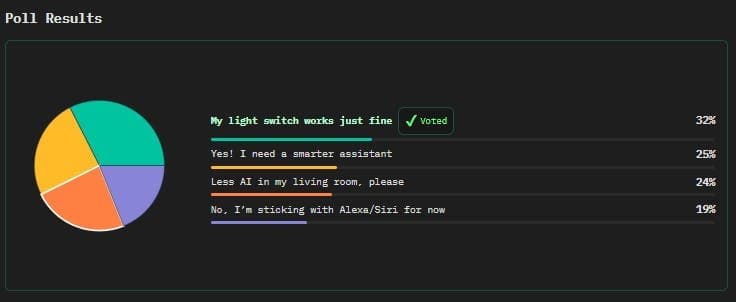
We asked our readers whether they would let Gemini live in their homes. The results break down as follows:
- 25 % – Yes, I want a smarter assistant – These voters are likely frustrated with existing smart speakers that stumble on simple tasks. The promise of a conversational partner that can understand context is appealing.
- 33 % – No, keep the AI out – A clear majority does not trust the technology enough to place it in a personal space.
- 32 % – Light‑switch level – Voters who would rather stick with a basic on/off switch than a full‑featured AI. This group reflects a pragmatic view that the current solution is “good enough.”
- 10 % – Loyal to other ecosystems – Users committed to Alexa or Siri who see no reason to switch.
The “yes” cohort is not a fringe group; it matches the proportion of users who have publicly complained about misfires from Alexa or Siri. The data suggests that a quarter of the market is ready to adopt a more capable assistant, provided it proves reliable.
Prediction markets: betting on Gemini 3.5
Polymarket’s “Gemini 3.5 released by …?” market shows $1.6 M in total volume, with three possible launch windows:
- May 31 – $545 k
- June 30 – $343 k
- July 31 – $50 k
Traders are overwhelmingly convinced the upgrade will happen, but they disagree on the exact timing. The concentration of bets in May and June aligns with Google I/O (May 19‑20), where a major announcement is expected.
Why does this matter for homeowners? Gemini 3.1 still suffers from bugs such as device misidentification and inconsistent responses. A stable 3.5 release before the end of summer could address those issues and give the 25 % of early adopters a functional product to live with for months. If the rollout slips to July or later, the current version will remain the default experience for a longer period, potentially reinforcing the “no AI” sentiment.
Competitive pressure from other models
Kalshi’s “Best AI at the end of 2026” market has Claude leading with a 62 % implied probability, Gemini at 19 %, and ChatGPT at 13 %. Gemini’s position has fallen since early 2025, when it briefly led the market. The shift mirrors the community poll: a sizable minority still sees Gemini as a viable contender, but most investors favor alternatives.
What Google needs to do next
- Close the reliability gap – Users need consistent device recognition and answer accuracy before they will trust an always‑on microphone.
- Show tangible home automation benefits – The new Nest camera summaries and proactive triggers are promising, but they must translate into everyday convenience (e.g., automatic lighting adjustments when a person enters a room).
- Communicate a clear upgrade path – If Gemini 3.5 arrives as expected, Google should highlight the specific bug fixes and new capabilities that address the pain points identified in the poll.
Bottom line
The data paints a picture of a market that is curious but cautious. About a quarter of homeowners are ready to let a conversational AI manage their daily routines, while the majority prefer to keep things simple or stay with existing ecosystems. Prediction markets are betting heavily on a summer release of Gemini 3.5, which could be the decisive factor that moves the needle toward broader adoption – or, if delayed, could cement the reluctance that dominates the poll results.
Stay tuned for the outcome of Google I/O and the next round of community polls. Your voice helps shape the future of residential AI.
Comments
Please log in or register to join the discussion