Building a SaaS without traditional backend frameworks or BaaS is possible using edge servers, direct database access, and minimal HTTP servers. This approach offers full control, faster performance, and deeper understanding of your application stack.
Everyone talks about using Rails, Django, Express, or Firebase to build a SaaS. That's the conventional story. But what if I tell you there's a way to build a full SaaS without touching a backend framework or even relying on BaaS? Most devs will call it crazy. But it's not. It's all about thinking differently about the server.
A backend isn't magic. It's just code that listens, stores, processes, and responds. If you can manage those 4 things without a traditional framework, you're golden. And with modern lightweight tech, it's 100% possible.
The secret? Edge servers + lightweight HTTP servers + direct database access + smart file-based storage.
Imagine this: your SaaS runs on a minimal Node.js or Deno server — literally 50–100 lines of code. You handle routing, validation, and authentication yourself. No framework hiding logic from you. Every request hits your tiny HTTP server, which talks directly to your database. That's it. Simple. Fast. Fully controllable.
For storage, think SQLite or Postgres running in a Docker container, or even better, Postgres serverless instances — you don't need a full BaaS. Just manage connection pooling carefully, and you're fine. Authentication? JWT + middleware. Payments? Stripe API directly, no abstraction. File uploads? S3-compatible object storage with signed URLs. Everything talks directly, no "backend framework" glue slowing you down.
You get full ownership and flexibility. Wanna implement a custom caching layer? Do it. Custom batching or queue system? Done. Traditional frameworks often force you into patterns or force updates every month. You won't have that problem. You learn every piece of your SaaS — and you can scale incrementally.
Sure, it's not beginner-friendly. You have to know what you're doing with routing, async requests, database indexing, and security. But if you do, your SaaS will be lighter, faster, and less coupled than a framework-heavy or BaaS-reliant app. Plus, debugging is a joy — there's no hidden magic. Every line of code is yours.
Building a SaaS without backend frameworks or BaaS is possible. The tech stack is minimal:
- Node.js / Deno for HTTP server
- Postgres / SQLite for database
- JWT / custom auth for authentication
- S3 or object storage for files
- Direct API calls to Stripe or other services
No framework boilerplate. No BaaS. Just pure your code, your control. And trust me — if you pull it off, you'll be in the rare group of devs who really understand their SaaS from top to bottom. Everyone else is just following tutorials. You? You'll own the logic, and that's priceless.
The Trade-offs of Framework-Free Architecture
When you choose to build without frameworks, you're making a deliberate trade-off between control and convenience. Traditional frameworks like Express or Django provide structure, middleware ecosystems, and battle-tested patterns that save development time. But they also introduce abstraction layers that can obscure what's actually happening.
Consider the request lifecycle in a typical Express app: middleware stacks, router layers, and framework-specific abstractions sit between your code and the HTTP request. In a minimalist approach, you're writing that HTTP server yourself. You decide exactly how requests flow through your system.
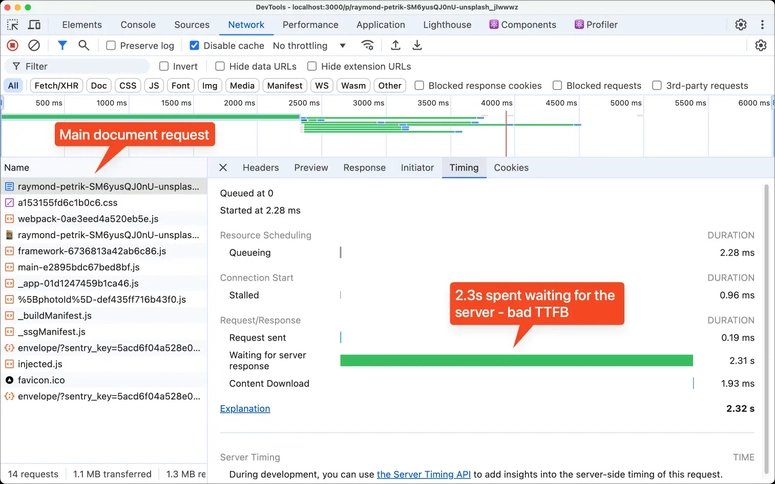
This granular control becomes particularly valuable when optimizing for performance. Without framework overhead, your request handling can be more direct. Database queries can be fine-tuned without fighting ORM abstractions. Response times become more predictable because you control every millisecond of the request lifecycle.
Database Access Patterns Without ORMs
One of the biggest shifts when abandoning frameworks is how you interact with your database. Most developers are accustomed to ORMs that provide object-oriented interfaces to relational data. Without these abstractions, you're working directly with SQL queries.
This direct approach has several advantages. You can write precisely optimized queries that match your exact needs. You avoid the overhead of ORM hydration and lazy loading that often causes performance issues in production. You also gain a deeper understanding of how your data layer actually works.
Connection management becomes critical in this setup. Without a framework's built-in connection pooling, you need to implement it yourself. This means understanding connection limits, timeout configurations, and how to handle connection failures gracefully. The trade-off is worth it for the performance gains and the complete control over your data access patterns.
Authentication and Security Considerations
Implementing authentication without a framework's built-in middleware requires careful attention to security fundamentals. JWT tokens provide a stateless authentication mechanism that works well in minimalist architectures. You generate tokens on successful login, validate them on each request, and handle token refresh and revocation yourself.
The security responsibility is entirely yours. You need to implement proper password hashing, secure token storage, rate limiting, and protection against common attacks like SQL injection and cross-site scripting. Without framework-provided security middleware, you must understand these threats and implement appropriate defenses.
This hands-on approach to security has educational value. You learn exactly how authentication flows work, how tokens are validated, and what security measures are actually necessary. This knowledge transfers to any system you work on, making you a more security-conscious developer overall.
Scaling Considerations for Framework-Free SaaS
Scaling a minimalist SaaS presents both challenges and opportunities. Without framework abstractions, you have direct control over how your application handles increased load. You can implement custom caching strategies, fine-tune database queries, and optimize your HTTP server for specific workloads.
Edge computing becomes particularly interesting in this context. By deploying your lightweight HTTP server to edge locations, you can serve users from geographically distributed points, reducing latency. The small footprint of your application makes it ideal for edge deployment, where resources are more constrained than in traditional server environments.
Database scaling requires careful planning. As your user base grows, you'll need to implement read replicas, connection pooling strategies, and potentially sharding. The direct database access approach gives you the flexibility to implement these scaling strategies exactly as needed, without fighting framework-imposed limitations.
The Learning Curve and Developer Experience
The primary barrier to adopting this approach is the steep learning curve. You need to understand HTTP protocol details, database optimization, security best practices, and system architecture at a deeper level than framework-based development requires. This knowledge investment pays dividends in the long run but requires significant upfront effort.
Debugging becomes more straightforward in some ways but more complex in others. Without framework abstractions, you can see exactly what's happening at each step of request processing. However, you're also responsible for implementing proper logging, error handling, and monitoring systems that frameworks typically provide out of the box.
The developer experience differs significantly from framework-based development. You have more control but also more responsibility. You write more boilerplate code but gain a deeper understanding of what that code does. The satisfaction comes from building something entirely your own, with complete understanding of every component.
When This Approach Makes Sense
This minimalist approach to SaaS development isn't for everyone or every project. It makes the most sense when you need maximum performance, complete control over your architecture, or want to deeply understand how your application works. It's particularly well-suited for applications with specific performance requirements or unique architectural needs that frameworks don't accommodate well.
For learning purposes, building a SaaS without frameworks provides invaluable education about web application fundamentals. You'll understand HTTP, databases, authentication, and scaling in ways that framework-based development never reveals. This knowledge makes you a more capable developer regardless of what tools you use in the future.
The trade-off is development speed. You'll write more code and spend more time on infrastructure concerns that frameworks handle automatically. If you're building a prototype or need to ship quickly, traditional frameworks might be the better choice. But if you're building something meant to last, with performance requirements that matter, the minimalist approach offers advantages that frameworks can't match.
The Future of Framework-Free Development
As edge computing becomes more prevalent and serverless technologies mature, the minimalist approach to SaaS development may become more common. The trend toward smaller, more focused tools aligns well with the philosophy of building without heavy frameworks. Developers are increasingly seeking control and understanding over convenience and abstraction.
The key is choosing the right tool for the job. Framework-free development isn't about rejecting all frameworks forever — it's about understanding when the overhead is worth it and when you can achieve better results with a more direct approach. As you gain experience with both paradigms, you'll develop the judgment to make these decisions effectively.
Building a SaaS without backend frameworks or BaaS is possible, and for many developers, it's a rewarding challenge that leads to better understanding, better performance, and ultimately better software. The question isn't whether you can do it — it's whether you should, based on your specific needs, constraints, and goals.
Comments
Please log in or register to join the discussion