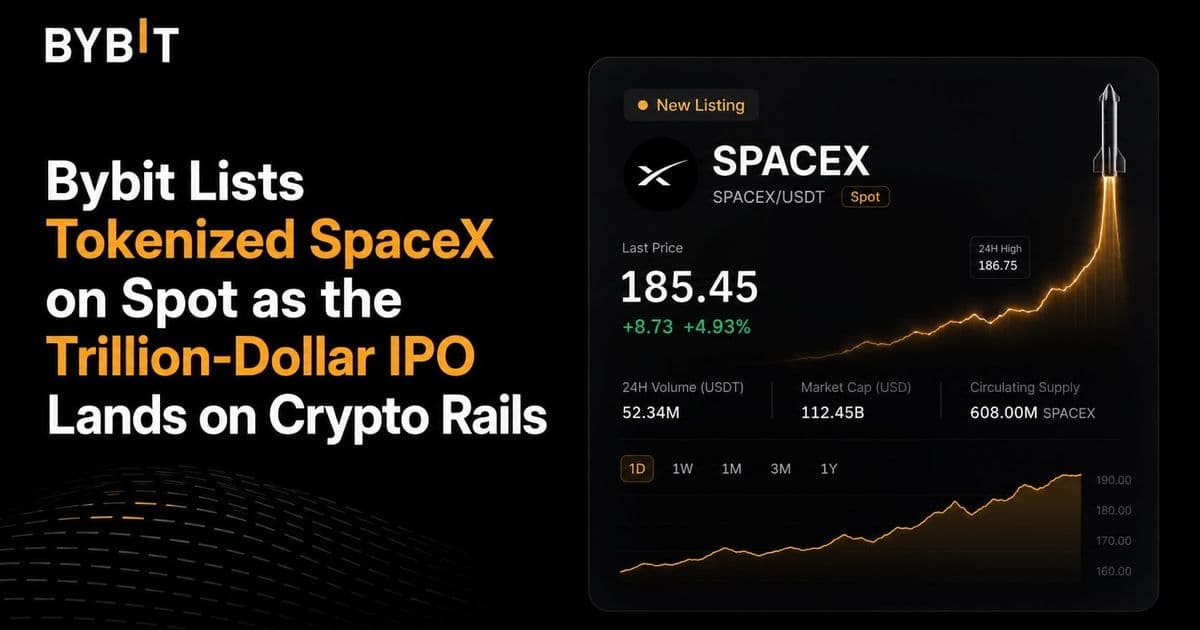
Bybit's tokenized SpaceX listing lets retail investors access pre-IPO shares through crypto rails, a move that signals traditional equity markets are increasingly comfortable living on-chain.
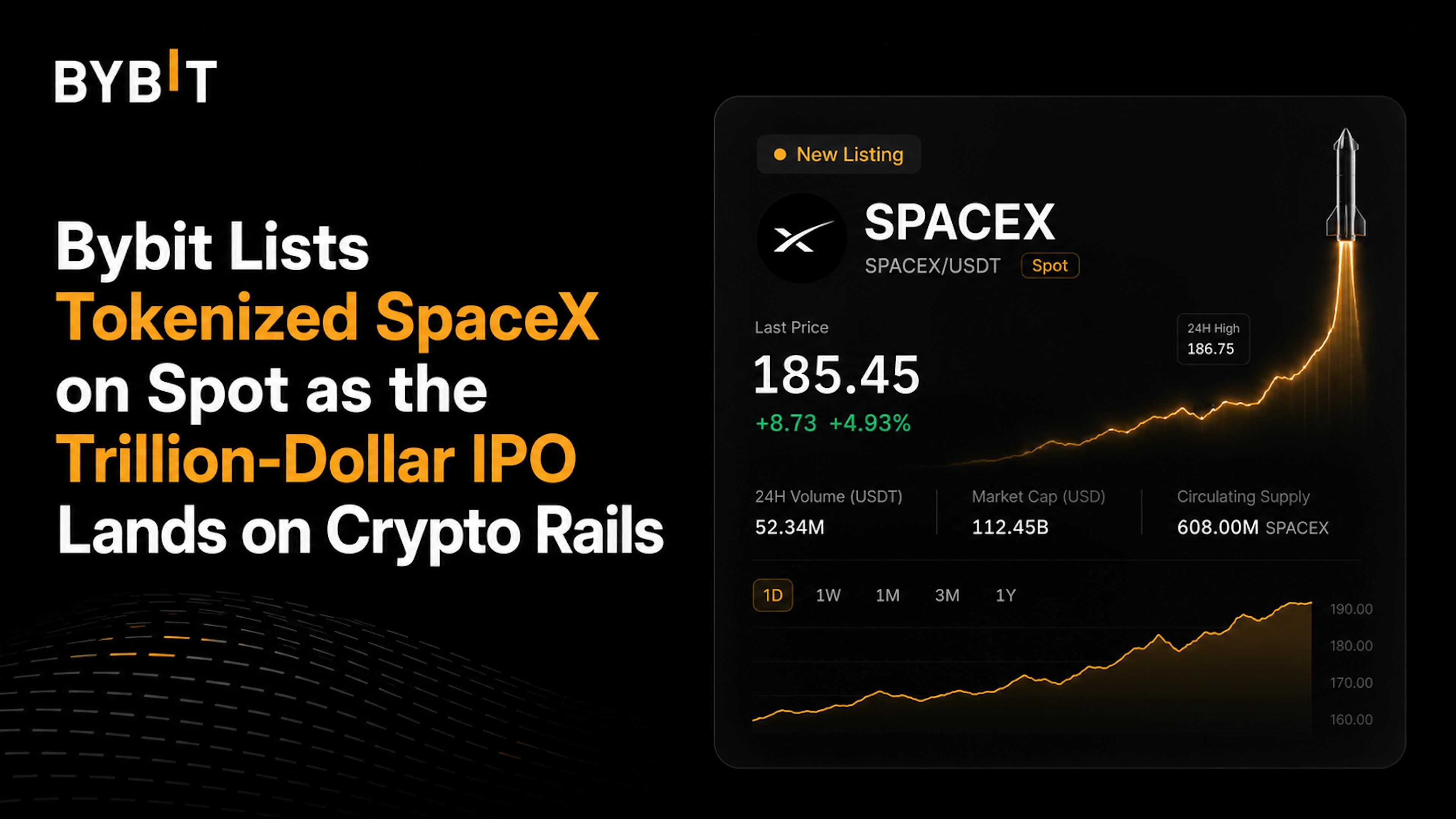
Bybit has listed tokenized SpaceX shares on its spot trading platform, giving crypto-native investors a way to gain exposure to one of the most anticipated IPOs in recent memory without waiting for a traditional brokerage account. The listing, announced June 13, 2026, arrives as SpaceX approaches a valuation that most analysts now peg well north of $1 trillion.
This is not the first time tokenized equities have surfaced in crypto, but the scale and timing matter. SpaceX is not just any private company. It is the satellite internet provider, rocket manufacturer, and space logistics operation that has fundamentally altered how the world thinks about access to orbit. And its IPO has been the subject of speculation for the better part of five years.
What Tokenization Actually Means Here
Tokenized equities work by representing ownership of a real-world asset as a digital token on a blockchain. In this case, Bybit is offering tokens that track the value of SpaceX shares held in custody by a partner institution. When you buy a tokenized SpaceX share on Bybit, you are not directly holding equity in SpaceX. You are holding a token that mirrors its price movements, backed by actual shares sitting in a regulated custodial environment.
The mechanism matters because it determines your rights. Token holders typically do not receive voting rights, dividends in the traditional sense, or direct shareholder protections. What they get is price exposure, 24/7 trading, and the ability to move in and out of positions without waiting for stock market hours.
This distinction is worth understanding clearly. The value proposition is not "you now own SpaceX." The value proposition is "you can trade SpaceX price action on crypto rails with the liquidity and accessibility that implies."
Why Bybit Is Doing This Now
The timing is not accidental. SpaceX's IPO has been the most anticipated private-to-public transition since Arm Holdings went public in 2023. Elon Musk has been coy about the timeline, but multiple reports in early 2026 pointed to filings being prepared. Bybit is positioning itself to capture demand before the actual listing happens.
For Bybit, this is a strategic play in the ongoing battle for crypto exchange market share. Binance has been exploring tokenized equities. Coinbase has signaled interest in expanding beyond pure crypto assets. OKX has been active in Hong Kong's regulated tokenization pilots. Bybit is making a move that says: we are not waiting for regulatory clarity in every jurisdiction. We are going to list the assets that people want to trade and figure out compliance as we go.
The exchange has grown significantly since its launch in 2018, building a reputation for aggressive listings and derivatives trading. Adding tokenized SpaceX shares fits that pattern. It is a high-demand asset with a built-in audience of both crypto traders and SpaceX enthusiasts who may not have traditional brokerage access.
The Broader Trend: Real-World Assets on Chain

Bybit's SpaceX listing is part of a much larger movement. Real-world asset tokenization, often abbreviated as RWA, has become one of the fastest-growing segments in crypto. BlackRock launched its BUIDL tokenized Treasury fund in 2024. Franklin Templeton has tokenized money market funds. Ondo Finance has built a business around tokenized yield-bearing assets.
The infrastructure for this has matured considerably. Custodial solutions for tokenized equities now exist from firms like Anchorage Digital, Fireblocks, and Copper. The legal frameworks, while still fragmented, have advanced enough that major exchanges feel comfortable listing these products. And demand from retail investors, particularly in markets where access to U.S. equities is limited, has proven consistent.
The tokenized equities market was estimated at roughly $12 billion in early 2026, up from under $2 billion two years prior. That growth rate suggests something more than novelty. It suggests that a meaningful segment of investors prefers the mechanics of blockchain-based ownership for assets they would otherwise access through traditional channels.
What Could Go Wrong
Skepticism is warranted. Tokenized equities introduce counterparty risk that direct stock ownership does not. If the custodian holding the underlying shares faces problems, the tokens become disconnected from their intended value. Regulatory crackdowns remain possible, particularly in jurisdictions where securities laws are strict about who can offer fractional ownership of private companies.
There is also the question of whether tokenized pre-IPO exposure actually serves investors well. SpaceX's IPO could be a buy-the-news event where shares pop on listing day and then trade sideways or down for months. Retail investors buying tokenized shares at a premium to the last private market valuation may find themselves underwater quickly.
And the 24/7 trading aspect, while convenient, can cut both ways. Traditional stock markets have circuit breakers and trading halts that prevent extreme volatility. Crypto markets do not. A sudden sell-off in tokenized SpaceX shares during off-hours could be more dramatic than anything that would happen on NASDAQ.
The Bigger Picture
What Bybit is really testing is whether crypto exchanges can become legitimate venues for trading traditional financial assets, not just cryptocurrencies. If tokenized SpaceX shares trade well and attract volume, it opens the door to tokenized shares of other high-profile private companies. OpenAI, Stripe, Databricks, and Klair could all follow.
The regulatory landscape will determine how far this goes. The SEC has been cautiously exploring frameworks for tokenized securities. European markets under MiCA have clearer rules. Asian markets are split, with Singapore and Hong Kong more open than mainland China.

For now, Bybit's listing is an experiment with real money on the line. The exchange is betting that demand for SpaceX exposure through crypto rails is strong enough to justify the regulatory and operational complexity. If it works, it could reshape how retail investors access high-growth private companies. If it does not, it becomes another cautionary tale in the long history of crypto products that promised to bridge traditional finance and ended up creating more friction than they removed.
The SpaceX IPO, whenever it happens, will be a landmark event for both traditional finance and crypto. Bybit is making sure that when the moment arrives, its users will not have to choose between the two.

Ishan Pandey covers AI, Web3, cybersecurity, startup funding, and enterprise SaaS.
Comments
Please log in or register to join the discussion