Canonical will integrate NVIDIA's DOCA-OFED networking stack into Ubuntu's official repositories, eliminating manual driver management and kernel compatibility issues for HPC and AI deployments.
Canonical has announced plans to integrate NVIDIA's DOCA-OFED software framework directly into the Ubuntu Linux archive, marking a significant step toward simplifying high-performance computing and AI deployments on this popular distribution. The move, revealed during NVIDIA's GTC 2026 kickoff, aims to eliminate the traditional headaches system administrators face when managing networking drivers for NVIDIA's high-end hardware.
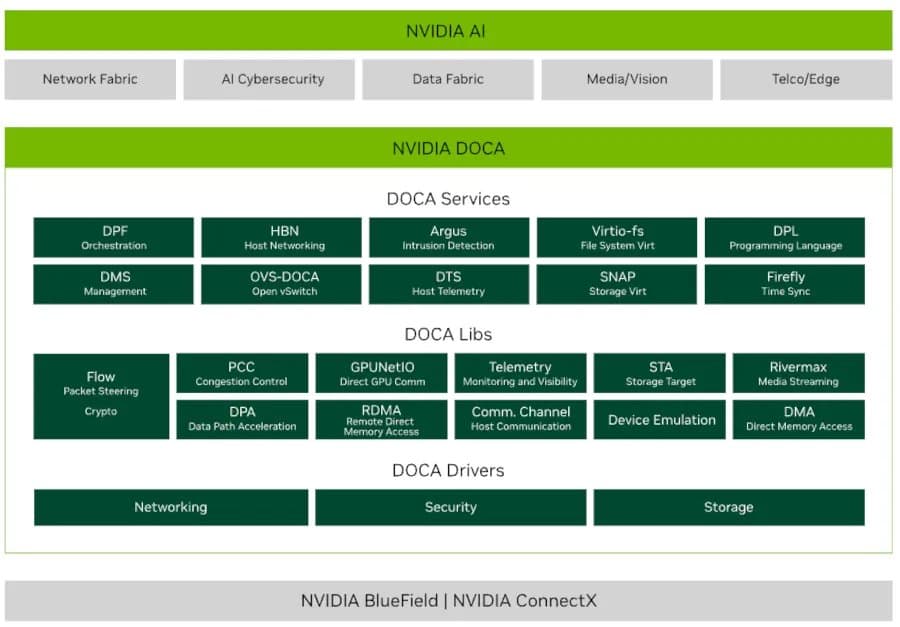
The DOCA-OFED framework represents NVIDIA's evolution of what was previously known as MLNX_OFED from the Mellanox era. It's a specialized subset of NVIDIA's broader DOCA (Data Center Offload and Computing Architecture) platform, designed specifically for the BlueField networking ecosystem that includes both DPUs (Data Processing Units) and SuperNICs.
Why This Matters for HPC and AI Workloads
For data centers running large-scale AI factories and HPC clusters, the integration addresses several critical pain points. Currently, administrators must rely on external installers or manual builds to get NVIDIA's networking stack working properly, often leading to version conflicts and kernel mismatch issues when operating systems update.
By bringing DOCA-OFED into Ubuntu's official repositories, Canonical is promising a more streamlined deployment experience that will be tested against Ubuntu's kernel versions. This integration means users can expect better compatibility and fewer operational headaches when deploying NVIDIA's networking solutions.
Technical Benefits of DOCA-OFED
The framework provides several performance-enhancing features crucial for modern computing workloads:
- RDMA (Remote Direct Memory Access): Enables direct memory transfers between systems without CPU intervention
- NVIDIA GPUDirect: Allows GPUs to communicate directly with network adapters
- CPU offload capabilities: Reduces processor load during network operations
- Lower and more predictable tail latency: Critical for time-sensitive applications
- Sustained throughput under load: Maintains performance during peak usage
These features combine to deliver the ultra-low latency and high-throughput data transfers essential for training large language models and running complex distributed simulations. The technology essentially provides the networking foundation needed for modern AI and HPC applications to reach their full potential.
What's Included in the Integration
According to Canonical's announcement, DOCA-OFED will be delivered as the DOCA-Host networking driver stack, which includes:
- Kernel drivers for hardware support
- User-space libraries for application development
- Management tools for system administration
- Support for NVIDIA network adapters
The integration will cover the complete software stack needed to leverage advanced networking capabilities, making it easier for developers and administrators to take advantage of NVIDIA's hardware without wrestling with driver compatibility issues.
Timeline and Availability
While the announcement was made during GTC 2026, the exact timing for when DOCA-OFED will appear in Ubuntu's repositories remains unclear. Canonical hasn't specified whether the integration will be ready in time for the upcoming Ubuntu 26.04 LTS release next month or if it will arrive in the archive after the launch.
This uncertainty leaves system administrators and developers in a holding pattern, though the commitment to integration suggests it's a priority for Canonical's Ubuntu engineering team.
The Broader Context
This announcement follows a similar pattern to last year's integration of NVIDIA's CUDA toolkit into Ubuntu's archive. Both moves reflect Canonical's strategy of making Ubuntu the easiest platform for deploying NVIDIA's high-performance computing solutions.
By reducing the friction involved in setting up these systems, Canonical is positioning Ubuntu as the go-to distribution for organizations building AI factories, HPC clusters, and other demanding computing environments where NVIDIA hardware plays a central role.
The integration represents a significant win for the Ubuntu community, as it removes one of the more complex aspects of deploying high-performance computing solutions on Linux. Rather than dealing with external installers and manual configuration, users will soon be able to install DOCA-OFED through Ubuntu's standard package management system, with the assurance that it's been tested against the distribution's kernels.
For organizations already invested in NVIDIA's ecosystem, this integration could significantly reduce deployment complexity and operational overhead, potentially accelerating the adoption of advanced networking technologies in enterprise environments.
Comments
Please log in or register to join the discussion