Carbon emerges as a modern, API-first open-source ERP/MES platform designed to eliminate vendor lock-in and empower manufacturers. Built on a cutting-edge tech stack including Remix, Supabase, and TypeScript, it offers full-stack type safety, real-time data, and extensible architecture for custom manufacturing workflows.
For years, manufacturers faced a painful dilemma: endure rigid, expensive enterprise resource planning (ERP) systems with punitive vendor lock-in, or attempt to build custom solutions from scratch. Enter Carbon—a game-changing open-source operating system for manufacturing that's rewriting the rules.
The Manufacturing Software Crisis
Traditional ERPs often fail manufacturers for three core reasons:
- API-first tooling is nonexistent - Legacy systems resist integration
- Extortionate vendor lock-in - Exit costs cripple innovation
- One-size-fits-none approach - Unique workflows demand custom solutions
Carbon's founders experienced these pain points firsthand while building manufacturing systems. Their solution? An AGPLv3-licensed platform that combines ERP, Manufacturing Execution Systems (MES), Quality Management (QMS), and more in a single extensible framework.
Architectural Breakthroughs
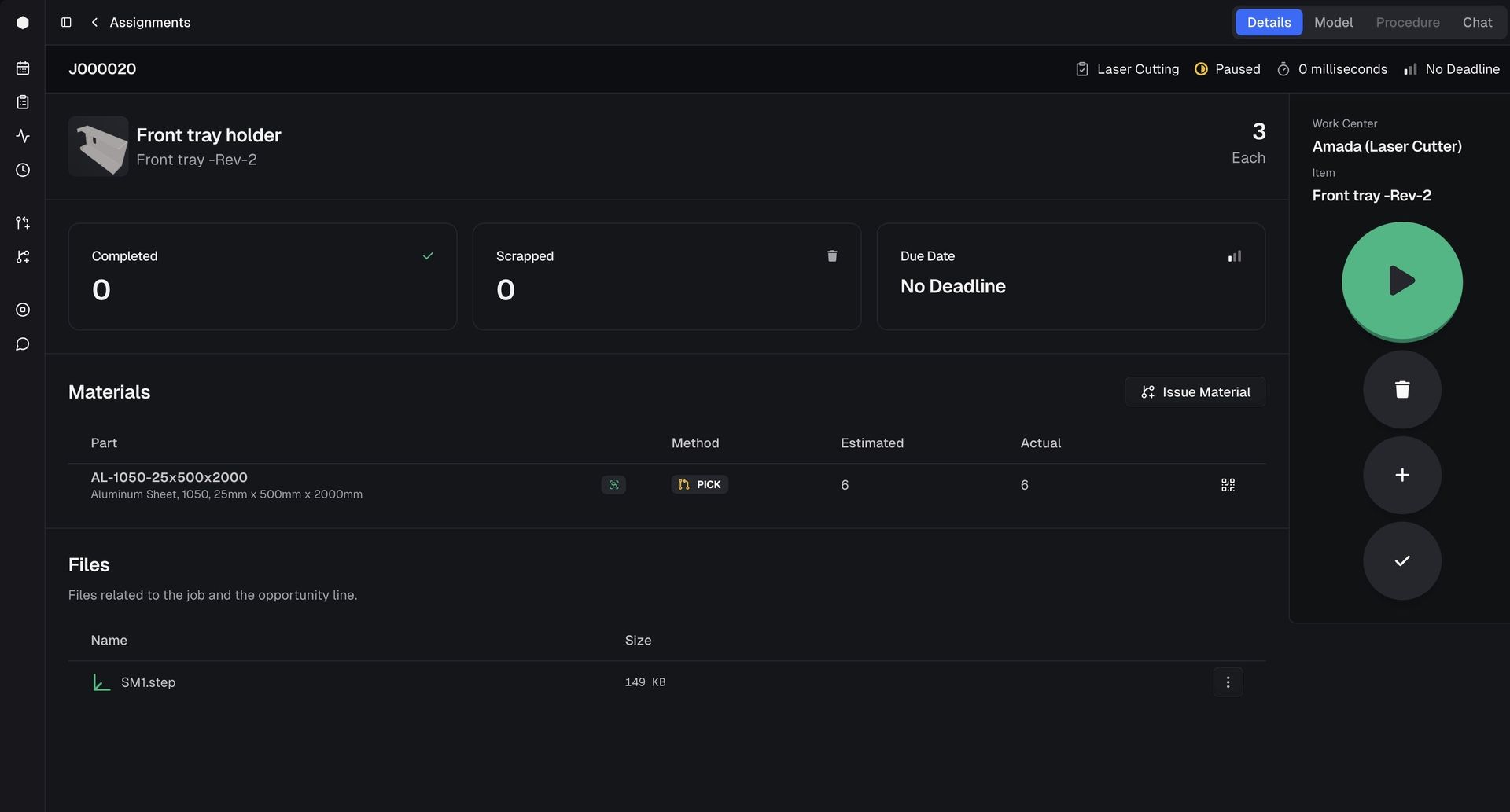 Caption: Carbon's ERP interface featuring nested Bill of Materials (BoM) and real-time traceability
Carbon's architecture solves critical industry challenges:
- Unified permissions across apps with ABAC and RBAC
- Full-stack TypeScript from database to UI
- Realtime subscriptions to PostgreSQL via Supabase
- Composable dependency graphs for complex operations
- Row-level security isolating tenant data
"Each manufacturing company has unique needs," explains Carbon's documentation. "We built extension points into every layer so you own your stack."
The Modern Tech Stack
Carbon's stack reads like a developer's wishlist:
// Core dependencies
{
  framework: 'Remix',
  language: 'TypeScript',
  styling: 'Tailwind',
  database: 'Supabase',
  auth: 'Supabase Auth',
  jobs: 'Trigger.dev',
  hosting: 'Vercel'
}
 Supabase powers Carbon's real-time data layer
The monorepo (managed via Turborepo) separates concerns cleanly:
/appsfor deployable applications (ERP, MES, Academy)/packagesfor shared libraries (database schemas, UI components, Stripe integration)
Getting Started Guide
- Clone the repository (public forks comply with AGPLv3)
- Configure services (Upstash Redis, PostHog, Stripe)
- Run
npm run db:buildto initialize containers - Launch apps simultaneously:
npm run dev
Developers get immediate access to:
- ERP at
localhost:3000 - MES at
localhost:3001 - Supabase Studio at
localhost:54323
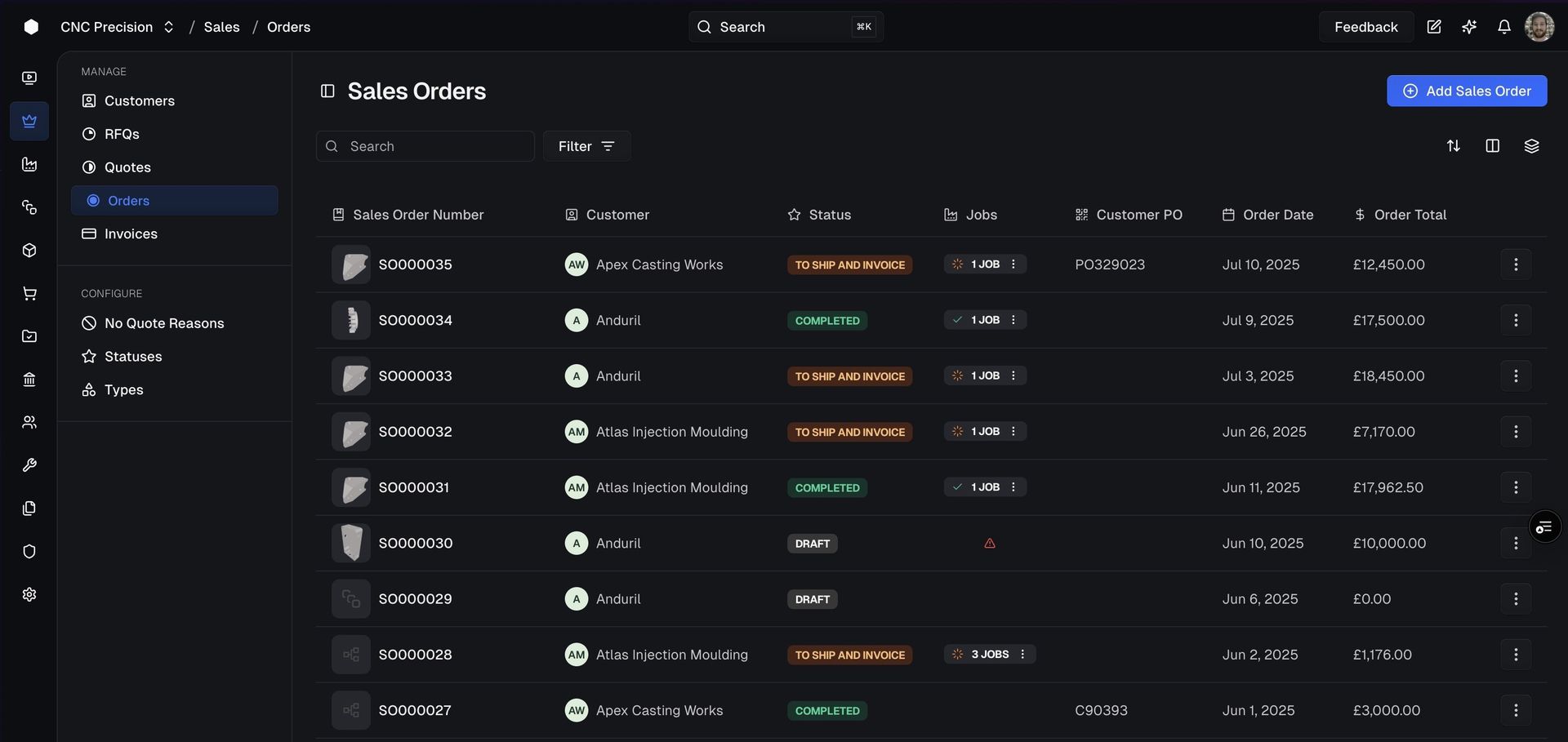
{{IMAGE:5}} Carbon's MES interface for shop floor operations
API-First Philosophy
Carbon treats APIs as first-class citizens:
// External API consumption example
import { createClient } from '@supabase/supabase-js';

const carbon = createClient(API_URL, PUBLIC_KEY, {
  headers: { 'carbon-key': API_KEY }
});

// Fetch all items for authenticated company
const { data } = await carbon.from('item').select('*');
Auto-generated documentation lives at /x/api/js/intro, reflecting real-time schema changes.
Why This Matters
Carbon represents a seismic shift in industrial software:
- Democratizes manufacturing tech - No six-figure implementations
- Prevents vendor hostage situations - Own your data and logic
- Accelerates innovation - Extend rather than replace
As supply chains grow more complex, open-source platforms like Carbon offer something rare: adaptability without compromise. For developers in manufacturing tech, this isn't just another ERP—it's an architectural liberation.
Comments
Please log in or register to join the discussion