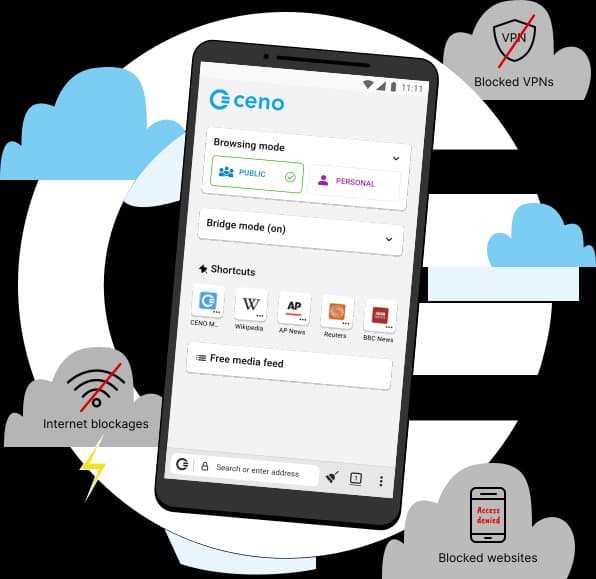
Ceno Browser enables users to access and share web content through a distributed network, bypassing censorship and internet outages.
Ceno Browser represents a novel approach to web access in regions where internet connectivity is unreliable or censored. Unlike traditional browsers that rely solely on direct connections to websites, Ceno creates a distributed network where users share content with each other, enabling access even when conventional internet infrastructure fails.
How Peer-to-Peer Web Browsing Works
The browser operates on a simple but powerful principle: when you access a website through Ceno, that content becomes available to other Ceno users. This creates a distributed cache of web content that persists even when the original site becomes inaccessible. If your internet connection drops or a website is blocked in your region, Ceno can retrieve the content from other users who have previously accessed it.
This peer-to-peer model means the more people use Ceno, the more resilient the network becomes. Each user contributes to a collective pool of accessible information, creating what the developers call "resilient websites" that can survive traditional network failures.
Circumventing Censorship and Outages
For users in countries with heavy internet censorship, Ceno offers a practical alternative to VPNs, which are often blocked themselves. The browser can access content through its distributed network even when standard circumvention tools fail. This makes it particularly valuable in regions where governments periodically shut down internet access or block specific websites.
Technical Foundation and Open Source
Ceno is built on Ouinet, an open-source library that enables peer-to-peer connectivity for web content. This architecture allows third-party developers to incorporate similar functionality into their own applications. The open-source nature of both Ceno and Ouinet means the technology can be audited, improved, and adapted by the global community.
Cost and Performance Benefits
Beyond resilience, Ceno offers practical advantages. By routing traffic through peer-to-peer networks rather than traditional servers, users can reduce their data costs. The distributed caching system can also improve loading times for frequently accessed content, as it may be retrieved from nearby peers rather than distant servers.
Building a Resilient Web Community
With over 566,000 active users, Ceno demonstrates the practical demand for alternative web access methods. Users contribute to the network simply by browsing normally - every page they visit becomes potentially available to others. This creates a self-reinforcing system where increased usage directly improves the service for everyone.
Getting Started with Ceno
The browser is available for mobile devices through standard app stores. eQualitie, the not-for-profit organization behind Ceno, emphasizes that preparation is key - users should download and use the browser before an internet crisis occurs, not during one. Regular use helps build the distributed cache that will be crucial when traditional access fails.
For those interested in the technical details or wanting to contribute to the project, the open-source components are available for review and modification. Ceno represents a practical application of peer-to-peer technology to solve real-world problems of internet access and freedom of information.
Download Ceno Browser to join the distributed web access network.
Comments
Please log in or register to join the discussion