Moonshot AI's Kimi K2.6 defeats Claude, GPT-5.5, and Gemini in AI coding contest, signaling narrowing gap between open-source and proprietary AI systems.
In a surprising turn of events, Kimi K2.6, an open-weights model from Chinese startup Moonshot AI, has emerged victorious in a competitive programming challenge that pitted it against industry frontrunners like Claude, GPT-5.5, and Gemini. The results, from the AI Coding Contest's Word Gem Puzzle challenge, suggest that the performance gap between open-source and proprietary AI systems is closing faster than many observers expected.
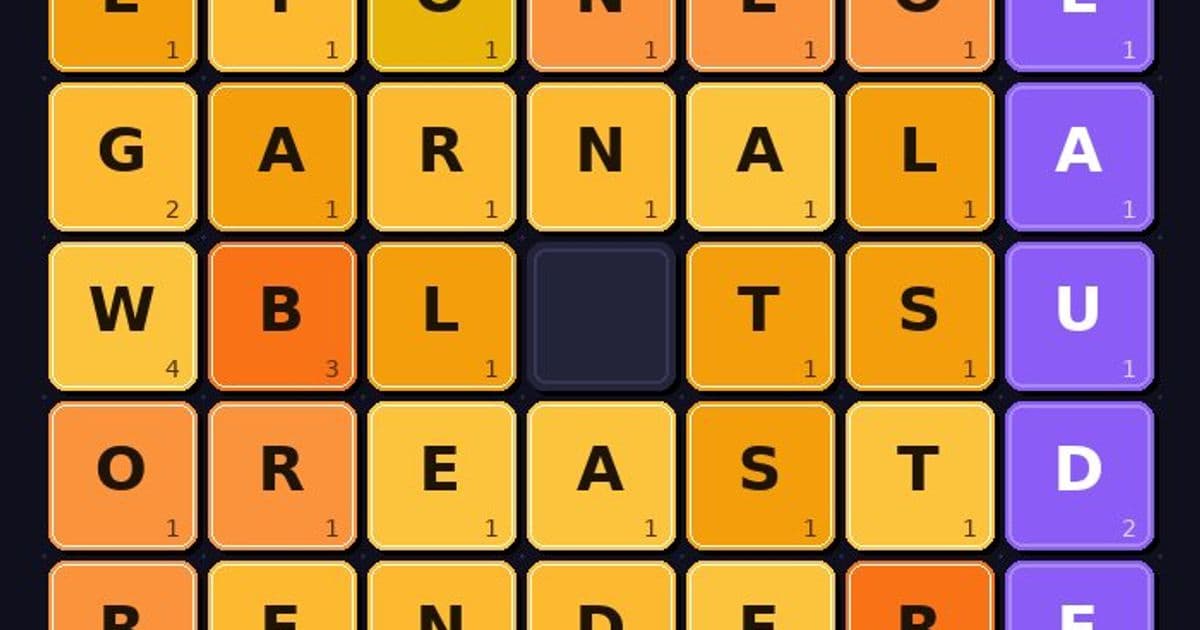
The Word Gem Puzzle challenge presented models with a complex sliding-tile letter puzzle where contestants had to form valid English words on a grid. The scoring system favored longer words while penalizing short ones, creating an interesting dynamic where models needed both strategic thinking and efficient execution.
Kimi K2.6's victory was decisive, accumulating 22 match points with a 7-1-0 record. The model employed an aggressive, greedy strategy that focused on maximizing positive-value words through continuous tile movements. While this approach had some inefficiencies on smaller grids, it proved particularly effective on the largest 30×30 boards where seed words had been scrambled, requiring active reconstruction rather than simple discovery.
"Kimi's cumulative score of 77 was the highest in the tournament," noted Rohana Rezel, who runs the AI Coding Contest. "Its approach was greedy: score each possible move by what new positive-value words it unlocks, execute the best one, repeat. When no move unlocked a positive word, it fell back to the first legal direction alphabetically."
The performance of Kimi K2.6 is particularly noteworthy given that Moonshot AI is a relatively young company, founded in 2023. As an open-weights model, Kimi represents a different approach to AI development compared to the closed, proprietary systems from Western labs like OpenAI, Google, and Anthropic.
"This isn't a clean China-beats-West story; it's two specific models that won," Rezel clarified. "Kimi K2.6 is open-weights, publicly available from Moonshot AI, a Chinese startup founded in 2023. MiMo V2-Pro is currently API-only; the tweet linked here is Xiaomi confirming that weights for their newer V2.5 Pro model are dropping soon."
The technical approach of the winning models revealed interesting insights about AI problem-solving strategies. While Kimi employed an aggressive sliding strategy, the second-place finisher, MiMo V2-Pro from Xiaomi, took the opposite approach by scanning the initial grid for long words and claiming them without any sliding movements. Despite their fundamentally different approaches, both models achieved remarkably similar results.
"MiMo's sliding code exists in the repo, but its 'best value greater than zero' threshold never triggered, so in practice it never slid once," Rezel explained. "It went straight to scanning the initial grid for words of seven letters or more and blasted all its claims in a single TCP packet."
The Western models, including GPT-5.5 and Claude Opus 4.7, placed third through seventh, with GPT-5.5 showing particular strength on certain grid sizes. Claude's inability to slide tiles proved to be a significant limitation in the challenge, highlighting how different AI architectures may be better suited for specific types of problems.
The results have broader implications for the AI landscape. A year ago, the prevailing assumption was that Western frontier labs maintained an insurmountable capability lead that open-weights models couldn't close. However, Kimi K2.6 now scores 54 on the Artificial Analysis Intelligence Index, compared to GPT-5.5's 60 and Claude's 57. While not parity, these numbers indicate a narrowing gap that has significant implications for AI accessibility and competition.
"When models within a few index points of the frontier are also freely available to run locally, that's a different competitive situation than the one that existed a year ago," Rezel observed. "This challenge is one data point in that shift. The gap is small enough now that it shows up in results like this one."
Moonshot AI's success with Kimi suggests that the company has developed an effective approach to training and optimizing open-weights models that can compete with proprietary systems. While specific details about the company's funding or technical architecture aren't publicly available, the performance of their model speaks to the progress being made in open-source AI development.
The AI Coding Contest provides a valuable benchmark for evaluating model performance on real-time programming tasks, complementing more traditional benchmarks that focus on static evaluations. The Word Gem Puzzle, in particular, tests models' ability to write clean functional code, connect to external systems, and make strategic decisions under time constraints.
As the field continues to evolve, events like this contest highlight the importance of diverse evaluation methodologies that capture different aspects of AI capability. The success of Kimi K2.6 suggests that open-weights models are not just catching up to proprietary systems but may soon excel in specific domains where their architectural advantages can be fully leveraged.
For developers and organizations considering which AI systems to adopt, these results underscore the value of looking beyond marketing claims and evaluating models on tasks relevant to their specific use cases. The open-weights approach, exemplified by Kimi K2.6, offers the additional benefit of transparency and customization that closed systems cannot provide.
The AI landscape continues to evolve at a rapid pace, with Moonshot AI's Kimi K2.6 demonstrating that innovation is not limited to established players. As open-weights models continue to improve, we may see a more diverse and competitive AI ecosystem that benefits from both cutting-edge research and open collaboration.
Comments
Please log in or register to join the discussion