Cloudflare has unveiled EmDash, a TypeScript-based CMS positioned as a "spiritual successor" to WordPress, featuring serverless architecture, AI-native capabilities, and enhanced security through plugin sandboxing.
Cloudflare has unveiled EmDash, a new open-source content management system positioned as a "spiritual successor to WordPress" that aims to address the long-standing security and scalability challenges of the world's most popular CMS platform.
Built entirely in TypeScript and powered by Astro 6.0, EmDash represents Cloudflare's ambitious attempt to reimagine the CMS landscape for a serverless, edge-computing era. The platform is currently available as a v0.1.0 developer preview and can be deployed on Cloudflare's infrastructure or any Node.js server.
The WordPress Problem EmDash Aims to Solve
WordPress powers over 40% of the internet, a remarkable achievement that has democratized publishing and created a massive global community of developers. However, Matt "TK" Taylor and Matt Kane, senior engineers at Cloudflare, argue that the platform's architecture has become increasingly problematic in today's cloud-native world.
"WordPress is a massive success that has enabled anyone to be a publisher, and created a global community of WordPress developers," they explain. "But the WordPress open source project will be 24 years old this year. Hosting a website has changed dramatically during that time. When WordPress was born, AWS EC2 didn't exist."
The fundamental security issue Cloudflare identifies is WordPress's plugin architecture. Plugins typically have full access to a site's files and database, creating a massive attack surface. The company claims that approximately 96% of WordPress security vulnerabilities stem from third-party plugins.
EmDash's Architectural Innovations
EmDash addresses these security concerns through a fundamentally different approach: plugin sandboxing. Plugins run in isolated environments called Dynamic Workers, with explicit permissions that limit their access to only what they need.
"Plugins are securely sandboxed and can run in their own isolate, via Dynamic Workers, solving the fundamental security problem with the WordPress plugin architecture," Taylor and Kane explain. This architectural shift means that a vulnerable or malicious plugin can no longer compromise an entire website.
Beyond security, EmDash embraces modern web development practices. The platform is built on Astro, which Cloudflare describes as "the fastest web framework for content-driven websites." This foundation enables automatic scaling and pay-per-use compute, aligning with the serverless paradigm that has become dominant in cloud computing.
AI-Native Features and Developer Experience
EmDash is designed from the ground up to be managed programmatically by AI agents. The platform includes three built-in primitives for AI interaction:
- Agent Skills: Describe CMS capabilities, plugin hooks, and guidance on structuring plugins or porting WordPress themes
- EmDash CLI: Programmatic interaction with the CMS
- Built-in MCP server: Exposes the same capabilities as the Admin UI to any MCP-compatible client
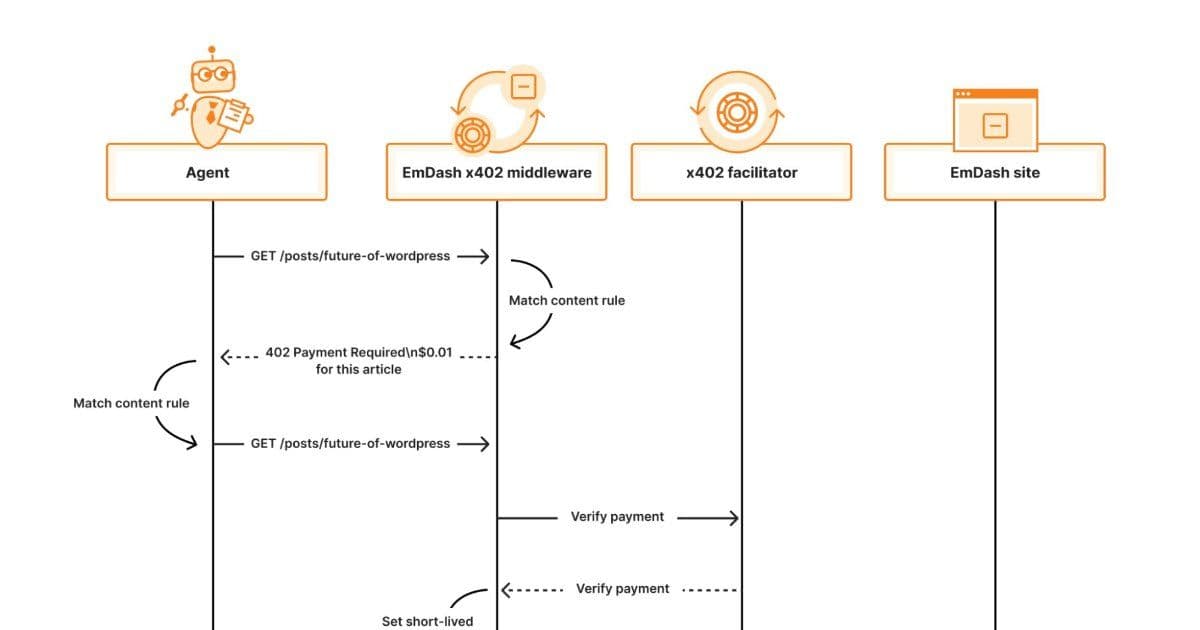
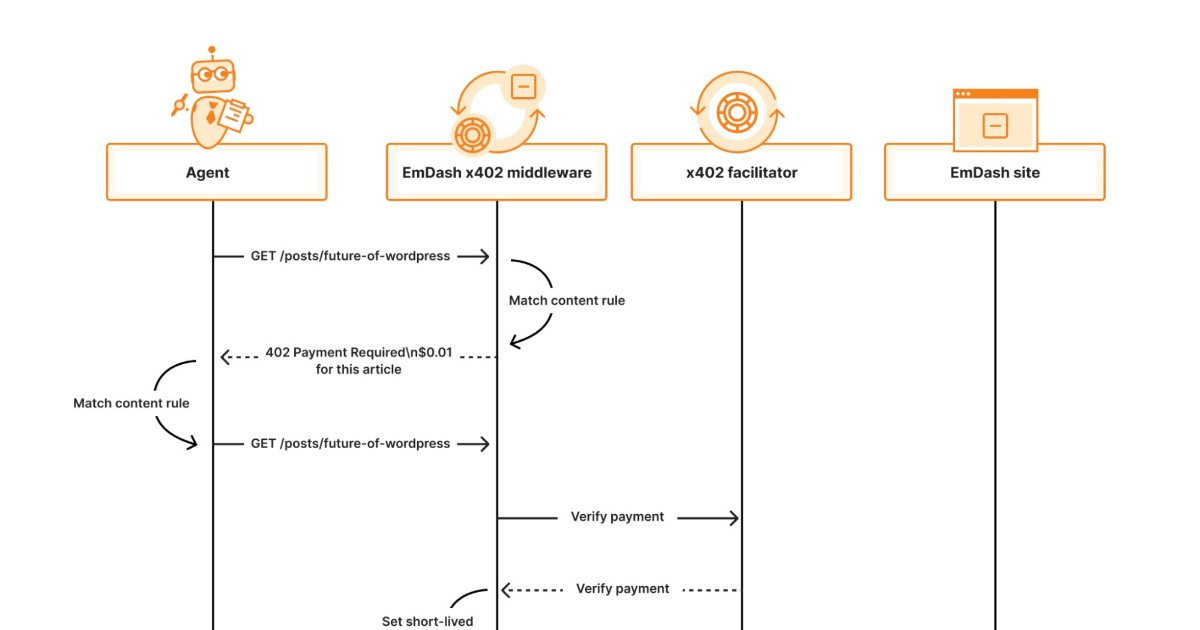
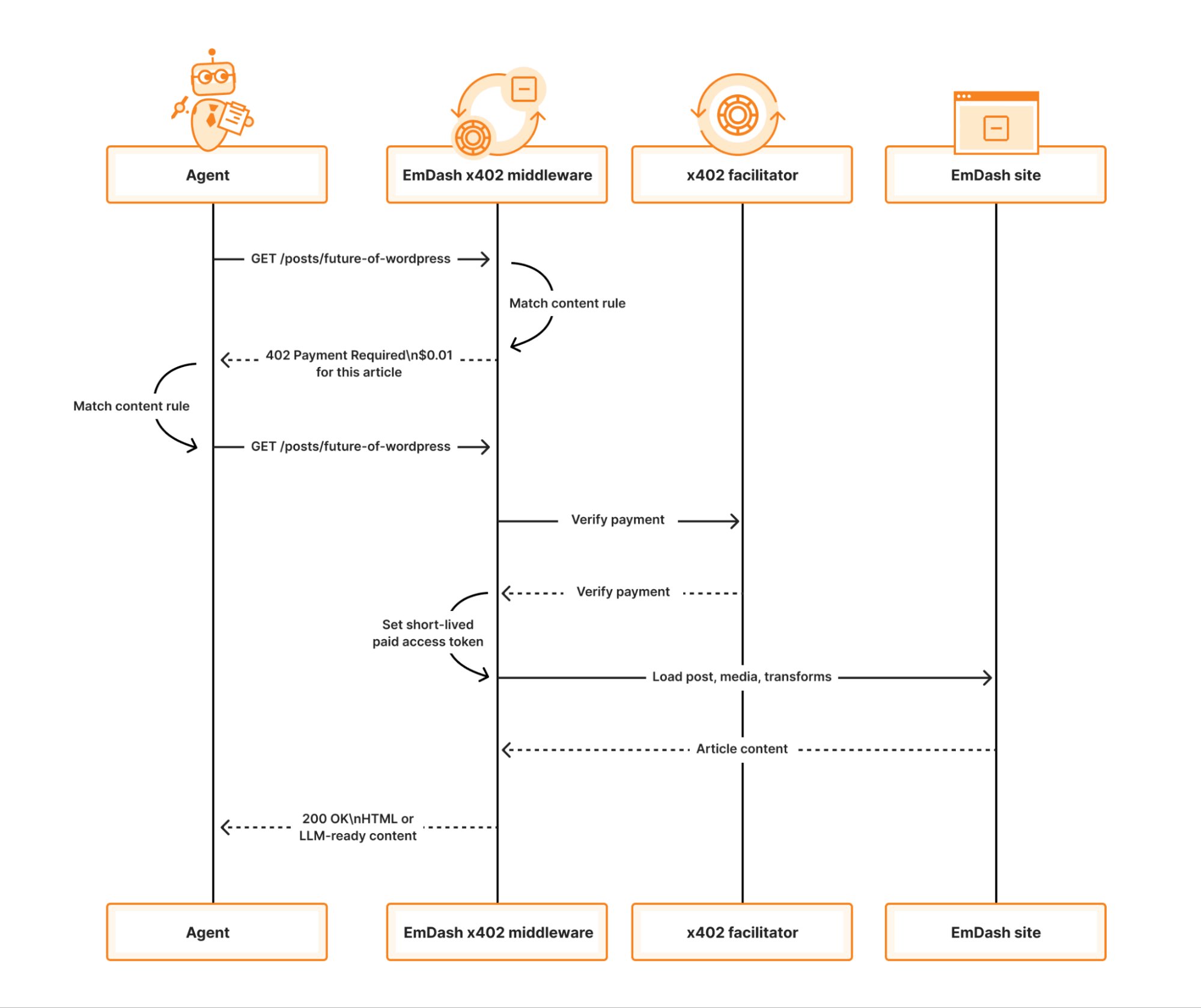
This AI-first approach extends to content monetization through x402 support, which enables site owners to charge AI agents or any HTTP client for content access on a pay-per-use basis, without requiring subscription infrastructure or custom engineering.
Migration and Compatibility Considerations
While EmDash aims to be compatible with WordPress, Cloudflare emphasizes that no WordPress code was used in its creation. This allows for a more permissive open source license while enabling a clean architectural break from WordPress's legacy constraints.
By design, EmDash themes are standard Astro projects, covering pages, layouts, components, styles, and a seed file that tells the CMS what content types and fields to create. This approach leverages the growing Astro ecosystem while maintaining compatibility with modern web development workflows.
Community Response and Criticism
The announcement has sparked significant debate within the WordPress and broader CMS community. Matt Mullenweg, co-founder of WordPress and CEO of Automattic, was quick to respond, suggesting that "EmDash was created to sell more Cloudflare services" and noting that its plugin security only works on Cloudflare.
Mullenweg's critique extends beyond technical concerns to philosophical ones about openness and community. "There's a new CMS every other day. And that's great! I love building CMSes and I totally get why other people do," he writes. "Some day, there may be a spiritual successor to WordPress that is even more open. When that happens, I hope we learn from it and grow together."
Some developers initially questioned whether EmDash was an April Fool's joke, given its announcement date of April 1st. However, the project appears to be genuine, with the GitHub repository showing active development under an MIT license.
Technical Limitations and Market Position
Critics have pointed out several limitations that may hinder EmDash's ability to compete with WordPress. Roger Montti, a search marketing consultant, summarizes the skepticism: "I was quite excited to read Cloudflare's announcement about a 'spiritual successor' to WordPress, but the more I read, the more it became apparent that EmDash is not the solution I am looking for."
A common concern is that EmDash includes a graphical interface for managing content but does not yet offer a point-and-click website builder like those found in many modern CMS platforms. This omission could limit its appeal to non-technical users who have been WordPress's core audience.
On Hacker News, some users see EmDash as "the polar opposite of the direction CMSs need to go," while others acknowledge its technical merits. User earthlingdavey comments: "I've worked with WordPress on and off for 10 years, and I'm convinced that this project has got 2 things absolutely spot on. TypeScript and Worker plugins."
The Broader Context: CMS Evolution
EmDash's announcement comes at a time when the CMS landscape is rapidly evolving. The State of JavaScript 2025 survey reveals that TypeScript is cementing its dominance in web development, making EmDash's TypeScript foundation particularly relevant.
Cloudflare's move also reflects the broader industry trend toward serverless architectures and edge computing. The company's recent launch of Dynamic Workers open beta for isolate-based sandboxing for AI agent code execution aligns perfectly with EmDash's architectural vision.
What This Means for Developers
For developers, EmDash represents an intriguing alternative to WordPress that addresses many of the platform's long-standing pain points. The TypeScript foundation provides type safety and better developer experience, while the serverless architecture eliminates many operational headaches.
However, the platform's current limitations and Cloudflare's potential lock-in concerns mean that widespread adoption is far from guaranteed. Developers considering EmDash should weigh its innovative features against the maturity and ecosystem of existing solutions.
Looking Forward
The success of EmDash will ultimately depend on whether it can attract a critical mass of developers and users. While its technical innovations are compelling, WordPress's entrenched position and massive ecosystem present significant barriers to entry.
As the CMS landscape continues to evolve, EmDash represents an important experiment in reimagining what a modern content management system can be. Whether it becomes the "spiritual successor" to WordPress or simply another interesting attempt at CMS innovation remains to be seen.
What is clear is that the conversation around CMS architecture, security, and developer experience is evolving, and EmDash has successfully pushed that conversation forward. For developers working with content management systems, understanding EmDash's approach and innovations will be valuable regardless of whether they adopt the platform itself.
The project is open source and available on GitHub under an MIT license, inviting developers to explore its architecture and contribute to its evolution as it moves beyond its current preview stage.
Comments
Please log in or register to join the discussion