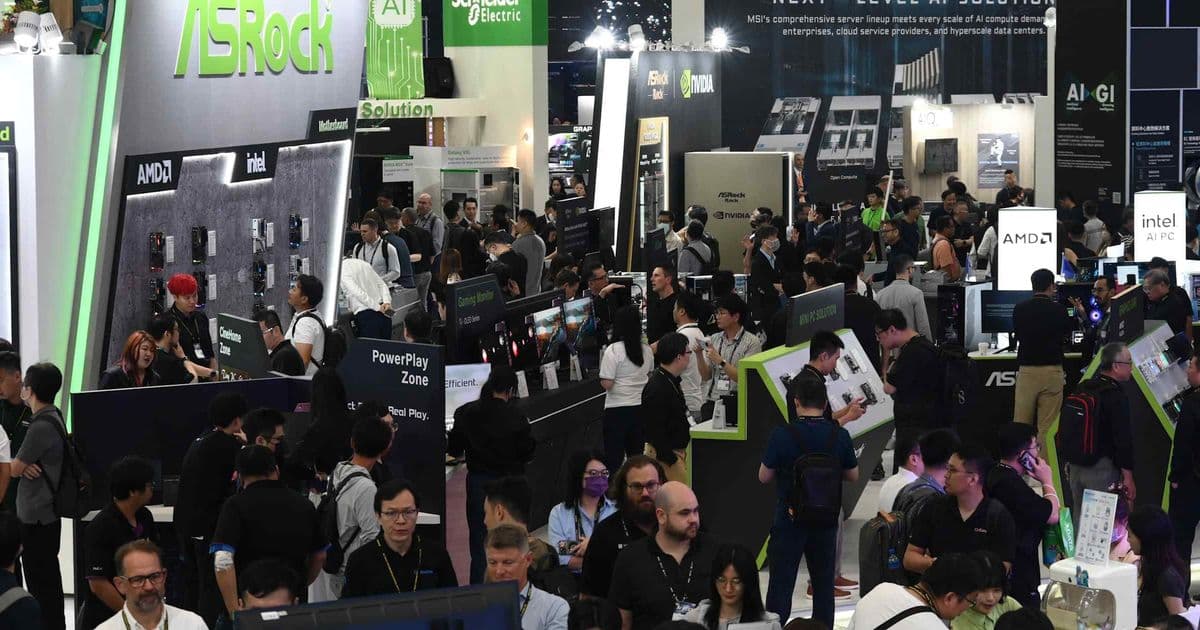
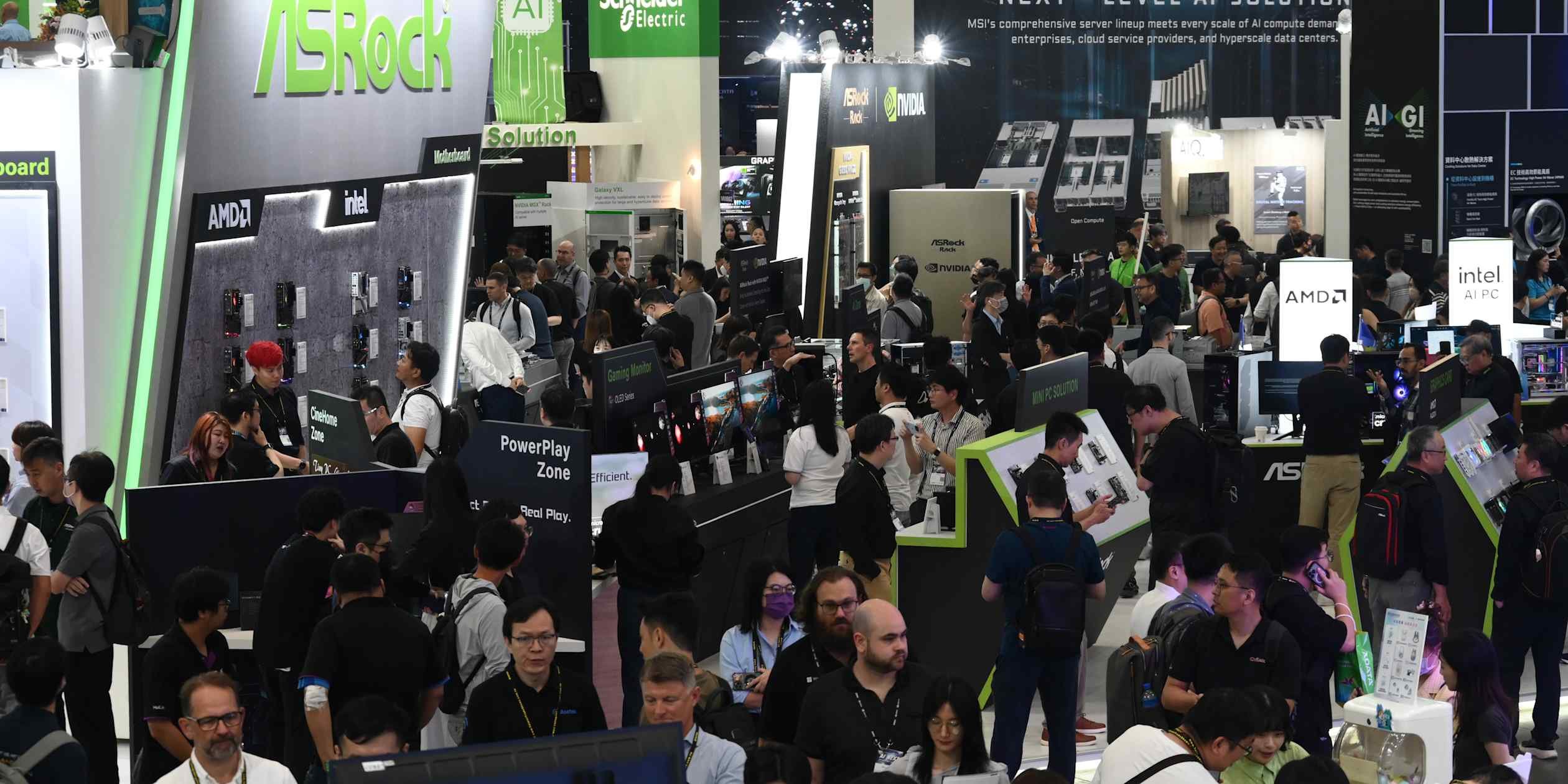
As the world's most influential chip companies gather in Taipei for Computex 2026, the event highlights Taiwan's critical role in the global AI revolution while geopolitical tensions and market shifts reshape the semiconductor landscape.
The annual Computex tech conference returns to Taipei this week, bringing together executives from the world's most influential semiconductor companies at a pivotal moment for the industry. As artificial intelligence continues to drive unprecedented demand for computing power, Taiwan's position as a global chip manufacturing hub has never been more critical—or more contested.
Computex 2026 officially kicks off Tuesday with a star-studded lineup of industry leaders. The event will feature speeches from CEOs of major chip companies including Arm, Intel, and Marvell, with a particular focus on artificial intelligence applications, robotics, and next-generation mobility technologies. These themes reflect the industry's rapid pivot toward AI-centric hardware solutions as companies scramble to meet surging demand.
The timing of Computex coincides with what industry analysts describe as the most significant chip shortage since the pandemic era, though this time driven specifically by AI data center expansion rather than consumer electronics. According to recent market research, global data center construction has increased by 37% year-over-year, creating unprecedented demand for high-performance chips, fiber-optic cables, and other optical components.
"The AI revolution has fundamentally changed the semiconductor industry's calculus," said Chen Wei-jen, an analyst with Market Intelligence & Consulting Institute (MIC). "Companies that were once focused on consumer devices are now prioritizing AI-specific architectures, creating both opportunities and challenges for established players."
NVIDIA CEO Jensen Huang will be in Taipei for the event, hosting the company's GTC conference on artificial intelligence alongside Computex. Huang's presence underscores the critical role of Taiwan's semiconductor ecosystem in enabling the AI boom, with TSMC (Taiwan Semiconductor Manufacturing Company) producing the vast majority of advanced AI chips designed by NVIDIA and other U.S. companies.
The geopolitical context surrounding this year's Computex adds another layer of complexity. Taiwan's opposition leader Cheng Li-wun is currently touring the United States to promote her foreign policy credentials, emphasizing the Kuomintang's position on the "one China" principle. This comes amid heightened tensions in the Taiwan Strait, with recent military exercises by China and increased U.S. support for Taiwan's semiconductor industry.
The U.S. has recognized Taiwan's strategic importance in the semiconductor supply chain, with the CHIPS Act allocating $52 billion to boost domestic semiconductor production. However, analysts note that Taiwan's advanced manufacturing capabilities—particularly in the sub-3nm process nodes—cannot be easily replicated elsewhere in the world for at least the next decade.
"Taiwan's semiconductor industry represents a unique concentration of talent, technology, and manufacturing expertise that would take decades and billions of dollars to replicate elsewhere," according to a recent report from the Center for Strategic and International Studies (CSIS).
Meanwhile, in South Korea, local elections this week will provide a referendum on President Lee Jae Myung's administration. The left-leaning leader, who took office one year ago, has presided over a boom in the KOSPI, South Korea's main stock index, which has risen 18% since his inauguration. However, recent polls suggest growing public skepticism about the U.S. alliance amid the Iran conflict, potentially affecting South Korea's role in the global semiconductor supply chain.
South Korea's semiconductor industry, led by giants like Samsung and SK Hynix, faces increasing competition from Taiwan in the advanced memory and foundry markets. While Samsung has made significant strides in 3nm chip production, TSMC maintains a technological lead in the most advanced process nodes, which are critical for AI applications.
India's monetary policy announcement Friday adds another dimension to the global semiconductor landscape. The Reserve Bank of India faces the difficult task of balancing inflation concerns with growth imperatives as the rupee languishes near record lows. While India has been positioning itself as an alternative manufacturing hub through its semiconductor incentive program, progress has been slower than expected, with only a handful of projects receiving final approval.
"India's semiconductor ambitions face significant challenges, including infrastructure gaps and a nascent talent ecosystem," said Priya Sharma, an analyst with India Ratings and Research. "While the government's incentives are substantial, building a competitive semiconductor industry will require at least a decade of consistent investment and policy support."
As Computex 2026 unfolds in Taipei, the event serves as both a showcase for Taiwan's technological prowess and a barometer of the global semiconductor industry's health. With AI continuing to drive unprecedented demand for advanced chips, Taiwan's role in the tech ecosystem has never been more critical—even as geopolitical tensions and market shifts create both challenges and opportunities for the island's tech sector.
The conference's emphasis on AI, robotics, and next-generation technologies reflects the industry's recognition that the future of computing extends beyond traditional silicon chips to encompass specialized hardware optimized for machine learning, autonomous systems, and other emerging applications.
For industry observers, Computex 2026 represents more than just a trade show—it's a window into the technological and geopolitical forces that will shape the global semiconductor landscape for years to come. As companies race to develop the next generation of AI hardware, Taiwan's position at the center of this technological revolution seems assured, even as the challenges of sustaining this leadership mount.
Comments
Please log in or register to join the discussion