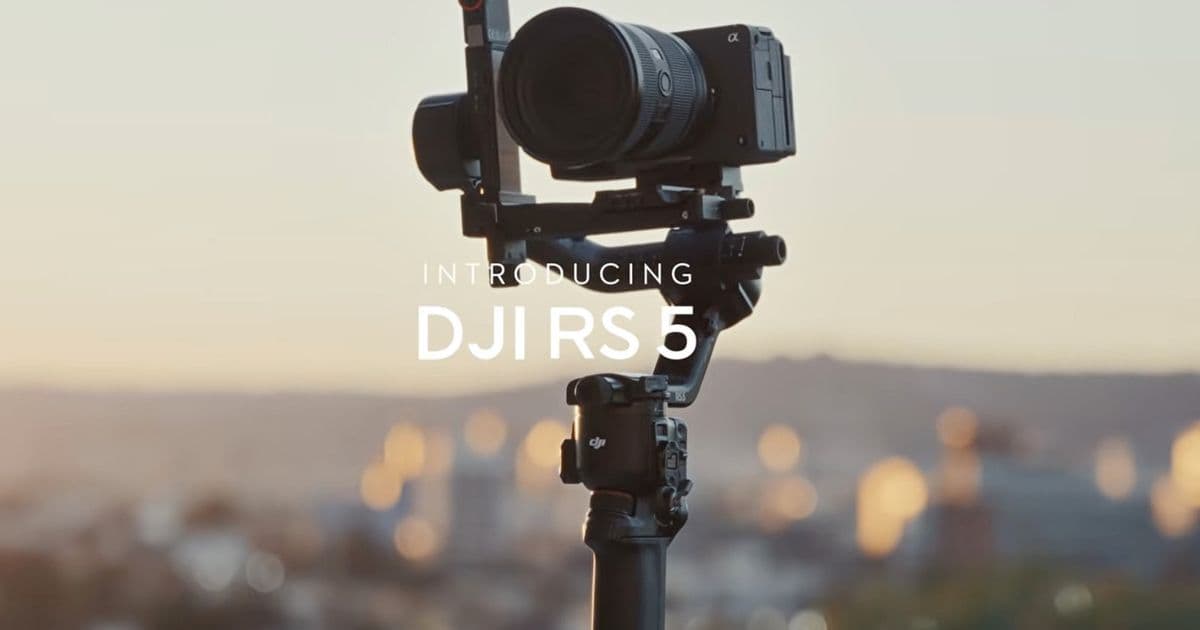
DJI's fifth-generation RS 5 stabilizer offers improved battery life and charging speeds but reduced payload capacity, launching worldwide except in the United States with prices starting at $479 in Canada.
DJI has officially launched its fifth-generation Ronin 5 (RS 5) camera stabilizer globally, marking the company's first major update to its popular stabilization lineup since the RS 4 Pro. After a two-week exclusive run in China, the RS 5 is now available across most international markets, though notably absent from the United States.
What's New in the RS 5 The RS 5 represents DJI's first camera stabilizer to incorporate its fifth-generation stabilization algorithm, promising smoother footage and more responsive control. The device also features significant improvements in battery life and charging speeds compared to previous generations, addressing two common pain points for professional videographers who rely on these tools for extended shooting sessions.
However, the RS 5 comes with a notable payload reduction. While the RS 4 Pro could handle up to 4.5 kg (9.9 lbs), the RS 5 is limited to 3 kg (6.6 lbs). This change suggests DJI is targeting a slightly different market segment or prioritizing the new stabilization technology over maximum carrying capacity.
Global Pricing and Availability The RS 5 has launched in Canada at $479 CAD (approximately $360 USD), with various combo packages available up to $1,138 CAD (around $855 USD). European markets will see the stabilizer starting at £485 in the UK and €569 across the Eurozone.
DJI is offering several bundle options for the RS 5, including packages that combine the device with its RS Enhanced Intelligent Tracking Module and Electronic Briefcase Handle for £619/€719. Additional combo packages incorporate the SDR Transmission Combo and other accessories, though specific pricing for these configurations varies by region.
The US Market Mystery Perhaps the most surprising aspect of the RS 5 launch is DJI's decision to exclude the United States from the initial release. While the company has confirmed the stabilizer will be available in other parts of North America, including Canada, there's currently no timeline for when—or if—the RS 5 will reach American consumers.
This absence is particularly noteworthy given the US's significance as a market for professional video equipment. The RS 4 Mini remains available in the US at $349, providing a more affordable option for those seeking DJI stabilization technology, albeit without the RS 5's latest features.
How It Compares For existing RS 4 Pro owners, the decision to upgrade depends largely on priorities. The RS 5's improved stabilization algorithm and better battery performance may justify the switch for some, but the reduced payload capacity could be a dealbreaker for those regularly mounting heavier camera setups.
The RS 4 Mini continues to serve as a compelling alternative, particularly for mirrorless camera users or those working with lighter payloads. At $349, it offers many of DJI's stabilization benefits at a more accessible price point, though it lacks the RS 5's latest technological advancements.
Who Should Consider the RS 5 The RS 5 appears best suited for professionals and enthusiasts using mirrorless or lightweight cinema cameras who prioritize the latest stabilization technology over maximum payload capacity. The improved battery life and charging speeds make it particularly attractive for documentary filmmakers, event videographers, and content creators who need reliable performance throughout long shooting days.
For those working with heavier cinema cameras or who require the maximum possible payload, the RS 4 Pro remains the better choice, assuming it's available in their region. Meanwhile, the RS 4 Mini continues to serve the entry-level and lightweight camera market effectively.
The global launch of the RS 5, minus the US market, represents an interesting strategic move by DJI. Whether this is a temporary exclusion or a more permanent decision remains to be seen, but it certainly leaves American videographers watching closely for any changes to the company's distribution plans.
Comments
Please log in or register to join the discussion