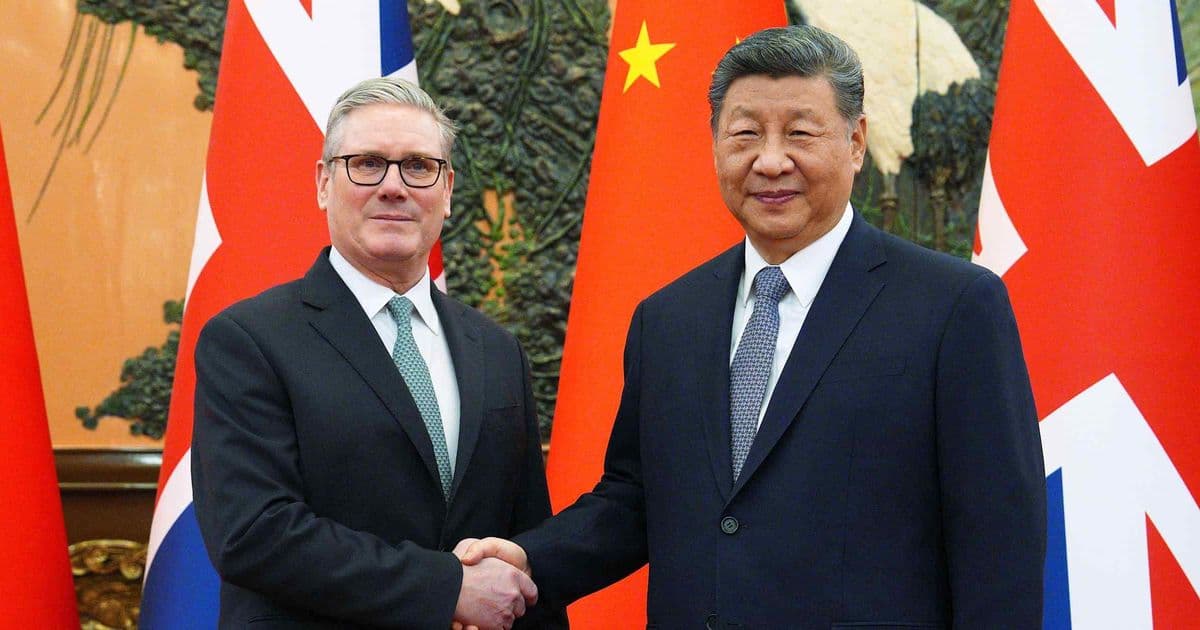
Chinese President Xi Jinping and British Prime Minister Keir Starmer held talks in Beijing as AstraZeneca announced a major $15 billion investment in China, signaling efforts to repair UK-China relations amid shifting global alliances.
Chinese President Xi Jinping and British Prime Minister Keir Starmer met in Beijing on January 29, 2026, marking a significant diplomatic engagement between the two nations as they seek to recalibrate their relationship amid growing global uncertainty. The meeting comes alongside a major business development, with pharmaceutical giant AstraZeneca announcing plans to invest $15 billion in China over the coming years.
Diplomatic Reengagement Amid Global Shifts
The talks between Xi and Starmer represent the first high-level meeting between Chinese and British leaders in several years, reflecting both nations' desire to stabilize ties that have been strained by various geopolitical issues, including Hong Kong, human rights concerns, and technology competition. The meeting took place at the Great Hall of the People, a venue traditionally reserved for significant diplomatic engagements.
British Prime Minister Starmer's visit to China signals London's intent to diversify its international partnerships as it navigates an increasingly complex global landscape. The timing is particularly noteworthy given the United Kingdom's "special relationship" with the United States and the potential for shifts in transatlantic alliances under changing U.S. administrations.
AstraZeneca's Major Investment
Accompanying the diplomatic engagement was AstraZeneca's announcement of a substantial $15 billion investment commitment to China. This investment represents one of the largest commitments by a British company to the Chinese market and underscores the pharmaceutical industry's continued confidence in China's long-term growth prospects despite geopolitical tensions.
The investment is expected to focus on research and development, manufacturing capabilities, and expanding access to innovative medicines across China's vast healthcare market. For AstraZeneca, China represents not only a significant market opportunity but also a strategic location for global pharmaceutical innovation.
Analysts See Modest Outcomes
Despite the high-profile meeting and significant business announcement, analysts suggest that the outcomes of this diplomatic engagement may be more modest than transformative. The complex web of issues between the UK and China—ranging from trade imbalances to human rights concerns—means that any immediate breakthroughs are unlikely.
However, the meeting itself is seen as a positive step toward establishing more predictable and constructive bilateral relations. Both sides appear committed to managing their differences while exploring areas of mutual interest, particularly in trade and investment.
Economic Context
The meeting occurs against a backdrop of significant economic developments in the region. China's battery storage installations have reportedly tripled, indicating the country's continued push toward renewable energy and grid modernization. Meanwhile, tensions in the Taiwan Strait continue to influence regional dynamics and global supply chains.
For the United Kingdom, strengthening ties with China comes as it seeks to position itself as a global trading nation post-Brexit. The AstraZeneca investment demonstrates that major British companies still see significant opportunities in the Chinese market, even as political relations have been challenging.
Strategic Implications
The Xi-Starmer meeting and accompanying business developments highlight several broader trends in international relations:
Diversification of Partnerships: The UK appears to be actively working to maintain strong relationships with both the United States and China, recognizing the importance of both markets to its economic future.
Business Diplomacy: The timing of AstraZeneca's announcement alongside the diplomatic meeting underscores how major business investments can serve as confidence-building measures in international relations.
Managed Competition: Both nations seem to be pursuing a strategy of managed competition, seeking to compartmentalize areas of disagreement while maintaining cooperation in areas of mutual benefit.
Looking Ahead
While the immediate outcomes of the Xi-Starmer meeting may be limited, the engagement sets the stage for continued dialogue between the two nations. The AstraZeneca investment provides tangible evidence of ongoing economic ties that both governments will likely seek to protect and expand.
As global geopolitical alignments continue to evolve, the ability of major powers to maintain productive relationships despite differences will be increasingly important. The UK-China engagement represents one example of how nations are navigating this complex landscape, balancing strategic interests with economic imperatives.
The coming months will reveal whether this diplomatic thaw leads to more substantive cooperation or whether the underlying tensions that have characterized UK-China relations in recent years will continue to limit the depth of their partnership.
Comments
Please log in or register to join the discussion