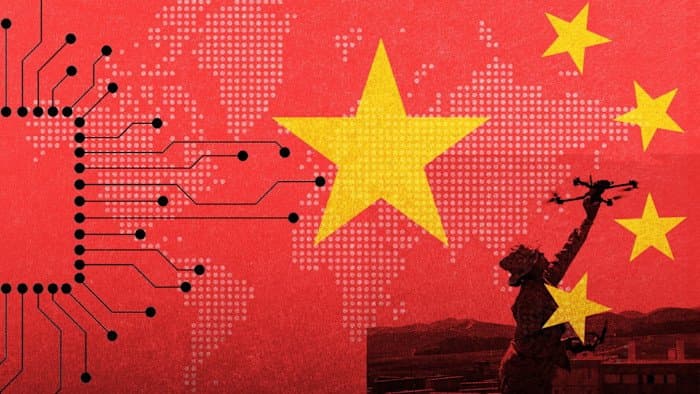
Financial Times reports the Department of Defense is negotiating with leading AI companies to develop automated tools for reconnaissance of China's power grids, utilities, and sensitive networks.
The Department of Defense has been in talks with leading artificial intelligence companies about building automated tools to conduct reconnaissance of China's power grids, utilities, and other sensitive networks, according to sources cited by the Financial Times.
The discussions represent a significant escalation in the use of AI for national security purposes, with the Pentagon seeking to leverage advanced machine learning capabilities to identify vulnerabilities in Chinese infrastructure. The tools under consideration would automate the process of mapping and analyzing critical systems that could be potential targets or points of weakness in the event of conflict.
While specific companies involved in the talks were not named, the report suggests that major players in the AI industry are being approached to develop these specialized reconnaissance capabilities. This development comes amid growing tensions between the United States and China over technological supremacy, trade policies, and military posturing in the Indo-Pacific region.
The initiative appears to be part of a broader strategy to enhance America's ability to conduct cyber operations and electronic warfare. By automating the reconnaissance process, the Pentagon aims to gather intelligence more efficiently and comprehensively than traditional methods allow. The AI-powered tools would likely be capable of processing vast amounts of data from various sources to create detailed maps of critical infrastructure and identify potential vulnerabilities.
However, the talks have raised concerns within the AI industry about the ethical implications of developing such tools. Some companies may be reluctant to participate due to fears about enabling offensive cyber capabilities or contributing to an AI arms race. The discussions also highlight the growing intersection between commercial AI development and national security interests, as governments increasingly seek to harness private sector technological advances for military and intelligence purposes.
The Financial Times report adds another dimension to the ongoing debate about the role of AI in modern warfare and international relations. As AI capabilities continue to advance rapidly, questions about appropriate boundaries, international norms, and the potential for unintended consequences become increasingly pressing.
This development follows other recent moves by the U.S. government to restrict Chinese access to advanced AI technologies and to promote domestic AI development for national security applications. The Pentagon's efforts to build specialized AI tools for reconnaissance against China's infrastructure networks represent a concrete manifestation of these broader strategic priorities.
The talks between the DOD and AI companies underscore the growing importance of artificial intelligence in geopolitical competition and the complex ethical and strategic considerations that arise as these technologies become increasingly powerful and pervasive.
Comments
Please log in or register to join the discussion