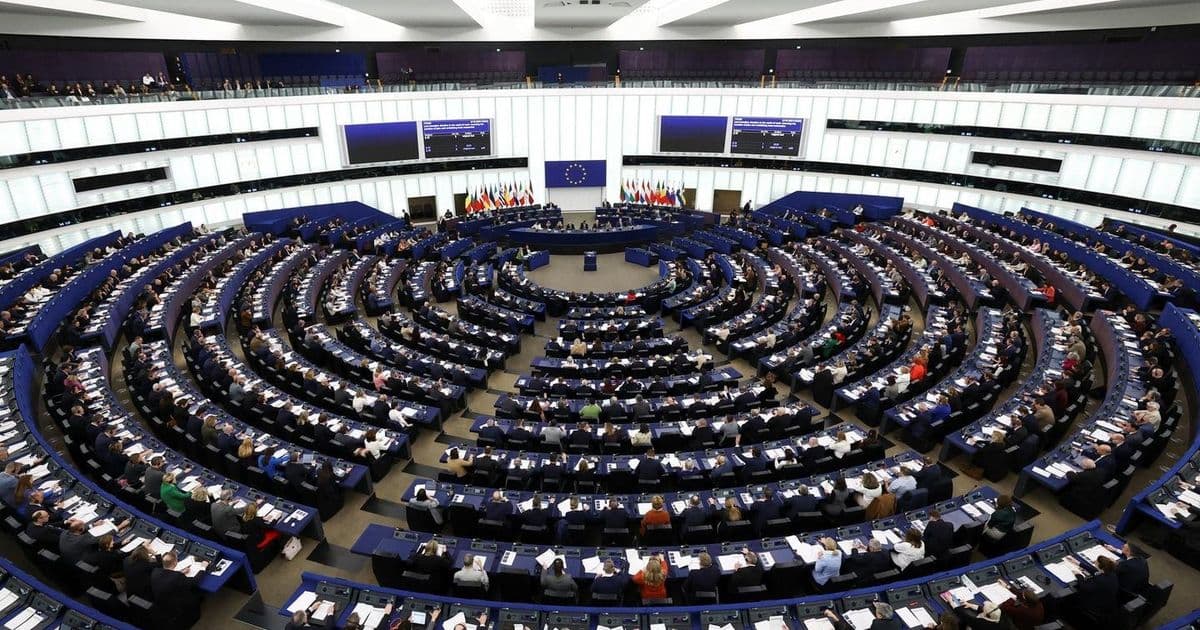
European lawmakers have paused approval of a key US trade agreement in response to President Trump's tariff threats over Greenland, signaling a potential new front in transatlantic trade tensions that could impact tech companies and supply chains.
The European Parliament's decision to hold off on ratifying a trade deal with the United States represents a calculated political maneuver rather than a complete breakdown in negotiations. Lawmakers from across the political spectrum agreed to suspend the vote that would have removed tariffs on US industrial goods, a move that sends a clear message to Washington without permanently scuttling the agreement.
The timing is significant. The Parliament was preparing to vote in the coming weeks on implementing the deal, which was finalized in July after months of tense negotiations that saw the US impose 15% tariffs on EU goods. By delaying approval, EU lawmakers retain leverage while avoiding the nuclear option of killing the agreement entirely.
The Greenland Factor
The immediate trigger is President Trump's threats to impose tariffs on six EU countries—including economic powerhouses France and Germany—if they don't support his demands regarding Greenland. The US president has framed Greenland's status as a national security issue, though European leaders view this as an overreach into Denmark's autonomous territory.
This isn't merely a territorial dispute. Greenland's strategic location in the Arctic, along with its untapped mineral resources, has drawn increased attention from global powers. The EU's resistance to US pressure reflects a broader pattern of European pushback against what many perceive as American unilateralism.
Economic Stakes for Tech
For the technology sector, this trade uncertainty creates immediate ripple effects. The original deal was designed to remove tariffs on industrial goods, which includes many technology components and equipment. A prolonged freeze could maintain higher costs for European tech manufacturers importing US components, while potentially protecting some European industries from American competition.
European tech companies with significant US operations—such as SAP, ASML, and various semiconductor firms—face a complex calculation. They benefit from stable transatlantic trade but also operate in a geopolitical environment where national security concerns increasingly override commercial interests.
Retaliation Options on the Table
EU leaders are preparing multiple response scenarios. The most immediate is maintaining the freeze on the trade deal ratification. More aggressive options include:
- Activating the €93 billion tariff package that was agreed upon during last year's trade standoff but suspended until February 6
- Using the EU's anti-coercion trade instrument, which allows for targeted retaliation against countries attempting to pressure member states
- Coordinating with other US allies who might face similar threats
French President Emmanuel Macron has been particularly vocal about using the anti-coercion instrument, which was designed specifically for situations where a third country attempts to force EU members into policy concessions through trade threats.
Industry Concerns
Technology industry associations have expressed concern about the potential for escalating trade barriers. The Digital Europe program, which depends on transatlantic data flows and technology cooperation, could face complications if trade tensions spill over into digital policy.
European tech startups that rely on US venture capital and market access are watching closely. The uncertainty could affect investment decisions and market expansion plans, particularly for companies in sensitive sectors like artificial intelligence, cybersecurity, and telecommunications.
The Broader Pattern
This incident fits into a larger pattern of US-EU friction that extends beyond trade. From the Inflation Reduction Act's subsidies for American green tech to disputes over digital taxation and platform regulation, transatlantic relations have been strained for years. The Greenland issue adds a geopolitical dimension that could harden positions on both sides.
European officials argue that yielding to US demands on Greenland would set a dangerous precedent, encouraging further pressure on other EU members. The Parliament's freeze is thus both a tactical response to immediate threats and a strategic signal about European unity.
What Comes Next
The emergency summit in Brussels on Thursday will determine the EU's formal response. Key questions include:
- Will the EU maintain its unified front, or will some member states push for a more conciliatory approach?
- How will the tech sector be affected if retaliatory tariffs are implemented?
- Could this dispute derail cooperation on other critical issues like climate technology and AI regulation?
The freeze on ratification gives both sides time to negotiate. However, it also creates uncertainty for businesses that depend on predictable transatlantic trade relationships. For the European tech ecosystem, the coming weeks will test whether geopolitical tensions can be contained or whether they will fundamentally reshape the business landscape.
The EU's use of trade policy as a political tool reflects a maturing of its approach to international relations. Rather than simply reacting to US actions, European lawmakers are demonstrating their willingness to use the leverage they possess—market access—to defend what they see as legitimate interests. Whether this approach strengthens Europe's position or deepens transatlantic divisions will depend on how both sides navigate the next phase of negotiations.
Comments
Please log in or register to join the discussion