European and U.S. authorities say AudiA6 helped ransomware crews and dark web operators turn stolen crypto into spendable money, showing why financial infrastructure remains one of cybercrime’s most important pressure points.
European law enforcement has disrupted AudiA6, a cryptocurrency laundering service authorities say was used by ransomware gangs, darknet market operators, and other cybercriminal networks to hide illicit funds. According to Europol, the service allegedly laundered more than EUR336 million, about $389 million, since launching in 2021, while also helping customers move funds through fraudulent exchange accounts, mule wallets, and private messaging channels.
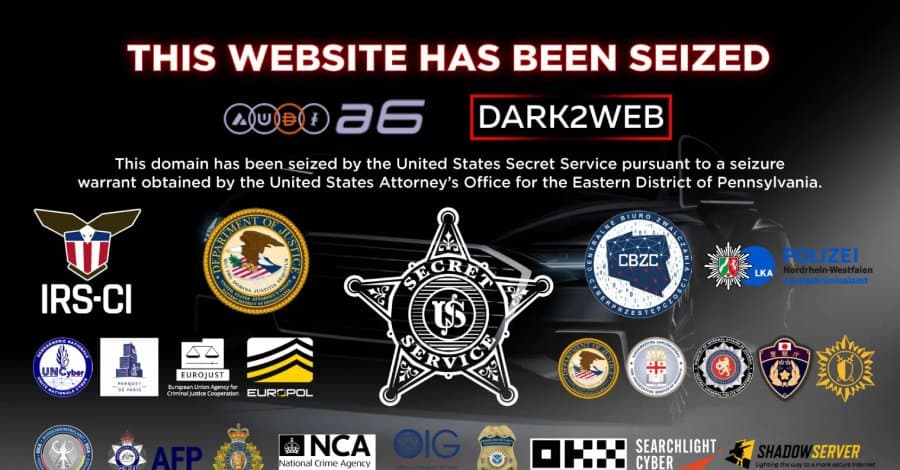
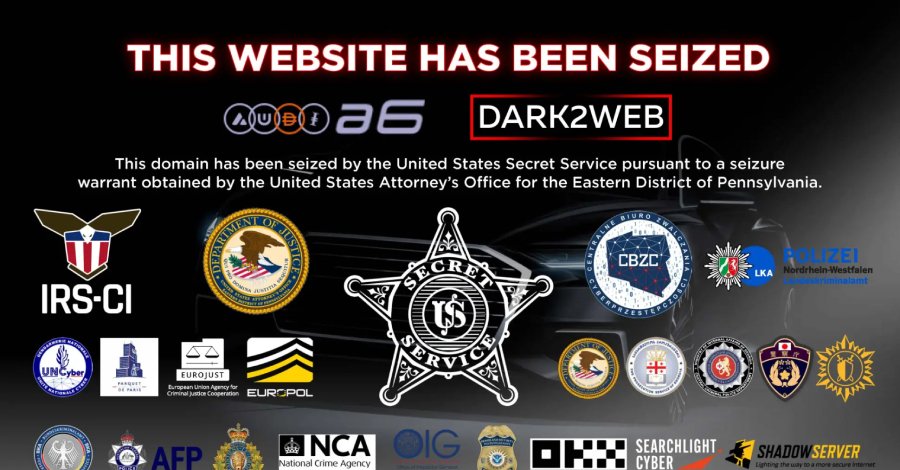
The June 10, 2026 operation led to two arrests in Georgia, three property searches, the takedown of 25 domains, the seizure of more than 30 servers, the freezing or seizure of cryptocurrency, and the blocking of Telegram accounts used by the network. Authorities also replaced AudiA6 and Dark2Web sites with law enforcement seizure banners. The U.S. Department of Justice, available at justice.gov, separately announced charges against Ruslan Igorevich Tkachuk and Alexander Vladimirovich Ledenev, accusing them of money laundering offenses that carry a maximum possible sentence of 20 years in prison if convicted.
Europol framed the takedown as a strike against the financial plumbing behind ransomware. Its statement said AudiA6 had become a central hub for ransomware actors and cybercriminals trying to cash out stolen digital assets while hiding the money trail. That language matters because ransomware response often focuses on malware families, exploited vulnerabilities, and negotiation portals. Those are visible parts of the crime. Laundering services are less visible, but they are what make extortion profitable.
What authorities say AudiA6 did
AudiA6 was marketed as a cryptocurrency mixing and cash-out service that promised speed and anonymity. Customers allegedly sent stolen or otherwise tainted crypto to wallets controlled by the group and received funds back through a chain of transactions designed to obscure origin and ownership. Europol said the service typically charged commissions between 3 percent and 10 percent, which is consistent with a broker model rather than a simple automated mixer.
That distinction is useful for defenders. A traditional mixer pools and redistributes funds, often in a more automated way. A laundering broker can combine several services: mule accounts at exchanges, stolen or purchased identity documents, chain-hopping between blockchains, decentralized exchange swaps, and human coordination over encrypted chats. The result is a service desk for criminal finance. The customer does not need to understand compliance gaps at each exchange or the safest route between assets. They pay a fee and outsource the risk.
The investigation also tied AudiA6 operators to Dark2Web, a dark web cybercrime forum where threat actors allegedly advertised services and connected with other criminals. If proven, that link shows how forums, laundering desks, ransomware crews, data brokers, and mule recruiters reinforce one another. A ransomware operator needs initial access, malware hosting, negotiation support, leak-site infrastructure, and a way to turn payment into usable funds. Dark web forums supply the marketplace. Laundering services supply the exit ramp.
The DOJ said roughly 10,333 bitcoin flowed into AudiA6 wallets, with about 393.39 BTC, valued around $19.2 million at the time of the transactions, received directly from known illicit sources such as darknet markets, ransomware organizations, cybercrime services, and related activity. The larger number is especially significant because laundering operations rarely touch only funds that are already labeled as criminal. They often mix direct deposits, indirect deposits, exchange withdrawals, and intermediate wallets to make attribution harder.
Why this matters beyond one takedown
The biggest lesson is that ransomware is not just a malware problem. It is a business process. Attackers need reliable payment collection, trusted laundering routes, identity fraud, hosting, communications, recruitment, and dispute resolution. When law enforcement removes a laundering provider, it can create immediate friction for many groups at once.
That friction matters. Ransomware gangs operate under operational risk. If a laundering service disappears, funds may be frozen, counterparties may be exposed, and wallets previously believed to be safe may become traceable. Operators then have to find new brokers, test new cash-out routes, and rebuild trust inside criminal markets. That does not end ransomware by itself, but it increases cost and uncertainty.
The AudiA6 case also highlights a familiar weakness in the crypto economy: Know Your Customer controls are only as strong as identity verification, account monitoring, and downstream transaction screening. Europol said investigators identified more than 6,000 KYC records linked to money mule accounts. Many were allegedly connected to Russian-speaking intermediaries recruited to move criminal proceeds through cryptocurrency exchanges.
For exchanges and payment firms, this is a reminder that onboarding checks are not enough. A mule account may pass document verification and still behave abnormally after activation. Useful signals include rapid deposits and withdrawals, repeated address reuse across accounts, access from unusual geographies, device fingerprints shared across supposedly unrelated customers, and transactions that repeatedly touch high-risk clusters. Mature anti-money laundering programs combine identity proofing with behavioral analytics and blockchain intelligence from providers such as TRM Labs and Chainalysis.
Affected platforms and services
This is not a vendor patch story where administrators update one product and move on. The affected platforms are the services and ecosystems that AudiA6 allegedly used or abused: cryptocurrency exchanges, private messaging platforms, Telegram accounts, dark web sites, email domains, mule identities, and blockchain networks used to move funds.
Europol listed several domains allegedly used in the operation, including designli.pictures, pheontx.eu, smplfy.in, sumato-soft.org, technobrains.dev, lett.email, trayo.app, deliverly.top, inboxly.top, postfast.eu, postino.click, inboxally.agency, mailora.eu, postify.email, quix.express, flowcomm.click, qube.black, deliverlett.com, and lettermail.eu. Security teams should treat these as indicators for historical review, not proof of compromise by themselves.
Organizations that handle cryptocurrency should check for direct or indirect exposure to wallets, domains, accounts, or customer records linked to AudiA6. Ransomware victims and incident response firms should also review older payment flows, because laundering investigations can identify downstream clusters long after an incident closes.
The agencies involved show the international scope: Europol, the U.S. Secret Service, IRS Criminal Investigation, Polish Police, and partners from Australia, Canada, France, Georgia, Germany, Iceland, Japan, Switzerland, and the United Kingdom. That broad participation is not incidental. Crypto laundering moves across jurisdictions by design, using exchanges, hosting providers, corporate registrations, residential proxies, and communications platforms in different countries.
Expert context: laundering is now a service layer
Europol’s assessment points to a shift many investigators have tracked for years: ransomware groups increasingly rely on chain-hopping, decentralized exchanges, mixer-style services, and mule accounts to move cryptocurrency quickly. In practical terms, criminals are trying to break the timeline. The faster funds move through assets and accounts, the harder it becomes for investigators, exchanges, and victims to freeze value before it leaves compliant platforms.
The FBI’s Internet Crime Complaint Center and CISA’s StopRansomware guidance have long emphasized that ransomware is an ecosystem problem. Preventing infection still matters, but response increasingly requires financial intelligence, legal coordination, and rapid communication with exchanges and law enforcement. A delay of hours can matter when funds are being swapped, split, and moved through multiple wallets.
There is also a policy angle for compliance teams. The AudiA6 allegations describe thousands of fraudulent exchange accounts opened with stolen or purchased identities. That means the fight is partly about identity supply chains. Criminals need documents, phone numbers, email addresses, residential IPs, and people willing to act as mule account holders. Controls that look only at wallet risk can miss the account-farm layer behind the transaction.
A useful analogy is cloud abuse. When attackers spin up infrastructure for phishing or command-and-control, defenders do not only block the final malicious URL. They look at account creation patterns, payment instruments, API behavior, hosting metadata, and abuse reports. Crypto platforms need a similar mindset. The risky transaction is often the last visible event in a longer preparation cycle.
Practical takeaways for security teams
First, incident responders should preserve payment and negotiation artifacts. Wallet addresses, transaction IDs, chat logs, leak-site URLs, timestamps, and email headers may become useful months later if law enforcement maps a laundering network. Even if funds are not recovered, these details can help connect incidents to broader campaigns.
Second, organizations should pre-plan ransomware reporting paths. In the United States, victims can report incidents to the FBI IC3 and contact CISA through StopRansomware. Financial institutions and crypto businesses should also know their suspicious activity reporting obligations and escalation paths before a crisis.
Third, crypto exchanges should revisit mule-account detection. Look for clusters of accounts sharing devices, IP ranges, withdrawal destinations, recovery emails, document templates, or timing patterns. Accounts that receive funds from high-risk sources and rapidly withdraw to newly created wallets deserve special scrutiny, even when the identity document passed onboarding.
Fourth, enterprises should not treat payment as the start of ransomware response. The response clock starts when intrusion indicators appear. Strong backup isolation, privileged access controls, endpoint detection, phishing-resistant multifactor authentication, and tested recovery processes remain the best way to avoid being forced into a payment decision.
Fifth, threat intelligence teams should add AudiA6-related domains and infrastructure to retrospective searches. The right use is historical correlation: DNS logs, proxy logs, email telemetry, security awareness reports, and case notes. A match may indicate research activity, fraud exposure, or contact with criminal infrastructure. It should trigger investigation, not automatic assumptions.
What changes for ransomware groups
AudiA6’s disruption will not remove the demand for laundering. Other services will try to absorb customers. Some ransomware groups may move more funds through decentralized exchanges, privacy coins where available, nested exchange services, peer-to-peer brokers, or cross-chain bridges. Others may split activity across smaller providers to reduce dependency on a single laundering hub.
That adaptation has trade-offs. More providers mean more counterparties who can steal funds, cooperate with investigators, or make mistakes. More transactions mean more blockchain evidence. More mule accounts mean more identity suppliers, devices, and communications that can be seized. Criminal finance wants speed and anonymity, but operational complexity creates exposure.
The AudiA6 case also signals that law enforcement is willing to work backward from seized devices, prior arrests, and exchange records. Europol said the current action followed an earlier Polish Police operation in September 2025 involving a Ukrainian national allegedly connected to AudiA6 money laundering activity. Forensic examination of seized electronics reportedly helped identify additional individuals. That is a common pattern in cybercrime cases: one arrest produces devices, devices produce chats and wallet records, and those records expose the next layer.
The bigger lesson
For defenders, AudiA6 is a reminder to track the business model, not only the malware. Ransomware crews are dangerous because they combine technical intrusion with financial logistics. Breaking the logistics can reduce harm across many victim organizations, especially when multiple criminal groups rely on the same service provider.
The practical response is not limited to blockchain firms. Enterprises should harden against ransomware, preserve evidence when incidents occur, and build relationships with incident response, legal, insurance, and law enforcement contacts before they are needed. Crypto platforms should treat mule-account detection as a core security function. Investigators and regulators should keep focusing on the service providers that make cybercrime profitable.
AudiA6 may be one name in a crowded criminal market, but the model behind it is the real issue: laundering as a managed service for ransomware and dark web crime. Disrupting that model raises the cost of doing business for attackers, and that is one of the few pressure points that can affect many cybercrime crews at once.
Comments
Please log in or register to join the discussion