
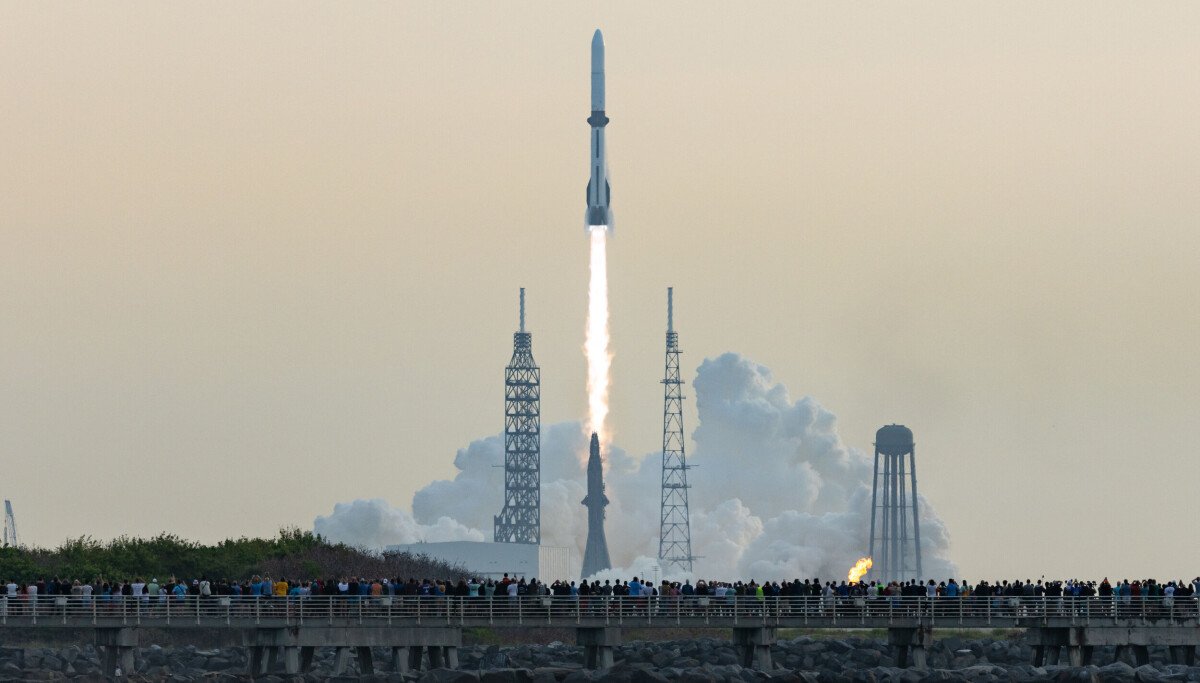
The FAA and Blue Origin disclosed that a cryogenic leak froze a hydraulic line on New Glenn’s second‑stage BE‑3U engine, reducing thrust and leaving the payload in an incorrect orbit. The agency has imposed a launch hold until nine corrective actions are verified, outlining a clear compliance path for the next flight.
FAA Grounds New Glenn After Cryogenic Leak Causes Thrust Anomaly
Regulatory action → What it requires → Compliance timeline
Regulatory action – On 26 May 2026 the Federal Aviation Administration issued a launch hold on Blue Origin’s New Glenn heavy‑lift vehicle. The hold remains in effect until the agency validates that Blue Origin has completed all corrective actions identified in the mishap report.
What it requires – The FAA’s Safety Certification Office listed nine specific requirements:
- Replace the cryogenic feed line that experienced the leak and verify the new line meets the ASTM F2910 standard for liquid hydrogen containment.
- Redesign the hydraulic routing to eliminate exposure to cryogenic temperatures, documented in a revised System Safety Assessment (SSA).
- Update the BE‑3U engine controller firmware to detect partial‑thrust conditions and trigger an automatic abort sequence, in compliance with 14 CFR 460.5.
- Conduct a full‑scale hot‑fire test of the second‑stage engine cluster at the West Texas test facility, with results submitted to the FAA within 60 days.
- Perform a Failure Modes and Effects Analysis (FMEA) for the hydraulic‑line‑freeze scenario and submit the analysis to the agency.
- Implement a revised pre‑launch checklist that includes a pressure‑integrity test of all cryogenic lines at launch‑pad temperature.
- Provide training records showing that all launch‑vehicle technicians have completed the updated Cryogenic Safety Course approved by the FAA.
- Submit a revised Launch Operations Manual that incorporates the new procedures for leak detection and hydraulic‑line monitoring.
- Establish a post‑flight data‑review board to assess engine performance metrics after each launch and report findings to the FAA within 30 days.
Compliance timeline – Blue Origin has pledged to complete the hardware replacements and software updates within 45 days. A hot‑fire test is scheduled for 15 June 2026, with the full data package submitted to the FAA by 30 June 2026. The agency has indicated it will conduct its verification review within 90 days of receipt, meaning the earliest possible resumption of New Glenn flights is early September 2026, provided all criteria are met.
Why the FAA’s intervention matters
The FAA’s mandate under Title 49 of the United States Code, Chapter 447 is to ensure that commercial space launches do not jeopardize public safety or national security. A thrust anomaly that leaves a payload in an unintended orbit can create space‑debris risks and jeopardize downstream missions, such as NASA’s VIPER lunar rover scheduled for a 2027 launch. By grounding New Glenn, the FAA enforces a risk‑based approach that protects the orbital environment and maintains confidence in the U.S. commercial launch sector.
Technical root cause
The mishap report, released by the FAA’s Office of Commercial Space Transportation, identified a cryogenic hydrogen leak that froze a hydraulic line feeding the BE‑3U engine’s thrust‑vector control (TVC) actuator. The frozen line prevented the actuator from achieving the commanded nozzle gimbal position, reducing thrust by roughly 12 % during the second‑stage GS2 burn. The loss of thrust lowered the perigee of the AST SpaceMobile BlueBird 7 satellite by about 150 km, rendering the spacecraft unrecoverable.
The BE‑3U engine, a hydrogen‑fuelled, staged‑combustion cycle engine, relies on precise hydraulic actuation for thrust vectoring. When the hydraulic fluid solidifies, the control loop cannot close, and the engine operates at reduced performance. The leak was traced to a micro‑crack in a stainless‑steel fitting that developed during the engine’s previous flight‑readiness campaign.
Next steps for Blue Origin
Blue Origin’s public response emphasizes that all nine corrective actions have been implemented ahead of the next launch. The company has posted a detailed compliance roadmap on its investor relations site (Blue Origin Compliance Update). The roadmap includes:
- A schedule of component replacements
- Test‑stand data from the upcoming hot‑fire
- Updated safety documentation for FAA review
CEO Dave Limp’s recent video of the vehicle being lifted onto the Transporter Erector shows the hardware in a clean‑room environment, indicating that the physical modifications are already in place.
Outlook
Assuming the FAA’s verification proceeds without further findings, New Glenn could return to flight in the late summer of 2026, positioning Blue Origin to meet its commitments to NASA’s Artemis III lunar‑surface demonstration and to resume commercial payload services. The agency’s swift but thorough response demonstrates the growing maturity of the U.S. commercial launch regulatory framework.
Comments
Please log in or register to join the discussion