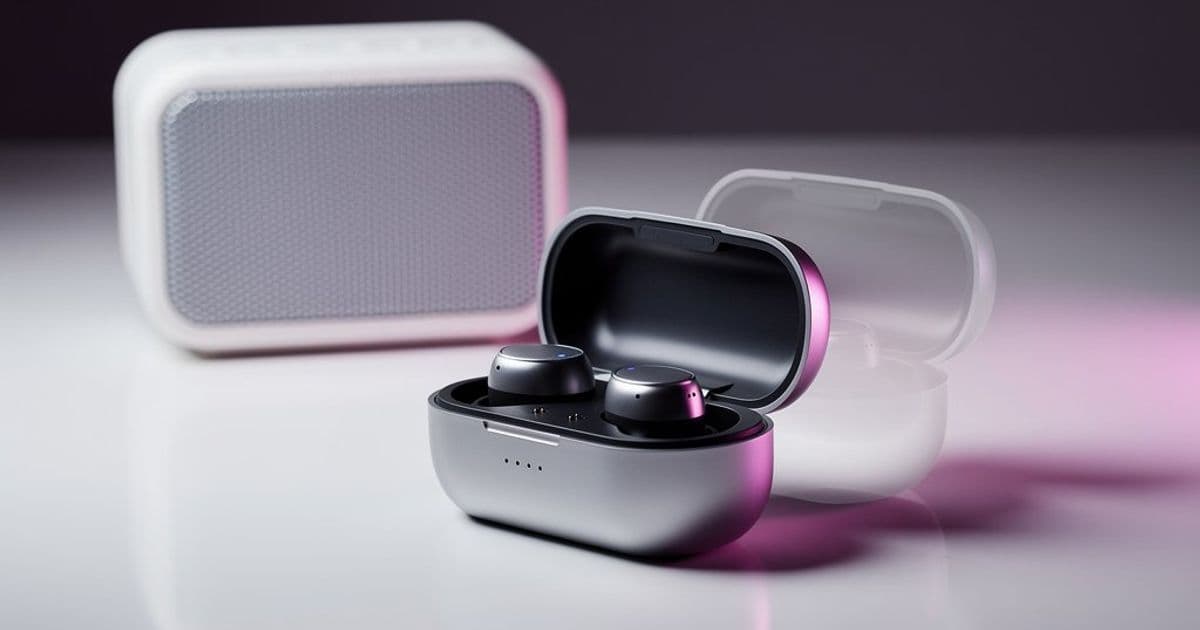
A critical vulnerability dubbed 'WhisperPair' in Google's Fast Pair specification allows attackers to silently hijack Bluetooth accessories like earbuds and speakers without the owner's knowledge, affecting hundreds of millions of devices worldwide.
A fundamental security flaw in Google's Fast Pair specification has left hundreds of millions of Bluetooth accessories vulnerable to silent hijacking, allowing attackers to seize control of devices without the owner ever touching a pairing button. The vulnerability, discovered by researchers at KU Leuven and named "WhisperPair," exposes a critical gap between security design and real-world implementation that has put users' privacy and device control at risk.
The WhisperPair Vulnerability
Fast Pair was designed to eliminate the friction of connecting Bluetooth accessories to Android devices. Using Bluetooth Low Energy beacons and cloud-based lookups, the system enables near-instant pairing when a user brings a compatible accessory near their phone. The specification requires that devices only accept new pairing requests when explicitly placed in pairing mode—a basic safety check meant to prevent unauthorized connections.
However, KU Leuven researchers found that many manufacturers have implemented this requirement incompletely or not at all. In practice, numerous Fast Pair-enabled accessories accept connection requests at any time, regardless of whether they're in pairing mode. This creates a straightforward attack vector: anyone within Bluetooth range can pair their own device to the accessory, even if it's currently in use by someone else.
The attack requires only a standard phone or laptop—no specialized hardware or nation-state resources. Once paired, the attacker gains the same level of access as a legitimate owner, which can include:
- Injecting or interrupting audio streams
- Manipulating volume controls
- In some cases, activating the microphone
- For devices integrated with Google's Find My Device network, registering the accessory to the attacker's account and receiving location updates
Regulatory and Compliance Implications
This vulnerability raises significant questions under data protection regulations like the GDPR and CCPA. Under GDPR Article 32, organizations must implement "appropriate technical and organizational measures" to ensure security appropriate to the risk. The failure to properly implement Fast Pair's security requirements could be seen as a violation of this obligation, particularly for manufacturers who shipped devices without adequate security controls.
The GDPR's "privacy by design" principle (Article 25) also comes into play. Fast Pair's convenience-first approach appears to have prioritized user experience over security, potentially violating this requirement. The European Data Protection Board could view this as a systemic issue requiring coordinated enforcement action.
For CCPA compliance, the vulnerability could trigger breach notification requirements if unauthorized access to personal data occurs. The California Attorney General's office has shown increasing interest in IoT security, and this flaw represents exactly the type of systemic vulnerability that could prompt regulatory scrutiny.
Impact on Users and Manufacturers
The scale of affected devices is substantial. Fast Pair has seen widespread adoption across earbuds, headphones, speakers, and other Bluetooth accessories from numerous manufacturers. The researchers estimate "hundreds of millions" of devices are potentially vulnerable, though the exact number depends on which manufacturers implemented the specification correctly.
For users, the implications are concerning:
- Privacy risks: Attackers could potentially listen to conversations through compromised microphones or intercept audio streams.
- Location tracking: Devices integrated with Find My Device could reveal the user's location to attackers.
- Service disruption: Malicious actors could interrupt audio or control devices without permission.
- Persistent access: Once paired, an attacker maintains access until the legitimate owner manually removes them.
For manufacturers, the vulnerability represents both a security crisis and a potential liability issue. Companies that shipped products without proper security implementations may face:
- Regulatory fines under GDPR or similar laws
- Consumer protection actions
- Reputational damage
- Potential class-action lawsuits
Google's Response and Manufacturer Actions
Google was notified of the vulnerability and has been working with manufacturers to develop fixes. Some patches are now being distributed as firmware updates, though coverage remains inconsistent. The problem is particularly acute for cheaper accessories, which often lack:
- Regular firmware update mechanisms
- User-accessible update processes
- Dedicated vendor apps for managing updates
Many users never open the companion apps required for updates, leaving devices permanently vulnerable. Even users who disable Fast Pair on their phones cannot protect accessories that continue to accept rogue pairing requests.
The Broader Pattern of IoT Security Failures
The WhisperPair vulnerability exemplifies a recurring problem in the Internet of Things ecosystem: security specifications that appear robust in documentation often unravel during real-world implementation. Several factors contribute to this pattern:
Economic pressures: Manufacturers race to ship products quickly and cheaply, often cutting corners on security implementation. The cost of proper security testing and validation may be seen as prohibitive for low-margin accessories.
Specification complexity: Security specifications like Fast Pair require careful implementation across hardware, firmware, and software layers. A single oversight can create vulnerabilities.
Testing gaps: Many manufacturers lack the expertise or resources to properly test security implementations, particularly against real-world attack scenarios.
Update challenges: Unlike software that can be updated centrally, IoT devices often rely on manufacturer-specific update mechanisms that users may not know about or use.
What Users Should Do
While waiting for manufacturer updates, users can take limited protective measures:
- Check for firmware updates: Visit the manufacturer's website or open their companion app to check for available updates.
- Monitor pairing requests: Be alert for unexpected pairing notifications on your phone.
- Use wired alternatives: For sensitive situations, consider using wired headphones or speakers.
- Disable Fast Pair temporarily: While this doesn't protect the accessory itself, it reduces the attack surface on your phone.
However, these measures are incomplete. The fundamental fix must come from manufacturers implementing proper security controls in their devices.
Regulatory Enforcement Considerations
This vulnerability may prompt regulatory action on several fronts:
GDPR enforcement: European data protection authorities could investigate whether manufacturers violated Article 32 security requirements. The systemic nature of the flaw suggests it may require coordinated action across multiple jurisdictions.
Consumer protection: Agencies like the FTC in the United States could take action under Section 5 of the FTC Act, which prohibits unfair or deceptive practices. Selling devices with known security vulnerabilities could be considered an unfair practice.
Industry standards: The vulnerability may prompt development of more stringent Bluetooth security standards, potentially through industry consortia or regulatory bodies.
Vendor accountability: Regulators may push for greater accountability for manufacturers, including requirements for security testing before market release and mandatory update mechanisms.
The Path Forward
Addressing the WhisperPair vulnerability requires coordinated action:
- Manufacturer responsibility: Companies must prioritize security in design and implementation, not just in specifications.
- Google's role: As the specification owner, Google should strengthen validation requirements and potentially create certification programs for Fast Pair implementations.
- Regulatory oversight: Data protection authorities should develop clear guidelines for IoT security, particularly for consumer devices.
- Industry collaboration: Bluetooth SIG and other standards bodies should work to close gaps between specifications and implementations.
- Consumer education: Users need better information about IoT security risks and how to protect themselves.
The WhisperPair vulnerability serves as a stark reminder that security is only as strong as its weakest implementation. As billions of IoT devices continue to connect to our networks and lives, the gap between security specifications and real-world implementations must be addressed through better design, stricter enforcement, and greater accountability.
For more information about Bluetooth security and IoT vulnerabilities, visit the KU Leuven Security Research Group website or consult the Bluetooth Special Interest Group's security resources.
Comments
Please log in or register to join the discussion