
Procurement records show the FBI is seeking a $36 million contract to aggregate automated license‑plate reader (ALPR) feeds from coast to coast. The move would give the bureau near‑real‑time vehicle location data without a warrant, reviving debates over the balance between law‑enforcement utility and civil liberties.
FBI’s $36 M Request for Nationwide License‑Plate Data Raises Privacy Concerns
 Featured image
The Federal Bureau of Investigation has posted a solicitation for a single‑vendor (or up to two‑vendor) SaaS platform that would let its Directorate of Intelligence query ALPR records across the United States, its territories, and even tribal lands. The attached price template shows the agency is prepared to spend $6 million per region, for a total ceiling of $36 million.
What the solicitation claims
The statement of work (SOW) describes a “crucial need for accessible LPRs” that can provide “a diverse and reliable range of collections across the United States.” In practical terms, the FBI wants a searchable database that can be filtered by:
- License‑plate number
- Vehicle description (make, model, color)
- Timestamp
- Geographic coordinates
The contract would cover the Eastern 48 (east of the Mississippi), the Western 48 (west of the Mississippi), Hawaii, Puerto Rico, Alaska, and outlying areas such as Guam, the U.S. Virgin Islands, and tribal territories. The agency explicitly states the system would be hosted as a Software‑as‑a‑Service (SaaS) offering, meaning the data would be stored and indexed by a private contractor.
What is actually new?
ALPR technology is not new; cameras have been scanning license plates for decades, and many municipalities already operate municipal networks that feed data to state or regional databases. What changes here is the scale and the direct federal access:
- Nationwide aggregation – While local police departments typically retain their own feeds, the FBI’s request would stitch together data from dozens of private vendors into a single, searchable repository.
- Federal intelligence mission – The contract is earmarked for the FBI’s Directorate of Intelligence, blurring the line between traditional criminal investigation and intelligence‑gathering.
- Commercial SaaS model – Rather than building an in‑house system, the bureau plans to outsource storage, indexing, and query handling to a private company, which raises questions about data stewardship and auditability.
Potential vendors cited in the procurement include Flock (which reports ~80 000 active cameras) and Motorola Solutions (owner of the former Vigilant Solutions/DRN platform). Both have existing relationships with federal agencies, but none currently provide a truly national, unified ALPR feed.
Why it matters
Surveillance reach without a warrant
Under the Fourth Amendment, law‑enforcement searches generally require a warrant based on probable cause. However, courts have repeatedly ruled that a single ALPR lookup of a vehicle’s recent movements does not constitute a search. The FBI’s proposed system would enable mass, retrospective queries that could reconstruct a vehicle’s entire travel history across the country with a single request. That capability sits in a legal gray area that has not been fully tested at the federal level.
Data security and retention
A SaaS platform means that raw images and metadata would be stored on third‑party servers. The SOW does not specify retention periods, encryption standards, or audit logs. Past incidents—such as the 2019 exposure of Motorola’s Digital Recognition Network data—show how easily large ALPR datasets can be mishandled or repurposed.
Impact on local governance
Many municipalities have enacted ordinances limiting ALPR data sharing or imposing retention caps. A federal contract that bypasses those local controls could undermine community‑level privacy safeguards. The FBI’s language suggests it would “award the contract to a single vendor”, potentially creating a de‑facto monopoly on nationwide vehicle tracking.
Limitations and open questions
- Vendor competition – The solicitation allows for up to two vendors if one cannot meet all requirements, but the bidding process may still favor the largest players with existing camera networks, limiting market diversity.
- Oversight mechanisms – The SOW mentions “audit assistance” tools from Flock, yet there is no publicly disclosed framework for independent oversight of the FBI’s queries.
- Legal precedent – No federal court has yet ruled on the constitutionality of a nationwide, warrant‑less ALPR query system. Future litigation could reshape the permissible scope of this data.
- Technical accuracy – ALPR systems have known error rates, especially with dirty plates or non‑standard fonts. False positives could lead to unwarranted investigations if the data is used as the sole basis for suspicion.
What to watch next
- Bid submissions – The procurement deadline is in early June. Tracking which company wins the contract will indicate how quickly the FBI could operationalize the system.
- Congressional response – Privacy‑focused legislators have already introduced bills to restrict federal ALPR use. Monitoring hearings or amendments to the FBI’s budget may reveal political pushback.
- State‑level lawsuits – Cities that have limited ALPR data sharing may file suit if they believe the federal contract circumvents local ordinances.
- Technical disclosures – Both Flock and Motorola have published whitepapers on their data pipelines. Scrutinizing those documents for encryption, retention, and access‑control details will be essential.
Bottom line
The FBI’s $36 million request is less about a novel technology breakthrough and more about centralizing an existing surveillance tool under a federal intelligence umbrella. The practical effect would be a searchable, nationwide vehicle‑movement ledger that can be accessed without a warrant. While the capability could aid investigations, it also amplifies longstanding privacy concerns and raises unanswered questions about oversight, data security, and constitutional limits.
For further reading on ALPR technology and its legal challenges, see the Electronic Frontier Foundation’s guide on ALPR and privacy and the recent U.S. Court of Appeals decision on warrant requirements for plate‑lookup databases.
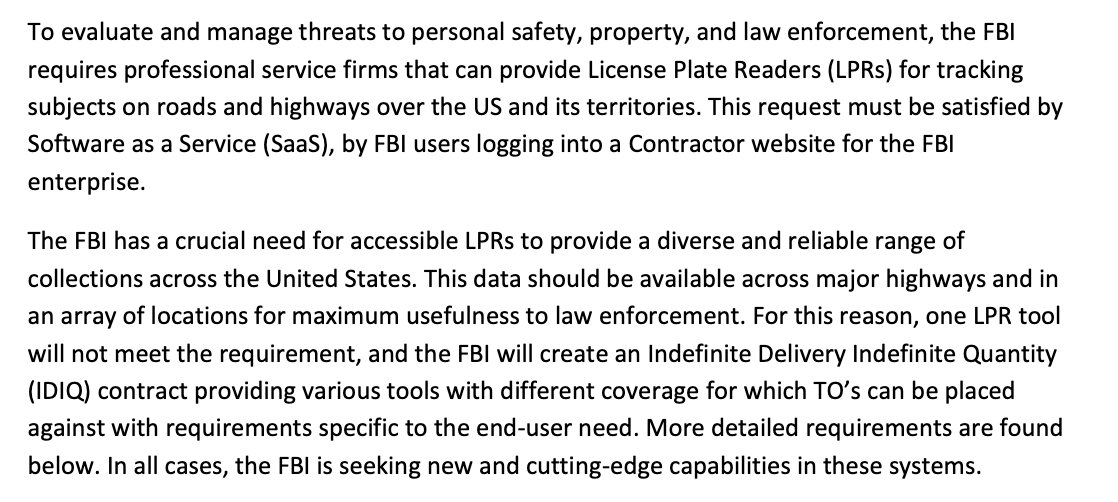 Screenshot from the FBI procurement documents showing the regional price breakdown.
 Excerpt of the statement of work outlining query parameters.
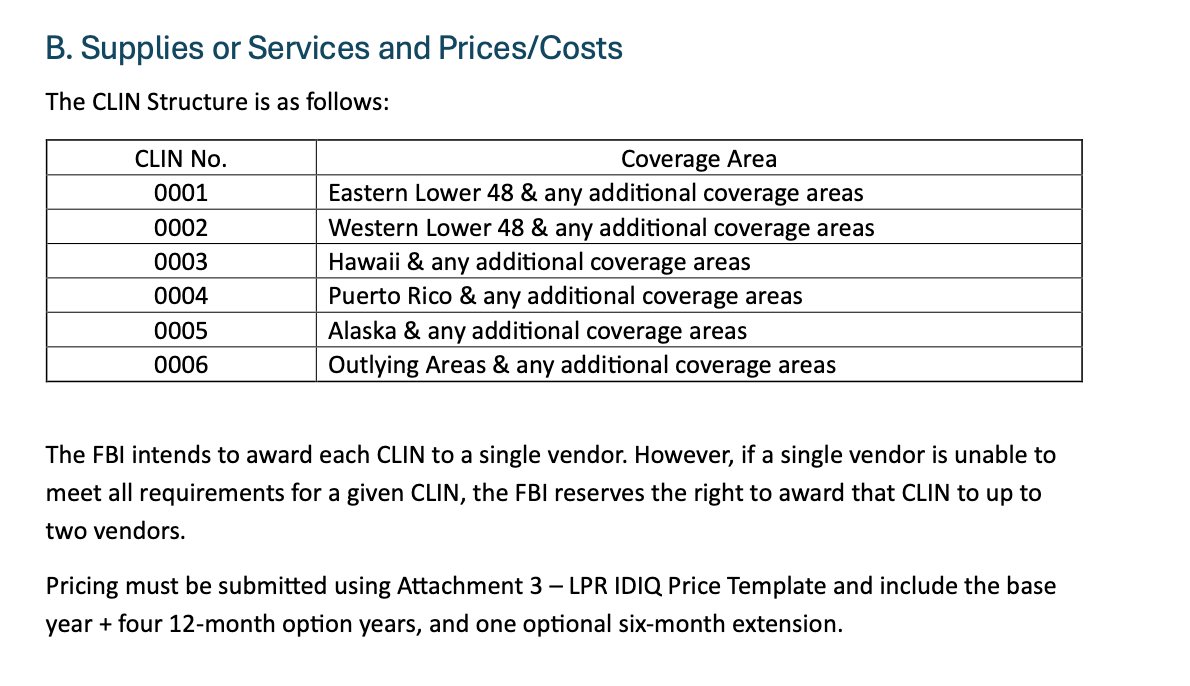 Diagram of a typical ALPR data pipeline, illustrating where private vendors store image metadata.
Comments
Please log in or register to join the discussion