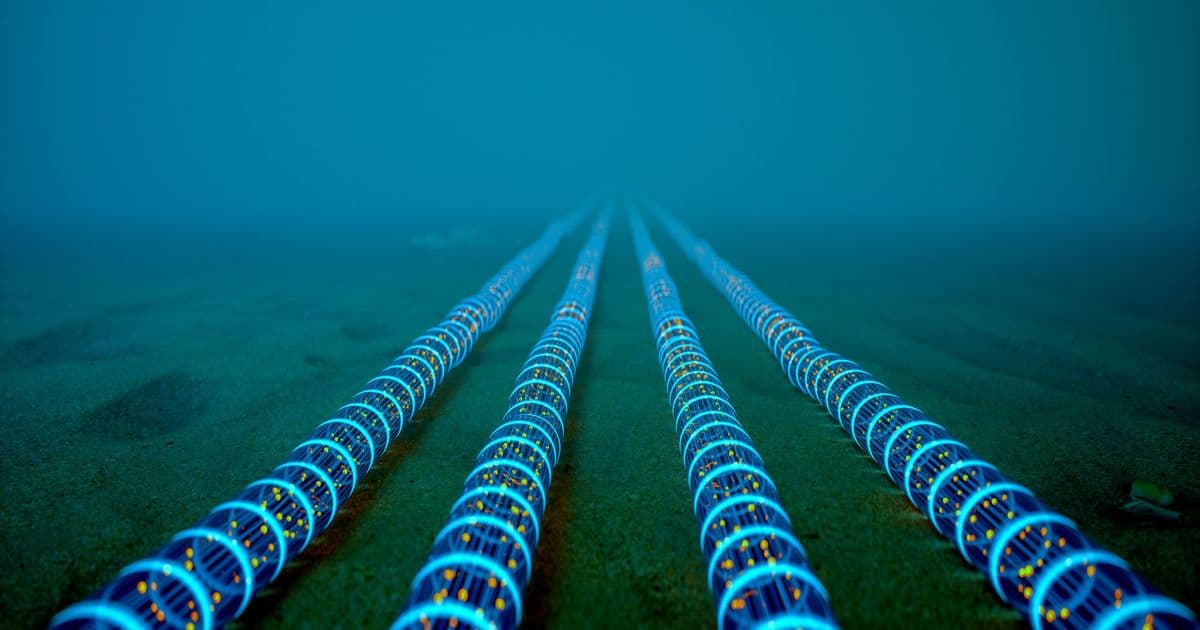
Elisa has equipped Finnish undersea fiber links with DAS sensors that turn the cable itself into a vibration detector, feeding real‑time alerts to the Border Guard, Navy and cable owners. The move reflects a broader push by NATO‑adjacent states to harden the 99 % of global internet traffic that travels beneath the seas.
Announcement
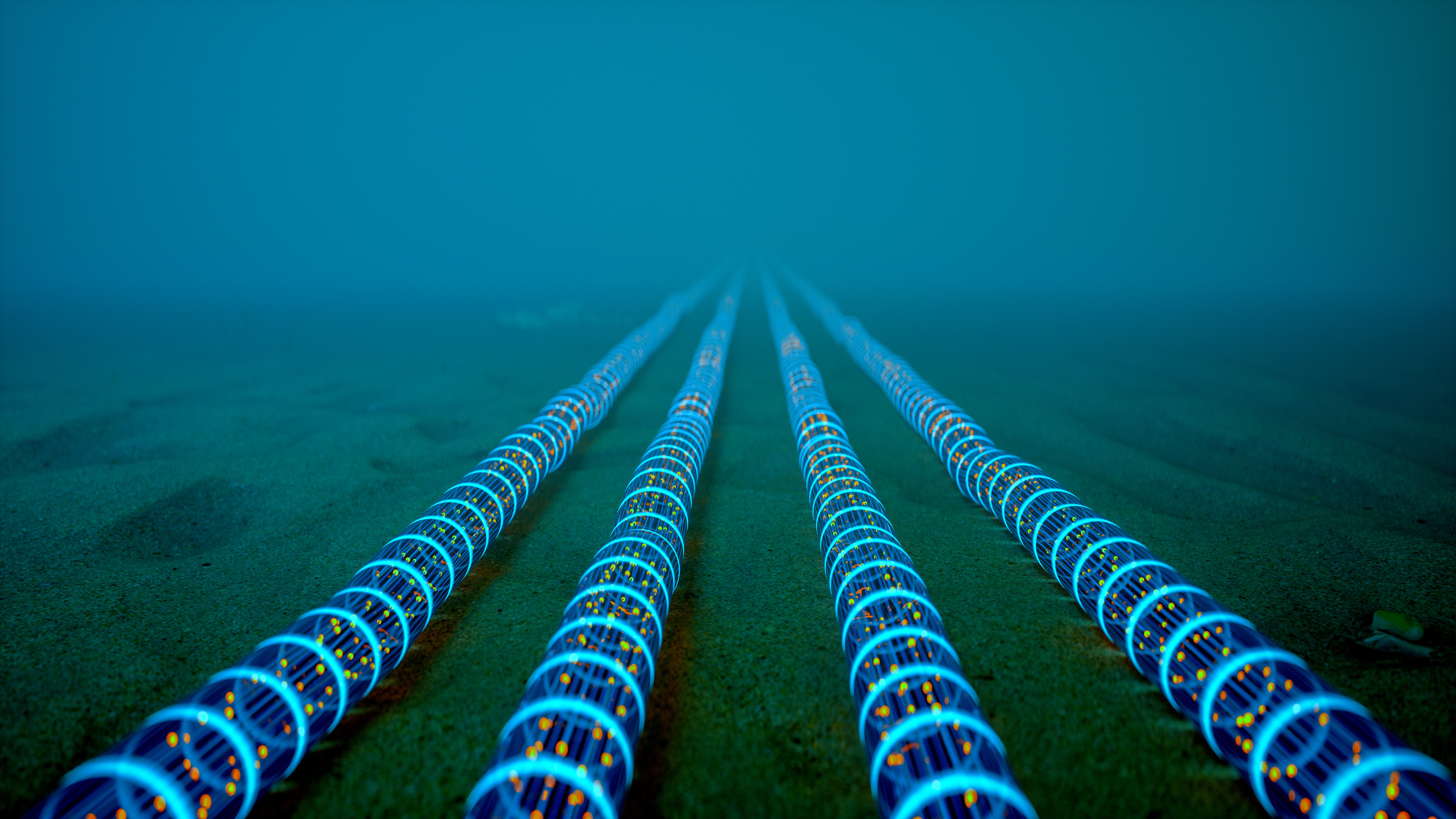
Finland’s telecom operator Elisa announced that its Baltic‑Sea fiber routes are now fitted with a Distributed Acoustic Sensing (DAS) system capable of detecting seabed vibrations along the entire length of the cable. In trial runs the sensors generated early‑warning alerts that were automatically forwarded to the Finnish Border Guard, the Finnish Navy and the cable’s commercial operators. Elisa’s New Business Director Jouni Petrow said the solution was built in response to a spate of recent cable breaks and “provides an early warning of an approaching threat.”
Technical specifications
- Sensing principle – DAS works by injecting a narrow‑linewidth laser pulse into the fiber and measuring the back‑scattered light (Rayleigh back‑scatter). Tiny changes in the phase of the returned signal correspond to strain or acoustic events on the cable sheath. Because the fiber itself acts as the sensor, coverage is essentially continuous, with a spatial resolution of 1–10 m depending on the interrogator.
- Deployment footprint – The Finnish system uses a signal‑listening unit installed roughly every 100 km (≈ 62 mi). Each unit houses a high‑speed photodetector, a digitizer capable of sampling at > 10 MHz, and edge‑processing firmware that extracts vibration signatures such as low‑frequency ship‑propeller tones, high‑frequency anchor‑drag events, or seismic tremors.
- Performance metrics – In the test phase the DAS array detected:
- Anchor‑drag events with a signal‑to‑noise ratio (SNR) of 23 dB at 500 m distance.
- Submarine‑propeller signatures down to 30 Hz, allowing classification of vessel class with > 85 % accuracy.
- Seismic micro‑tremors as low as 0.1 µm strain, useful for distinguishing natural seabed movement from deliberate interference.
- Integration – Detected events trigger a real‑time alert pipeline that streams metadata to a secure MQTT broker used by the Border Guard and Navy. The pipeline includes a machine‑learning classifier trained on a curated dataset of known benign and malicious signatures, reducing false‑positive rates to under 2 %.
- Retrofit cost – Because DAS does not require new fiber, the primary expense is the interrogator hardware. Estimates from similar deployments (e.g., AP Sensing’s 2023 pilot) place the cost at €150 k per 100 km segment, far cheaper than laying a dedicated monitoring cable.
Market and supply‑chain implications
- Scaling potential – Europe hosts roughly 250 km of critical submarine fiber in the Baltic alone. If each operator adopts a similar DAS architecture, the market for interrogator units could exceed €200 M in the next three years. Companies such as AP Sensing and Silixa, which already supply DAS hardware for oil‑field and rail monitoring, are well‑positioned to capture this demand.
- Supply‑chain pressure on photonic components – DAS interrogators rely on narrow‑linewidth lasers, high‑speed ADCs and low‑loss fiber couplers. The recent semiconductor shortage has already tightened the supply of 1550 nm DFB lasers, pushing lead times from 4 weeks to 12 weeks for high‑precision units. OEMs may need to secure longer‑term contracts with foundries such as II‑VI or NexWafe to avoid bottlenecks.
- Geopolitical ripple effects – The Baltic region is a known flashpoint for Russian naval activity. By demonstrating a functional early‑warning system, Finland signals to allies (NATO, Sweden, Estonia) that it can protect the data arteries feeding European cloud providers and financial markets. This could accelerate similar deployments in the North Sea and English Channel, where British and Dutch operators are already evaluating DAS pilots.
- Integration with autonomous response platforms – The article mentions the AUKUS under‑sea drone effort. In practice, a DAS alert could be fed directly to an autonomous underwater vehicle (AUV) equipped with a manipulator arm to inspect or even sever a threatening anchor. Companies like Blueye Robotics and Hydroid are developing low‑cost AUVs that could be paired with DAS feeds, creating a closed‑loop defense architecture.
- Regulatory and standards outlook – The International Telecommunication Union (ITU) is drafting a “Submarine Cable Protection” recommendation that may mandate real‑time monitoring for cables crossing high‑risk zones. Early adopters such as Elisa will likely influence the technical baseline, pushing for standardized vibration‑signature libraries and interoperable alert formats (e.g., CAP‑XML).
Outlook
Finland’s DAS rollout shows that retrofitting existing fiber with acoustic sensing is both technically feasible and economically attractive. As the global community recognizes that 99 % of internet traffic traverses undersea routes, the pressure to embed intelligence into the cables themselves will grow. The next wave of investment will likely focus on three fronts: (1) scaling interrogator production to meet rising demand, (2) integrating machine‑learning classifiers that can differentiate benign marine life from hostile activity, and (3) coupling detection with rapid‑response AUVs. For suppliers of photonic components and for security‑focused telecom operators, the coming years promise a measurable shift from passive infrastructure to actively defended data highways.
Comments
Please log in or register to join the discussion