A homeowner reflects on Virgin Media’s £30 Gig1 plan, questioning real‑world uses for 1 Gbps speeds while noting the broader shift toward gigabit connectivity in the UK. The article weighs everyday bandwidth needs against emerging workloads, hardware limits, and the long‑term value of a ubiquitous high‑speed pipe.
When a Gigabit Pipe Feels Like Overkill
Six years after trying to convince an ISP to upgrade a modest fibre line, I finally landed Virgin Media’s Gig1 package for £30 / month. The headline number—1 130 Mbps down‑link, 110 Mbps up‑link—sounds impressive, especially when the same price would have bought a 100 Mbps plan a few years ago. Yet, after a week of testing, the practical ceiling I’m seeing hovers around 700 Mbps on speed‑test sites, and my home network rarely exceeds 940 Mbps on a wired cat‑6 link. The question that keeps resurfacing is simple: What can a typical household actually do with a gigabit connection?
Evidence from the Home Lab
| Device / Path | Measured Throughput | Bottleneck |
|---|---|---|
| Cat‑6 Ethernet (direct to router) | ~940 Mbps | Router’s 1 Gbps NIC |
| Wi‑Fi 6 (802.11ax) – close to AP | ~450 Mbps | Radio spectrum & interference |
| HomePlug (powerline) | ~80‑120 Mbps | Electrical wiring quality |
| 4K Fire Stick (wired) | ~80 Mbps (speed‑test) | Device’s internal NIC |
| Upload (Twitch, cloud backup) | ~100 Mbps sustained | ISP’s 110 Mbps cap |
Even with a solid Ethernet run, the router’s internal 1 Gbps ports cap the flow. Most Wi‑Fi devices top out well below the advertised 1 Gbps, and older switches in the house still run at 1 Gbps, not the newer 2.5 Gbps standard. The result is a network that can handle a gigabit pipe but rarely does, simply because the downstream hardware can’t keep up.
Typical Domestic Demands
| Activity | Typical Bandwidth Need | Real‑World Impact |
|---|---|---|
| 4K video streaming (Netflix, Amazon) | 25 Mbps per stream | 40 simultaneous streams would still be < 1 Gbps, but few households reach that density |
| Video calls (Zoom, Teams) | 2‑4 Mbps per participant | Negligible compared to the pipe size |
| Large OS/ISO downloads (Ubuntu, Windows) | 100‑200 Mbps limited by server side | A 5 GB ISO finishes in ~3 min on a full gigabit line, but most users download far less often |
| Game patch updates (Steam, Epic) | 50‑150 Mbps burst | Patch size (tens of GB) can be fetched in minutes, yet daily demand is low |
| Cloud‑based dev work (Git LFS, Docker images) | 20‑100 Mbps | Improves CI/CD latency, but not a daily bottleneck |
| Home security camera upload (4 MP, 30 fps) | ~5‑10 Mbps per camera | Even a dozen cameras stay well under the 110 Mbps upload cap |
The numbers illustrate why most users feel comfortable with 100‑200 Mbps plans: they comfortably cover streaming, remote work, and occasional large downloads. The extra headroom of a gigabit line often sits idle.
---\n## Signals of Adoption and Future Utility
- ISP pricing pressure – Virgin Media’s £30 Gig1 plan undercuts many competitors, nudging the market toward a new baseline. When a major provider makes gigabit “budget‑friendly,” the perceived value of lower‑speed tiers erodes.
- Hardware evolution – New routers (e.g., the Ubiquiti Dream Machine Pro 2.5G) and switches are beginning to ship with 2.5 Gbps and 5 Gbps ports. As these become mainstream, households will finally be able to use the full pipe.
- Emerging workloads – Edge AI inference, local model fine‑tuning, and multi‑camera 8K surveillance are still niche but growing. When a developer routinely pulls 10‑TB datasets from cloud storage, the difference between a 500 Mbps and a 1 Gbps link can shave minutes off each sync.
- Remote work trends – High‑resolution virtual desktops (e.g., Nvidia RTX Virtual Workstation) and real‑time collaborative 3D design push bandwidth needs upward, especially for teams spread across continents.
These signals suggest that while the average user may not need a gigabit pipe today, the infrastructure is being laid for a future where many more applications will demand it.
Counter‑Perspectives: Why Gigabit Might Still Be Premature
- Cost vs. utility – Even at £30, the plan adds a fixed monthly expense that could fund better Wi‑Fi hardware, a mesh system, or a 2.5 Gbps switch. For many, the ROI is unclear.
- Upload asymmetry – Most residential gigabit offers cap uploads at ~100 Mbps. For creators who livestream in 4K, this ceiling can become a bottleneck, limiting the benefit of a fast download lane.
- Device limitations – Laptops, phones, and tablets still ship with 1 Gbps Ethernet at best. Without a universal upgrade path, the pipe will be throttled at the device edge.
- Environmental factors – In dense urban flats, Wi‑Fi interference and shared building cabling can reduce real‑world speeds dramatically, making the advertised 1 Gbps feel like a marketing number.
Finding Value in the Excess
If you already have a gigabit pipe, consider future‑proofing your setup:
- Upgrade internal networking – Replace 1 Gbps switches with 2.5 Gbps or 5 Gbps models. Even a single 2.5 Gbps uplink to a NAS can double backup speeds.
- Self‑host media and dev environments – Run a Plex Media Server or a local GitLab instance. While external access will be limited by the 110 Mbps upload, intra‑home traffic can fully exploit the gigabit lane.
- Experiment with edge AI – Tools like OpenVINO let you fine‑tune models locally. Pulling multi‑terabyte datasets from S3 becomes noticeably faster.
- Create a home‑lab cloud – Spin up a small Kubernetes cluster on your LAN. The internal network will handle pod‑to‑pod traffic at near‑gigabit speeds, useful for learning modern cloud patterns.
- Participate in distributed computing – Projects such as BOINC or Folding@home can make use of high‑throughput uplinks for data contribution.
Bottom Line
Gigabit broadband in 2026 sits at an interesting crossroads. For most households, the practical ceiling remains well below 1 Gbps because of Wi‑Fi, legacy switches, and modest upload caps. Yet the strategic value of a ubiquitous high‑speed pipe is growing: hardware is catching up, new bandwidth‑hungry workloads are emerging, and ISP pricing is nudging the market toward gigabit as the new baseline.
If you’re already paying for a gigabit line, the smartest move is to invest in internal networking and explore use‑cases that keep traffic inside your LAN. That way, the pipe you’re paying for won’t sit idle, and you’ll be ready when the next wave of bandwidth‑intensive applications arrives.
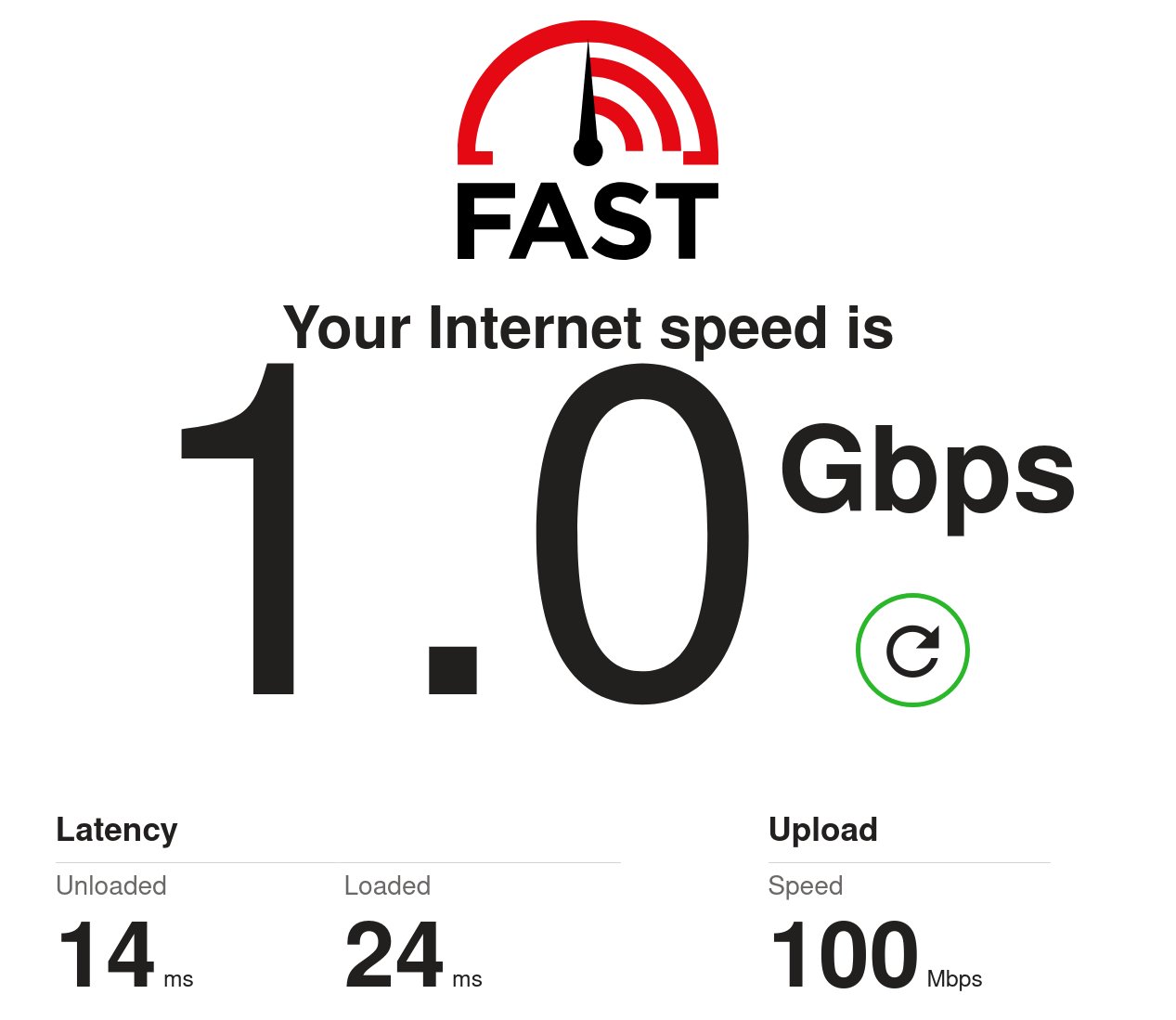
Featured image: a visual metaphor for the invisible speed of a gigabit connection, reminding us that the real limits often lie in the hardware we touch.
Comments
Please log in or register to join the discussion