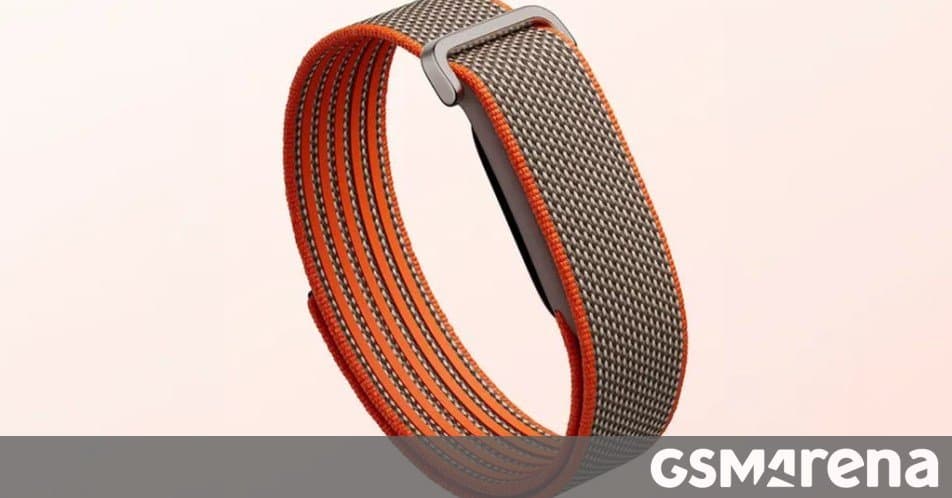
Google's new screenless fitness tracker encounters pairing issues for early Android adopters due to app update rollout delays, highlighting ecosystem fragmentation challenges.
Google's first foray into screenless fitness tracking with the Fitbit Air has hit an unexpected hurdle as early deliveries reveal compatibility issues with Android phones. The device, officially launching tomorrow, May 26, 2026, is already causing frustration for some eager customers who received their units ahead of schedule.
The Pairing Problem
The core issue stems from the Fitbit Air's requirement for version 5.0 of Google's Health app, a critical component for initial setup and ongoing functionality. For Android users who received their Fitbit Air early, this creates a frustrating catch-22: the device needs the updated app to pair, but the updated app hasn't reached all devices yet.
"When you try to pair the wearable, you get a message that it requires an updated version of the Google Health app, but that may still not be available to you," explains the situation affecting many early adopters. This creates a significant barrier to using the new hardware immediately upon arrival.
Interestingly, this issue appears to be exclusive to Android, with iOS users experiencing no such problems. The updated Google Health app is already live and functional on Apple's ecosystem, allowing seamless pairing for iPhone users who've received their Fitbit Air early.
Google's Response
Google has acknowledged the issue, with a product team representative responding on Reddit to affected users. The company confirmed it's "doing its best to accelerate the rollout of the updated app on Android" to accommodate these early deliveries, promising the fix will be "available shortly."
This response, while reassuring, highlights a common challenge in the Android ecosystem: the fragmented nature of software updates across different device manufacturers, carriers, and Android versions. Unlike iOS, where Apple controls both the hardware and software, Android's open nature creates more complex update pathways.
Fitbit Air Features and Ecosystem Considerations
The Fitbit Air represents Google's strategic entry into the screenless fitness tracker market, positioning itself against established players like Whoop and Oura Ring. Without a display, the device relies entirely on the companion app for data visualization and configuration, making the initial pairing process particularly critical.
Key features of the Fitbit Air include:
- Advanced sleep tracking with detailed sleep stage analysis
- Continuous heart rate monitoring
- Blood oxygen saturation (SpO2) tracking
- Stress management tools
- Battery life estimated at 7-10 days
- Water resistance up to 50 meters
The pairing issue underscores a broader consideration in smart device ecosystems: the growing interdependence between hardware and software. As devices become more sophisticated, they increasingly rely on specific software versions to function properly, creating potential friction points for early adopters.
The Android Fragmentation Challenge
This situation exemplifies the ongoing challenge of Android fragmentation. While Google has made significant strides with Project Mainline to deliver core Android updates through the Play Store, app-specific updates still follow traditional pathways that vary by manufacturer and carrier.
For fitness and health devices, where timely setup is crucial to establishing baseline metrics and tracking routines, these delays can be particularly problematic. Users who receive hardware before the necessary software is ready may experience frustration that could impact their initial impression of the product.
Looking forward, this incident may prompt Google to reconsider its rollout strategy for critical companion apps, potentially implementing staged releases or temporary compatibility modes to bridge the gap between hardware availability and software readiness.
For those affected by the issue, the temporary workaround is patience—waiting for the Google Health app 5.0 update to become available on their device. Given Google's acknowledgment and active work on the problem, the resolution is likely imminent, though the exact timeline remains unspecified.
This early hiccup with the Fitbit Air serves as a reminder that even major tech companies can encounter unexpected challenges when coordinating complex hardware and software launches, particularly across diverse ecosystems like Android.
Comments
Please log in or register to join the discussion