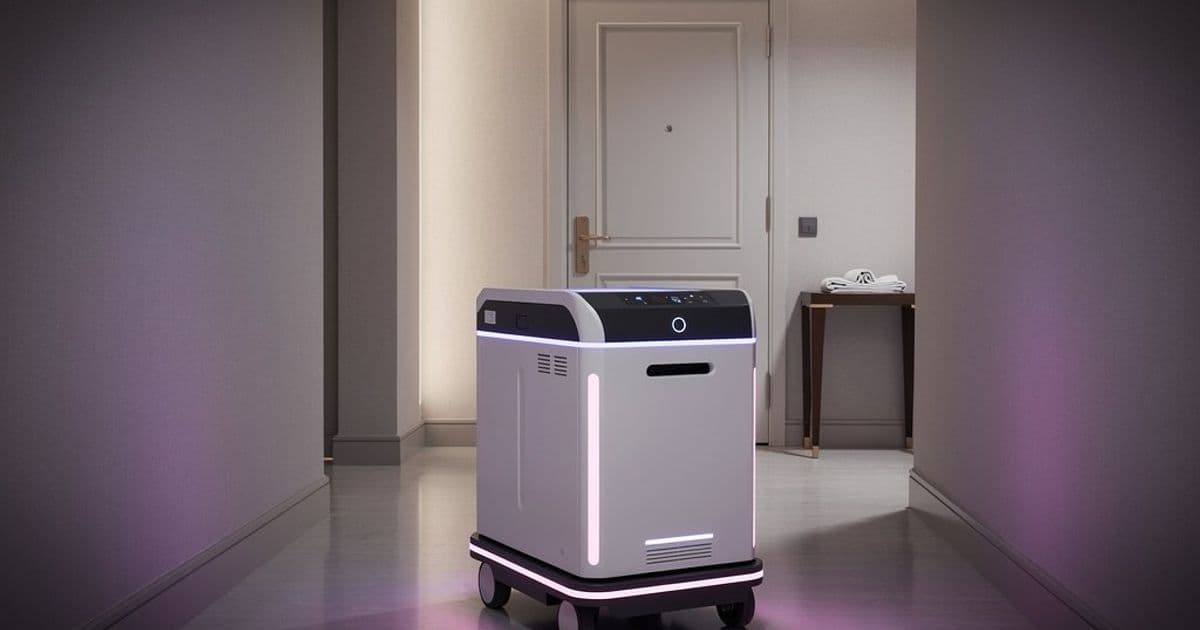
Flowtel, a Y Combinator W25 startup, has secured $3 million in seed funding to build an AI-first operating system for hotels. The company is now hiring its first engineers to scale a platform where AI agents handle everything from booking to room service, a move that could test the limits of automation in a traditionally human-centric industry.
The hospitality industry has long been a graveyard for ambitious software projects. Property management systems remain clunky, staff are perpetually understaffed, and the guest experience often feels like a patchwork of disconnected tools. Flowtel, a new Y Combinator-backed startup, is betting that the solution isn't another interface for humans, but a system where AI agents do the work instead.

The company announced it has closed a $3 million seed round, led by Y Combinator, to build what it calls the next-generation operating system for hospitality. Founded in 2024 and part of YC's Winter 2025 batch, Flowtel's premise is simple but radical: replace human labor in hotel operations with a fleet of specialized AI agents. These agents aren't just chatbots; they're designed to autonomously manage the entire guest lifecycle, from booking and check-in to room service orders and maintenance requests.
"We're not building a tool for hotel staff to use," says Eylon Miz, Flowtel's co-founder and CEO. "We're building the staff."
That distinction is critical. Most hospitality tech focuses on empowering employees with better software. Flowtel is attempting to make those employees redundant in specific, high-volume tasks. The company's seed funding, which it secured shortly after launching, will be used to hire its first founding engineers—staff and senior-level engineers who can help scale a system where AI agents are the primary operators.
The Technical Challenge: From Chatbots to Autonomous Agents
Flowtel's vision moves beyond the current wave of AI-powered customer service tools. While many companies use large language models (LLMs) to power chatbots that answer guest queries, Flowtel is building agents that can execute complex, multi-step workflows. This requires more than just a conversational interface; it demands robust integration with existing hotel systems, real-time decision-making, and the ability to handle exceptions gracefully.
For example, a guest might text a hotel's number at 2 AM requesting extra towels. A simple chatbot could acknowledge the request, but a Flowtel agent would need to verify the guest's room, check housekeeping inventory, dispatch a task to the appropriate staff (or another agent), and confirm completion—all without human intervention. This involves connecting to property management systems, inventory databases, and communication platforms, often through APIs that weren't designed for autonomous interaction.
The company's job postings emphasize "extreme AI coding experience" and a preference for "agents more than humans." This suggests a deep focus on building systems where AI is not a feature but the core architecture. The engineering team will likely work on:
- Agent Orchestration: Designing frameworks to manage multiple specialized agents (booking, service, maintenance) that can collaborate on complex requests.
- Integration Layer: Building robust connectors to legacy hotel systems (like Oracle Opera or Amadeus) and modern APIs, ensuring data flows seamlessly between AI agents and physical operations.
- Reliability & Safety: Implementing guardrails to prevent AI agents from making costly mistakes, such as overbooking rooms or mischarging guests. This is a significant challenge, as current LLMs can be unpredictable.
- Scalability: Architecting a system that can handle thousands of concurrent requests across multiple hotel properties without degradation in performance.
The Market and Funding Context
Flowtel's $3 million seed round is modest by Silicon Valley standards but significant for a pre-product startup in a niche vertical. The funding comes from Y Combinator, which provides $500,000 in standard investment, with the remainder likely from YC's network of angel investors and early-stage funds. This capital is intended to get the company through its first year, funding the core engineering team and initial pilots with hotel partners.
The valuation and specific investors were not disclosed, but the round's size suggests a focus on capital efficiency. Flowtel's team is intentionally small—currently just five people—which aligns with its "AI-first" philosophy. The company states that every part of the business, from product to marketing, uses AI thoughtfully, reducing the need for large human teams.
This approach mirrors a broader trend in the startup ecosystem: using AI to build companies with leaner teams and faster iteration cycles. However, it also carries risk. Hospitality is a high-stakes industry where errors can damage reputations and lead to significant financial loss. An AI agent that mishandles a VIP guest's reservation could cost a hotel more than it saves in labor costs.
The Hiring Push: Founding Engineers Wanted
With fresh capital in hand, Flowtel is now recruiting its first engineers. The roles are explicitly for "Founding Engineers" at the Staff and Senior level, with equity packages ranging from 0.5% to 3%. The salary range is $120,000 to $250,000, reflecting the premium for engineers with deep AI and systems-building experience.
The job description highlights several key requirements:
- High Agency: Engineers must be comfortable making decisions with limited oversight, a common trait in early-stage startups.
- Extreme AI Coding Experience: This likely means hands-on work with LLMs, agent frameworks (like LangChain or AutoGPT), and building systems that can reason and act autonomously.
- Loves Agents More Than Humans: A telling phrase that underscores the company's core philosophy.
The company is also targeting "ex-founder-level" talent, suggesting it wants engineers who understand the pressures and trade-offs of building a product from scratch. This is a strategic hire; founding engineers in a YC startup often shape the technical direction, culture, and product roadmap for years to come.
Skepticism and Real-World Hurdles
While Flowtel's vision is compelling, the path to adoption is fraught with challenges. The hospitality industry is notoriously slow to adopt new technology, and many hotels operate on thin margins, making them risk-averse. Convincing a hotel chain to replace human staff with unproven AI agents will require more than a demo; it will need rigorous proof of reliability and a clear ROI.
Moreover, the technology itself is still maturing. Current AI agents can handle routine tasks but struggle with edge cases, nuanced requests, or situations requiring empathy and judgment. A human front-desk clerk can de-escalate an upset guest; an AI agent might exacerbate the situation.
Flowtel's success will depend on its ability to navigate these complexities. The company's focus on "thoughtful" AI use across all business functions suggests an awareness of these limitations. They're not claiming to replace all human interaction, but rather to automate the repetitive, high-volume tasks that consume staff time.
What's Next for Flowtel?
The immediate next step is building the core engineering team and securing pilot partners. A successful pilot with a single hotel property could provide the data needed to refine the AI agents and demonstrate value. From there, scaling to multiple properties and eventually a full platform-as-a-service model is the logical progression.
Flowtel's journey will be a test case for AI's role in transforming legacy industries. If it succeeds, it could inspire a wave of similar startups targeting other verticals with high labor costs and repetitive tasks. If it fails, it will serve as a cautionary tale about the limits of current AI technology.
For now, the company is in the early, optimistic phase. With $3 million in the bank and a clear vision, Flowtel is poised to make its mark. The real work begins now: turning the promise of AI agents into a reliable, scalable system that hotels can trust.
Learn more about Flowtel:
Related Reading:
- The State of AI in Hospitality (2024)
- LangChain Documentation for building AI agent workflows.
Comments
Please log in or register to join the discussion