
Christine Pilcavage, managing director of MISTI Japan, leverages her deep personal and professional ties to Japan to create immersive experiences for MIT students, bridging technical education with cultural understanding through internships, research, and on-campus programs.
For Christine Pilcavage, the value of an immersive experience in a different cultural context is a foundational truth she learned early. Born and raised in Japan as part of a military family, she has since lived in Cambodia, the Philippines, and Kenya. "Any experience in a different context improves an individual," she says. This ethos is the driving force behind her role as managing director of MISTI Japan, the MIT International Science and Technology Initiatives program that connects MIT students and faculty with collaborators in Japan for internships, research, and cultural exchange.
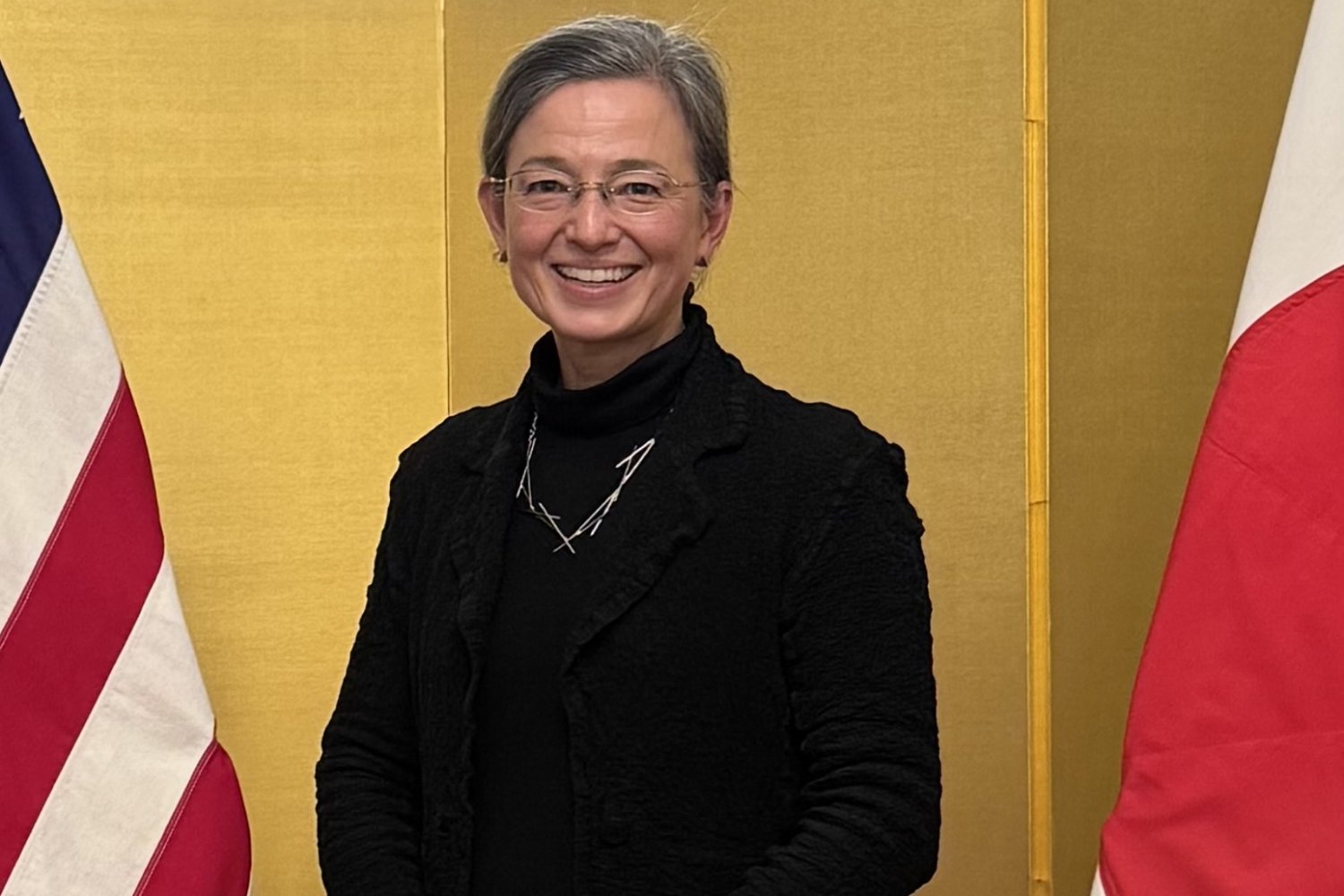
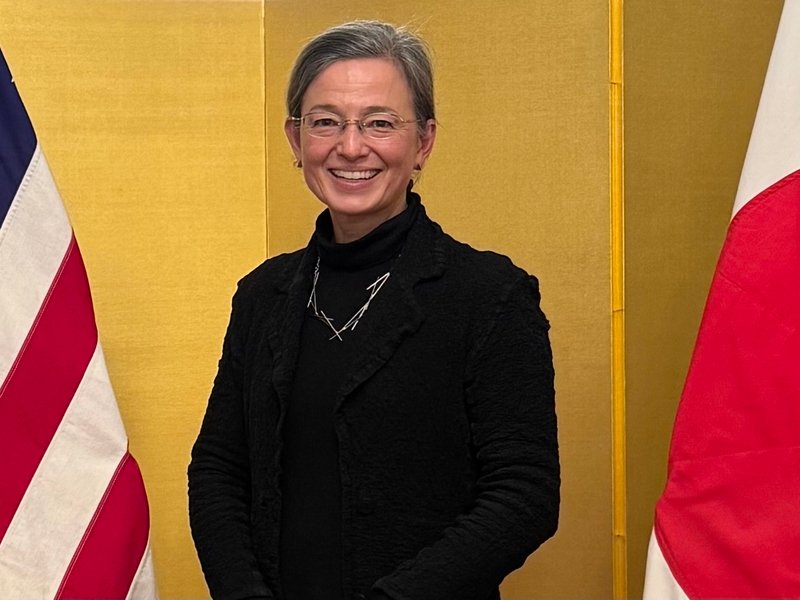
Pilcavage’s journey to this role was shaped by a career dedicated to global health, education, and international relations. With master’s degrees in international affairs and public health, and undergraduate studies in economics and psychology, she has worked with organizations including the United States Agency for International Development (USAID), the Japanese government, the Japan International Cooperation Agency (JICA), and the World Health Organization. Her path to Cambridge began with a hands-on role at Management Sciences for Health, where she investigated reproductive and women’s health and supported a Japanese nonprofit. Her ties to MIT and Cambridge deepened personally and professionally; she was married in the MIT Chapel, and her reception was held in Walker Memorial. "I was a migratory bird who landed on a tree, and my husband is the tree that has deep local roots here," she reflects.
Her professional connection to MIT solidified in 2013 when she joined the Comprehensive Initiative on Technology Evaluation (CITE), an MIT Department of Urban Studies and Planning project. Pilcavage administered the $10 million research program, which developed new methods for product evaluation in global development, funded by USAID. The program focused on identifying the most effective low-cost interventions for people in lower-income communities. This experience in managing complex, real-world research projects directly informs her current leadership of MISTI Japan, where she emphasizes creating collaborative environments to solve difficult problems.
MISTI Japan’s roots run deep in MIT’s history. The connection dates back to 1874, when its first Japanese student graduated. In 1911, the MIT Association of Japan was founded, becoming Japan’s first MIT trans-Pacific alumni club, which later evolved into the MIT Club of Japan. The MISTI Japan program itself predates the formal MISTI umbrella; the MIT-Japan Program was established in 1981 to prepare MIT students to be better scientists and engineers who understand and work effectively with Japan. The program’s goal was to foster deeper U.S.-Japan collaboration in science and technology during a period of Japan’s growing economic and technological power. Sending its first students to Japan in 1983, the program has since placed hundreds of MIT students in three-to-12-month internships and research positions at Japanese institutions, from major corporations to research laboratories.
Pilcavage believes these immersive experiences are invaluable. "Japan is so different from the Western world," she notes. "For example, in Japanese, verbs end sentences, so it’s important to develop patience and listen carefully when communicating." This linguistic and cultural nuance is a core lesson. The program isn’t just about sending students to a lab; it’s about fostering what Pilcavage calls "cultural resilience." She encourages students to engage deeply with local populations, to move beyond the "MIT bubble," and to think carefully about how to solve difficult problems in a global context.
This commitment to immersion is evident in programs that take MIT students into rural Japanese communities. In the tsunami-affected regions of Northern Japan, a program established in 2017 sends MIT students to teach STEAM (Science, Technology, Engineering, Arts, and Mathematics) workshops to rural children in Japanese. "Learning to code switch means they improve their language skills while also learning important cultural nuances, like body language," Pilcavage explains. This dual focus on technical instruction and cultural exchange is a hallmark of the MISTI Japan approach.

On MIT’s campus, Pilcavage works to bring Japanese culture to the community. During the Independent Activities Period (IAP), she has organized activities like Ikebana (Japanese flower arranging) classes and a Japanese Film Festival. These events provide a gateway for students who may not be ready for a full overseas immersion but are curious about Japanese culture. The goal is to create a continuous loop of cultural and technical exchange, enriching the MIT environment while preparing students for deeper engagement abroad.
Pilcavage’s leadership is recognized for its impact. She has received the Foreign Minister's Commendation from the Japanese Ministry of Foreign Affairs and the John E. Thayer III Award from the Japan Society of Boston. Richard Samuels, the Ford International Professor of Political Science at MIT and founder and faculty director of MISTI Japan, states, "Chris is a determined, empathetic leader who inspires our students and is committed to advancing both MIT’s mission and U.S.-Japan relations. I can think of no one more deserving of these awards."
Looking forward, Pilcavage is excited about new initiatives that expand the program’s scope. "We’re launching our first global classroom with [MIT historian] Hiromu Nagahara and [lecturer in Japanese] Takako Aikawa," she notes. This program will take students to cities like Kyoto and Hiroshima, allowing them to explore Japanese history and culture up close, directly linking historical context to contemporary technological and social challenges. She is also developing social impact workshops and continuously questioning how to improve MISTI Japan’s work and its impact.
For Pilcavage, the mission is clear. "We want our students to think and create," she says. "They need to see beyond the MIT bubble and think carefully about how to solve difficult problems and help others." In her view, the technical training MIT provides is only half the equation. The other half is the cultural and interpersonal intelligence gained through immersion, which allows engineers and scientists to collaborate effectively across borders. "I tell people I have the best job in the world," she concludes. "I get to share my culture with the MIT community and work with the best colleagues who are nurturing and supportive. I believe I’ve found my home here."
Related Resources:
Comments
Please log in or register to join the discussion