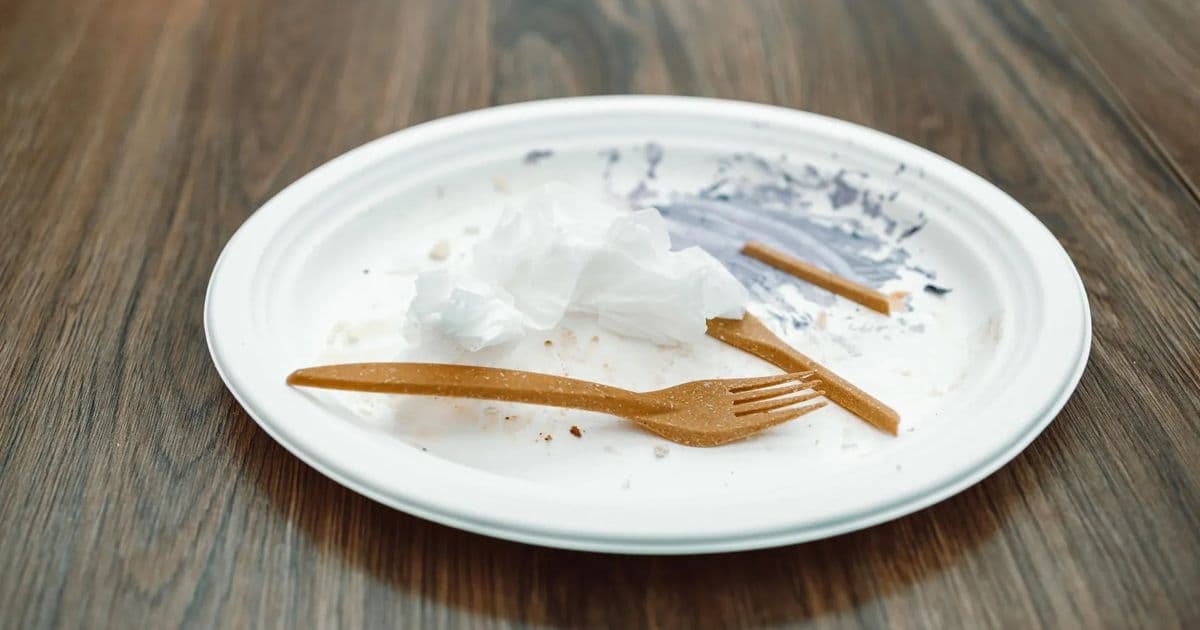
Scientists have developed a biodegradable film made from milk protein, starch, and clay that decomposes in soil within 13 weeks, potentially replacing single-use food packaging.
As plastic pollution reaches crisis levels globally, researchers at Flinders University have developed a surprising new material that could help solve one of our most persistent environmental problems: a biodegradable film made partly from milk protein that breaks down completely in soil within just 13 weeks.
The innovation comes from a team blending calcium caseinate—a commercially available form of casein, the primary protein found in milk—with modified starch and bentonite nanoclay. The researchers added glycerol and polyvinyl alcohol to improve the material's durability and flexibility, creating a thin, flexible film designed to mimic conventional plastic packaging.
Why This Matters
Plastic pollution has become one of the most pressing environmental challenges of our time. The Organisation for Economic Co-operation and Development (OECD) has warned that without coordinated international action, plastic production could increase by 70% between 2020 and 2040, surpassing 700 million tonnes annually. Currently, about 60% of plastics are single-use, and only 10% are recycled.
From 2 million tonnes in 1950 to 475 million tonnes by 2022, plastic production has grown exponentially—roughly equivalent to the weight of 250 million cars. Many plastics contain thousands of chemical additives, including dyes and flame retardants, some of which are toxic or linked to cancer.
How It Works
The milk-based film represents a significant advance in biodegradable packaging technology. In soil tests, the material steadily decomposed under normal conditions, with full breakdown estimated within 13 weeks. This rapid decomposition addresses one of the key challenges with conventional plastics, which can persist in the environment for hundreds of years.
Microbial testing found bacterial colony levels remained within acceptable limits for non-antimicrobial biodegradable films, suggesting low toxicity. However, Professor Youhong Tang from Flinders University's Institute for NanoScale Science and Technology recommends further antibacterial evaluations in future testing and development.
The international collaboration included researchers from Colombia, specifically Nikolay Estiven Gomez Mesa and Professor Alis Yovana Pataquiva-Mateus from the Department of Engineering at Universidad de Bogotá Jorge Tadeo Lozano. Their work in the Nanobioengineering Research Group focused on developing new polymer materials using caseinates to make milk-based nanofibers.
The Science Behind the Innovation
"We were experimenting with caseinates to make milk-based nanofibers and found that it could be used to cast polymers similar to common packaging materials," explains Mr. Gomez. "From there, we began exploring ways to improve their properties by introducing natural and abundant components such as starch, and also a biodegradable polymer with remarkable mechanical features. This also opened the opportunity to integrate nanoclays, like bentonite, which can enhance the film's strength and barrier performance."
The entire formulation was designed to use inexpensive ingredients that are biodegradable and environmentally friendly. The addition of nanoclay not only improves the film's strength but also enhances its barrier performance—critical properties for food packaging applications.
Real-World Applications
Professor Pataquiva-Mateus emphasizes the broader impact of the work: "Everyone can play a part in reducing their plastic use, and finding biodegradable polymer alternatives is an important part of science helping to find solutions for industry, consumers, and the environment. Most of our single-use plastic comes from food packaging, so these sorts of options should be explored further and join the circular economy revolution to conserve resources."
The timing is critical. As concerns grow about both the environmental and health impacts of plastic waste, the need for viable alternatives has never been more urgent. This milk-based film offers a promising solution that could be implemented relatively quickly, given that its components are already commercially available and the production process is straightforward.
Looking Ahead
While the 13-week decomposition time is impressive, the research team acknowledges that further development is needed. The recommendation for additional antibacterial testing suggests that the material may need refinement before widespread commercial adoption, particularly for food packaging where microbial safety is paramount.
Nevertheless, this innovation represents a significant step forward in the quest for sustainable alternatives to single-use plastics. By combining readily available natural materials with advanced nanotechnology, researchers have created a product that could help address one of the most visible and damaging forms of pollution while maintaining the functionality that makes plastic packaging so ubiquitous.
As the world grapples with the plastic pollution crisis, solutions like this milk-based film demonstrate that sustainable alternatives are not only possible but may be closer than we think. The challenge now lies in scaling up production and ensuring these innovations can compete economically with conventional plastics—a hurdle that will require continued investment, research, and policy support.
For consumers and businesses alike, this development offers hope that the convenience of plastic packaging doesn't have to come at such a devastating environmental cost. As Professor Tang notes, developing sustainable alternatives for food packaging and other single-use plastic products is essential to slowing the rise of global pollution—and this milk-based film may be one of the most promising solutions yet.
Comments
Please log in or register to join the discussion