Verizon's admission that a software issue caused a nationwide outage affecting millions of customers highlights the complex, software-dependent nature of modern cellular networks. While the company has offered a $20 credit and confirmed no cybersecurity incident was involved, the lack of technical details raises questions about network resilience and the critical systems that keep our phones connected.
Verizon's nationwide wireless outage on January 14, 2026, began like many technical failures do: with confused customers staring at their phones, seeing "SOS mode" indicators where a signal should be. By the afternoon, the problem had escalated from isolated reports to a full-scale national disruption, affecting users from coast to coast. The company's eventual explanation—a "software issue"—deceptively simple, masks the intricate web of systems that make cellular networks function.
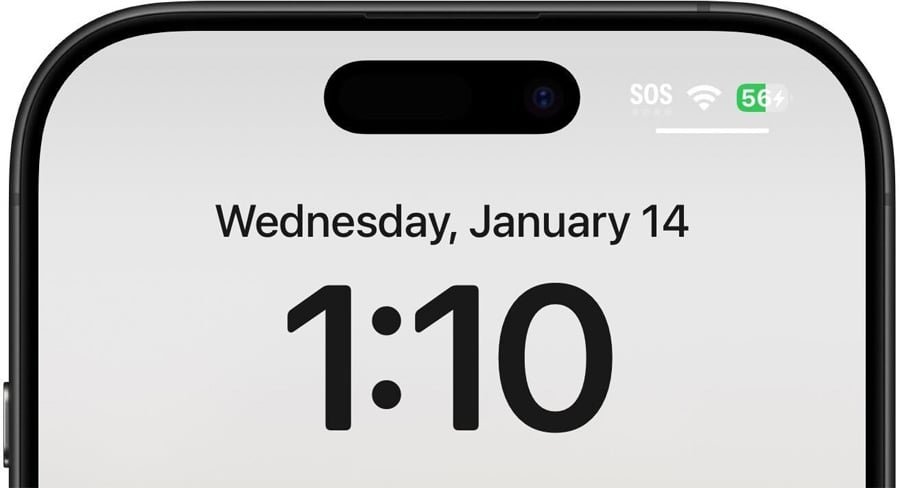
The outage started around 12 PM ET, with customers reporting complete loss of cellular service. Unlike typical network congestion or localized tower failures, this disruption was geographically widespread, affecting users in multiple states simultaneously. DownDetector, a service that tracks real-time outage reports, showed a massive spike in Verizon-related complaints, with the map glowing red across the United States. For many, the most alarming symptom was the "SOS mode" notification on their devices—a feature designed to allow emergency calls even without a carrier connection.
However, the outage revealed a critical flaw in that emergency safety net. New York City Emergency Management issued a warning that some Verizon customers might be unable to reach 911, advising residents to use alternative carriers or landlines. This contradiction—SOS mode present but emergency calls failing—points to a deeper system failure than a simple tower or backhaul problem.
Verizon's initial public statements were measured. On X (formerly Twitter), the company acknowledged the disruption and stated engineers were working to identify and resolve the issue. The resolution came late that evening at 10:20 PM ET, with Verizon advising customers to restart their devices to reconnect. The following day, the company offered a $20 account credit to affected customers, accompanied by a candid admission: "This credit isn't meant to make up for what happened. No credit really can."
The "Software Issue" Problem
When a telecommunications giant like Verizon attributes a nationwide outage to a "software issue," it signals a failure in the complex software systems that manage network operations. Modern cellular networks are not just towers and antennas; they are software-defined systems controlled by multiple layers of infrastructure:
Core Network Software: The central systems that authenticate devices, route calls and data, and manage user sessions. These include the Home Location Register (HLR) and Home Subscriber Server (HSS), which store subscriber data and location information.
Network Management Systems: Software that monitors network health, allocates resources, and handles load balancing across thousands of cell sites.
Configuration Management: Software that pushes updates and configuration changes to network elements. A faulty configuration update could propagate across the entire network almost instantly.
Interconnection Software: Systems that handle handoffs between different network segments and technologies (4G to 5G, for example).
The fact that the outage was nationwide suggests a failure in a centralized system rather than localized equipment. When individual towers fail, the impact is geographically limited. When core network software fails, the entire network can go down simultaneously.
Historical Context: Software Failures in Telecom
This isn't the first time software has brought down a major carrier. In 2022, Rogers Communications in Canada experienced a nationwide outage that lasted 19 hours, affecting banking, emergency services, and 911 calls. The cause? A software configuration issue during a network update. Similarly, in 2021, AT&T experienced a multi-hour outage attributed to "software issues."
These incidents reveal a pattern: as networks become more software-defined (a trend accelerated by 5G and virtualization), the potential for software-induced failures increases. The trade-off is that software-defined networks offer more flexibility and efficiency, but they also introduce new failure modes.
The Cybersecurity Question
Verizon's explicit statement that "there is no indication that a cybersecurity incident caused the outage" is significant. In an era of increasing cyber threats against critical infrastructure, carriers must consider malicious actors as potential culprits. By ruling this out, Verizon suggests the failure was internal—likely a bug, configuration error, or failed update rather than an external attack.
However, this distinction matters for customers. A software bug might be resolved more quickly than investigating a sophisticated cyberattack, but it also raises questions about quality assurance and testing procedures at a company that manages critical national infrastructure.
Practical Implications for Consumers
For Verizon customers, the outage had immediate practical consequences:
Emergency Communication: The failure of SOS mode to connect to 911 in some cases represents a serious safety concern. While carriers are required by FCC regulations to provide emergency access, software failures can create unexpected gaps.
Business Continuity: For professionals relying on mobile connectivity for work, the outage meant lost productivity and missed communications.
Digital Dependency: The incident highlighted how deeply integrated cellular service is into daily life—from two-factor authentication to mobile payments.
What Customers Should Do
While waiting for more technical details from Verizon, customers can take several steps:
Diversify Communication Methods: Maintain access to alternative communication channels (landlines, Wi-Fi calling apps like WhatsApp or Signal, or other carrier services).
Enable Wi-Fi Calling: Most modern smartphones support Wi-Fi calling, which can provide voice and text service when cellular networks fail, provided you have Wi-Fi access.
Monitor Official Channels: Follow verified carrier accounts on social media and check outage tracking sites for real-time updates during future incidents.
Document Impact: For business users, document downtime and service disruptions, as carriers may provide additional compensation beyond standard credits for extended outages.
The Bigger Picture: Network Resilience
This outage serves as a reminder that network resilience requires more than redundant hardware—it requires robust software architecture, comprehensive testing, and graceful failure modes. As networks evolve toward 5G and beyond, with increased virtualization and software-defined components, carriers must invest in:
Improved Testing Environments: Realistic simulations of network-wide failures before deploying software updates.
Gradual Rollouts: Phased deployments of software changes rather than all-at-once updates.
Better Monitoring: Enhanced visibility into software system health before failures cascade.
Clear Communication Protocols: Transparent, timely information sharing with customers during incidents.
Verizon's $20 credit, while appreciated, doesn't address the underlying concern: how can customers trust that their carrier's software systems won't fail again? The company's promise of a "full review" suggests internal investigation, but without public technical details, customers are left with unanswered questions about what went wrong and how it's being prevented.
For now, the incident stands as a cautionary tale about the hidden software dependencies in our increasingly connected world—and the fragility that can emerge when those systems fail. As one industry expert noted after similar outages, "We've spent decades building redundancy into network hardware, but we've only recently begun to understand the software failure modes that can bring down entire networks."
The full technical post-mortem from Verizon, if shared, could provide valuable insights for the entire telecommunications industry. Until then, this outage serves as a reminder that in our software-defined world, the most critical infrastructure is often the code we never see.
Related Resources:
- FCC Communications Outage Reporting Requirements
- Verizon Network Status Page
- National Weather Service Wireless Emergency Alerts (for emergency communications alternatives)
- FCC Guide to Emergency Communications
Comments
Please log in or register to join the discussion