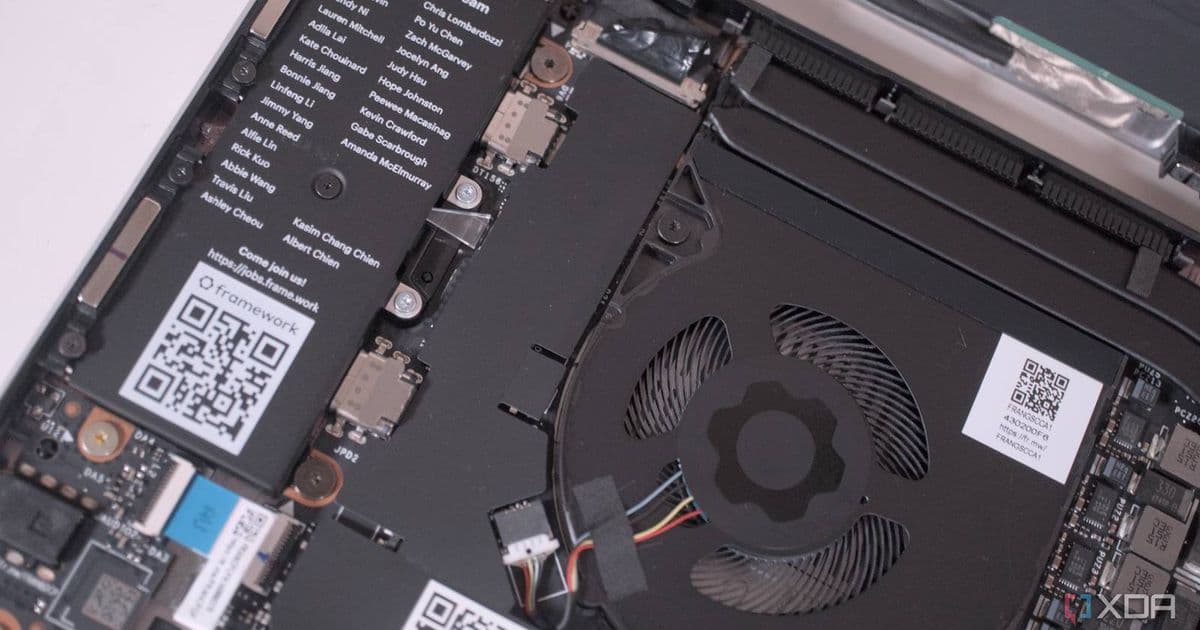
Framework partners with KDE to fund Linux desktop development and provide advisory input for hardware-optimized experiences.
The DIY laptop maker Framework has become an official patron of the KDE desktop environment, marking a significant partnership between hardware and software that could reshape the Linux laptop experience for power users and developers.
This collaboration goes beyond simple sponsorship. Framework will provide both financial support and gain a seat on KDE's advisory board, allowing the company to help guide development priorities that align with its hardware ecosystem. The arrangement reflects the natural synergy between Framework's modular laptops and KDE's highly customizable desktop environment.
Why Framework and KDE make perfect partners
Framework laptops have cultivated a dedicated following among Linux enthusiasts who value the company's commitment to repairability, upgradeability, and open-source principles. KDE Plasma, with its extensive customization options and powerful feature set, has emerged as a favorite desktop environment for Framework users who want complete control over their computing experience.
"KDE is extremely popular in the Framework community, and we're excited to help support KDE's efforts to make the best possible Linux desktop," said Nirav Patel, Founder of Framework. This sentiment captures the mutual benefit: Framework users get a desktop environment optimized for their hardware, while KDE receives crucial funding and user feedback from a hardware partner deeply invested in the Linux ecosystem.
What the partnership means for Linux users
The advisory board seat gives Framework direct influence over KDE's development roadmap. This could lead to optimizations specifically for Framework hardware, such as improved power management for the company's modular components, better integration with expansion cards, or enhanced support for the unique features that make Framework laptops stand out.
For the broader Linux community, Framework's patronage joins contributions from other major tech companies including Google, SUSE, Canonical, and The Qt Company. This diverse funding base helps ensure KDE's independence while providing the resources needed to compete with commercial desktop environments.
KDE's growing ecosystem of support
Framework joins an impressive list of KDE patrons that reads like a who's who of Linux and open-source companies. Blue Systems, Kubuntu Focus, Slimbook, TUXEDO Computers, and Rocky Linux all contribute to KDE's development, creating a robust ecosystem of support that extends beyond traditional software sponsorship.
Aleix Pol, President of KDE e.V., expressed enthusiasm about the new partnership: "We're thrilled to welcome Framework as a patron. Their commitment to sustainable, repairable hardware aligns perfectly with KDE's values of user freedom and control."
The future of Linux laptops
This partnership signals a maturing relationship between Linux desktop environments and hardware manufacturers. Rather than treating Linux as an afterthought, companies like Framework are investing directly in the software stack that makes their products compelling to their target audience.
The collaboration could set a precedent for other hardware makers who see the value in supporting open-source desktop environments. As Linux continues to gain traction in both consumer and professional markets, these kinds of partnerships may become increasingly common, leading to better-integrated experiences across the entire computing stack.
For Framework users, the immediate benefit will be a KDE experience that feels increasingly tailored to their hardware. For the Linux community at large, it represents another step toward mainstream viability for open-source desktop computing. And for KDE, it provides both the financial stability and the hardware-specific insights needed to continue evolving as a world-class desktop environment.
The Framework-KDE partnership demonstrates how the right combination of hardware and software philosophy can create something greater than the sum of its parts—a Linux laptop experience that's not just functional, but genuinely delightful to use.
Comments
Please log in or register to join the discussion